Why Does Scrap Rise at Speed on an NC Servo Feeder?
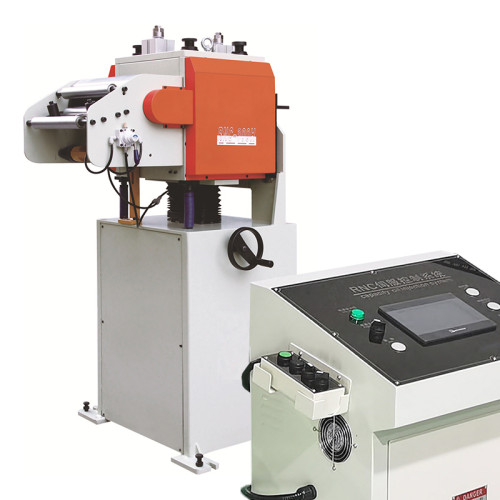
Scrap rate is not linear with press speed. On most coil-fed lines it is flat until a specific takt, then climbs steeply within a narrow band of maybe 20 strokes per minute. Engineers often blame the die, change the lubricant, and re-shim the punches — and the curve does not move, because the cause sits upstream at the NC servo feeder.
We have collected scrap and speed data from more than 200 active line installations, and the shape of that curve is remarkably consistent. Here is what actually changes when you push the press, and which of those changes you can control.
The Curve Has a Knee, and the Knee Is Predictable
Plot scrap percentage against strokes per minute and you get three zones. In zone one, from zero to roughly 70 percent of the line's rated speed, scrap sits at the die's baseline — the inherent burr, the occasional slug pull, the normal variation in material. In zone two, from 70 to 90 percent, scrap begins to scatter: the same die produces good parts and marginal parts in alternating runs.
Zone three starts where the curve turns vertical. One customer running appliance brackets saw scrap move from 0.9 percent at 160 SPM to 6.4 percent at 240 SPM with no tooling change at all. The die was not the variable. The feeding system was.
Cause One: Acceleration Outruns Roll Grip
A servo feeder does not move strip at constant velocity. It accelerates from rest to peak speed, holds briefly, decelerates, and stops. At 120 SPM the acceleration phase is long and gentle. At 300 SPM the whole feed cycle may be under 100 milliseconds, and the acceleration phase compresses into a few milliseconds.
Required force scales with acceleration, not with speed. Double the takt and you can quadruple the instantaneous torque demand at the feed rolls. If the roll pressure was set for comfortable margin at low speed, it becomes marginal at high speed — and the strip slips. A slip of 0.3 mm at the first station is a torn part at the fifth.
The fix is not simply more spring pressure. Excess roll pressure marks the strip and flattens the coating. The correct answer is usually a combination of higher grip coefficient (roll material and surface finish), reduced moving mass in the feed carriage, and a motion profile that spreads acceleration over a slightly longer window.
Cause Two: The Pilot Release Window Collapses
Pilot release is the brief moment when the pilot pins enter the strip and the feed rolls must let go. The window is defined by the die's geometry, not by the controller, and it is measured in milliseconds.
At low speed, that window is comfortable and a small timing error is invisible. At high speed, a 6 ms error that used to fall inside the window now falls outside it. The result is that the feed rolls are still gripping when the pilots engage, so the strip is pulled backwards by a fraction of a millimetre, or the pilot pin is bent.
Measure it rather than estimate it. A proximity sensor on the pilot plate plus a marker in the controller trace will show you exactly where release begins and ends relative to feed completion. If the margin is under 4 ms at your target takt, you will be chasing scrap forever.
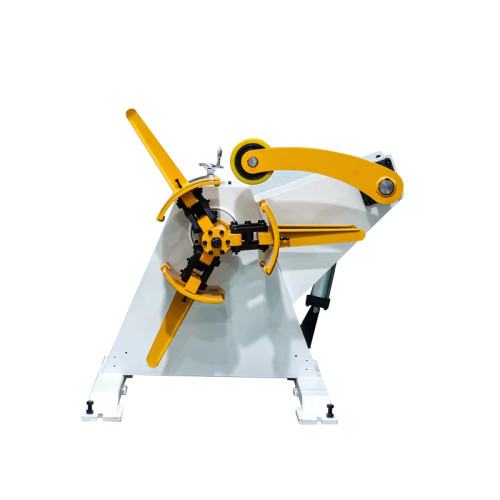
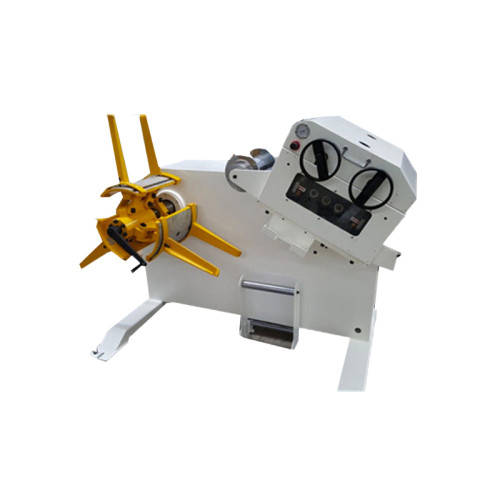
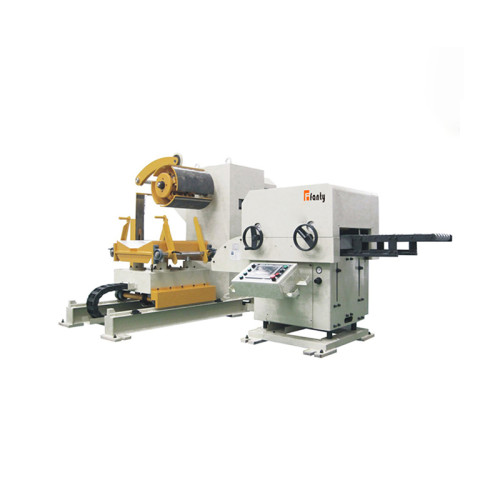
Cause Three: Loop Instability Between Decoiler and Straightener
Strip between the decoiler and the straightener sits in a free loop. That loop is a spring-mass system, and its natural frequency does not care about your production schedule.
As takt increases, the decoiler's pay-off control cycles faster. At some speed the pay-off cycle starts to excite the loop's natural frequency and the loop begins to oscillate. The oscillation travels downstream as a tension variation, which arrives at the feed rolls as a varying back-tension. Feed accuracy degrades even though nothing about the feeder changed.
The diagnostic signature is unmistakable: scrap appears in bursts, roughly periodic, and correlates with audible strip slap. If you hear the strip, you have already found a cause. Corrective options are a tighter loop with a dancer or loop sensor, a faster pay-off response, or added damping at the entry guide.
Cause Four: Lubricant Film Fails at Higher Shear Rate
Lubricant behaves differently at different sliding speeds. A formulation with good boundary lubrication at 120 SPM can thin out and lose load-carrying capacity at 280 SPM, because the film never fully develops in the shorter contact time.
The symptom looks like die wear rather than a lubrication problem: galling appears at the draw radius, pickup builds on the punch face, and burr height grows. Changing to a lubricant with higher viscosity or a different additive package can move the knee by 30 to 50 SPM. Applying it more evenly — a roller coater instead of a drip — often helps more than changing the product.
Match the Symptom to the Cause
Before you touch the tool, identify the pattern. Different causes leave different fingerprints in the scrap, and the fingerprint usually saves you a week of guesswork.
| Scrap pattern | Most likely cause | First check | Typical fix |
|---|---|---|---|
| Feed short by 0.2–0.5 mm, worsens through the shift | Roll slip under acceleration | Roll pressure and roll surface condition | Roll material or grip profile change, revised motion profile |
| Random pilot pin marks or bent pins | Pilot release timing | Release window margin at target takt | Re-time release, adjust cam or controller offset |
| Bursts of scrap, periodic, audible strip slap | Loop oscillation | Loop height stability and pay-off response | Dancer or loop sensor, damping at entry guide |
| Galling at draw radius, rising burr height | Lubricant film breakdown | Lubricant viscosity and application uniformity | Higher-viscosity lubricant, roller coater |
| Parts good on one side of the strip, bad on the other | Strip camber or crown | Incoming coil, leveler roll gap across width | Straightener adjustment, supplier coil tolerance review |
| Scrap only in the first 20 strokes after a stop | Thermal or loop re-establishment | Restart sequence and strip temperature | Ramp-up routine, controlled restart profile |
Raise the Knee Instead of Slowing Down
Slowing the press is the default response, and it costs you the throughput you bought the line for. A better approach is to find which of the four causes is setting your knee, then remove it.
- Log feed length continuously from the controller, not by sampling parts. Drift and scatter look identical in a sample and completely different in a trace
- Step the speed up in 20 SPM increments and record scrap at each step. The knee shows up as a clear inflection, usually within one increment
- Test one change at a time. Changing roll pressure, lubricant and release timing in the same shift produces a result you cannot attribute
- Check incoming coil tolerance before blaming the line. Thickness scatter of 0.08 mm across a coil is enough to move feed accuracy outside ±0.05 mm
- Re-verify pass line height after any tooling change. A 0.5 mm error here shows up as edge wave that looks exactly like a leveler problem
Questions We Get About High-Speed Scrap
Is there a universal speed limit for coil-fed stamping?
No. The limit depends on strip thickness, material yield strength, feed length and die design. A short feed on thin material can run far faster than a long feed on 4 mm high-strength steel, because the moving mass and the required acceleration are completely different. Treat any single number as marketing until you have measured it on your material.
Should I increase roll pressure to stop slipping at high speed?
Only as a temporary diagnostic. If added pressure fixes the slip but leaves roll marks, you have traded one defect for another. The durable fix is more grip per unit of pressure: harder roll surfaces with the right roughness, or a larger contact area through a different roll diameter.
Why does scrap sometimes improve after a short stop?
Because whatever was drifting — hydraulic oil temperature, loop position, lubricant film — gets a chance to reset. If scrap is clean for the first twenty strokes after every stop and then degrades, you are looking at a thermal or tribological cause, not a mechanical one.
Can a controller upgrade fix a scrap spike?
It can fix the part of the problem caused by timing resolution and motion profile. It cannot fix insufficient roll grip, an unstable loop or a lubricant that has stopped working. Upgrade the controller when the trace shows a timing problem, not before.
How do I know when the die really is the problem?
Run the same die in a different press with a different feeder. If the scrap pattern follows the die, the die is the cause. If it disappears, the die was fine and the feeding system was setting your limit. This single test has resolved more arguments on shop floors than any amount of discussion.
Find Your Line's Real Speed Limit
Send us your material grade, strip thickness, feed length and current takt. Our engineers will identify which factor is capping your speed and what it takes to raise it without adding scrap.
Talk to an EngineerFanty · NC Straightener Feeder
Pitch, Pass Line and Roll Pressure, Sorted Before You Order
Tell us your press stroke rate and feed length. Our engineers match servo feed power, straightener roll geometry and loop control to your actual cycle time.
Get a Free QuoteFANTY Machinery · 13 years on stamping automation · 2,000+ coil lines installed · engineers reply within 24 hours