Why Do Coil Lines Fail Their Site Acceptance Test?
The line is bolted down, wired in and running a coil. Then the buyer opens the acceptance sheet, measures a strip sample against the print, and the numbers do not match what the quotation promised.
An NC straightener feeder is normally sold on a flatness figure and a feed accuracy figure. Both are real measurements, and both were taken on a coil the buyer will never see again.
What follows is the order in which to look for the gap, how to isolate each cause inside an hour, and where to move the argument so it costs nothing to win.
A Failed Acceptance Test Rarely Looks Dramatic
Nine times out of ten the machine is not broken. It runs, it feeds, and it produces parts that pass a visual check on the bench.
The failure lives in a measurement instead: flatness drifting 0.4 mm per metre, feed length accumulating 0.3 mm over 200 strokes, or a row of witness marks on coated strip that nobody saw on the sample coil.
The buyer's position is fair. The print says 0.05 mm, the floor delivers 0.15 mm, and the difference has to be explained by somebody.
The supplier's position is also fair. On the coil supplied for the test, the machine performed to the letter of the specification it signed.
Both statements can be true at the same time, which is exactly why these disputes run for weeks and end in a compromise nobody enjoys.
Sorting the causes in the right order turns an argument into a checklist. Most failures fall into three buckets, and two of them have nothing to do with the machine.
Cause One: The Specification Was Written Around an Ideal Coil
Strip properties decide most of the outcome, and most purchase orders describe material in a single line: SPCC, 1.2 mm, 1,000 mm wide.
Yield strength, coil set, camber and residual stress never appear. On 250 MPa mild steel the quoted numbers hold without effort.
Run the same gauge at 340 MPa and the straightener runs out of penetration before it runs out of stroke. The machine is doing what it was built to do, on material it was not built for.
Coil set is the second half of the same problem. A coil wound tight and stored flat behaves differently from one that sat on a saddle for eight months in a humid yard.
The cheapest fix costs nothing: ask for the mill certificate of the coil that will be used for acceptance, and write that coil into the contract as the reference material.
A specification without a material reference is not a specification. It is an intention, and intentions do not survive a measurement.
Cause Two: Power, Air and Floor Arrive Below the Assumption
A line quoted at 200 SPM needs the voltage, the air volume and the slab it was designed around, not the values that happen to exist in the building.
Voltage sag is the most common gap. A press starting on the same transformer pulls line voltage down by 8 to 12 percent for a fraction of a second.
The drive reports a following error, the operator sees a feed fault, and everybody walks over to look at the machine. The machine was reporting a power problem it did not cause.
Air pressure is the second gap. Mandrel expansion and brake release draw on the same header, and a 0.4 MPa supply instead of 0.6 MPa makes a hydraulic clamp slow enough to miss its timing window.
The floor shows up last and confuses people most. A decoiler bolted to a slab that flexes will vibrate, and that vibration reaches the straightener as a periodic flatness error that moves with line speed.
None of these are machine faults. All of them get blamed on the machine, because the machine is the new thing in the building.
Cause Three: Nothing Was Straightened at Rated Speed
Acceptance tests are frequently run at 40 or 50 SPM, because the die is late or because the operator is being careful with a new line.
Flatness at 60 SPM says very little about flatness at 200 SPM. Loop control, brake response and feed roll grip all change as speed rises.
A controlled test uses the speed written into the contract. If the contract has no speed, that is the first line to add before anyone signs.
A stepped run at 25, 50, 75 and 100 percent of rated SPM takes twenty minutes and produces a curve that ends the discussion.
One page, four data points, and a note on where the flatness figure started to drift. That page is worth more than any warranty clause you can negotiate afterwards.
Five Tests That Isolate the Cause in Under an Hour
Each test answers one question and eliminates one explanation. Run them in this order, because the cheapest test removes the widest range of possibilities.
| Test | What It Proves | What It Costs You |
|---|---|---|
| Static flatness, hand-fed sample | Roll geometry and alignment | 30 minutes, and it cannot see dynamic error |
| Stepped speed run, 25 to 100 percent SPM | Where loop or brake control breaks down | One scrap coil, roughly 300 kg of strip |
| Voltage logging at the press control | Whether the supply sags on press start | A loaned logger and two days of waiting |
| Material swap on identical settings | Whether the coil or the machine is at fault | 200 kg of certified strip, the cheapest evidence available |
| 200-stroke feed length audit | Accumulated drift against single-shot error | Half a shift of production time |
The material swap deserves a word of its own. Buyers resist it because authorising it feels like admitting the coil was the problem.
In practice it is the fastest way to separate a machine fault from a material fault, and it usually saves a week of correspondence.
Where a Passed Test Still Leaves You Exposed
A clean acceptance test does not promise a clean result next year. Rolls wear, and the wear curve is not linear with tonnage.
It does not cover a material change either. Moving from cold rolled to hot rolled, or from 250 MPa to 420 MPa, shifts the whole operating envelope of the machine.
It says nothing about coil end behaviour, which is where a large share of marks and misfeeds actually originate.
And it cannot test a die that has not been built. If acceptance runs on a test die, the production die may impose a different pass line, a different strip tension and a different feed length.
Treat the signed sheet as evidence that the line was assembled and set up correctly on one day with one coil. That is a valuable fact, and it is not the same as a performance guarantee.
Moving the Argument to the Contract
Every cause above can be settled in one page of purchase order wording, months before the truck is loaded. The wording is boring, which is why it works.
- Name the material: grade, yield strength, thickness range, width range, and the specific coil used for acceptance.
- Name the speed: the rated SPM at which flatness and feed accuracy are measured, and the tolerance at that speed.
- Name the utilities: voltage, connected load, air pressure and flow, and the slab specification with anchor layout.
- Name the sequence: static check, stepped speed run, 200-stroke feed audit, and who signs off each stage.
- Name the remedy: adjustment, rework or replacement, and the window in which the buyer can invoke it.
- Name the person: one engineer on each side with authority to stop the test, rather than a purchasing thread.
Benchmarking helps more than arguing. Ask two other builders how they would prove the same flatness figure, then compare the test procedure rather than the promise.
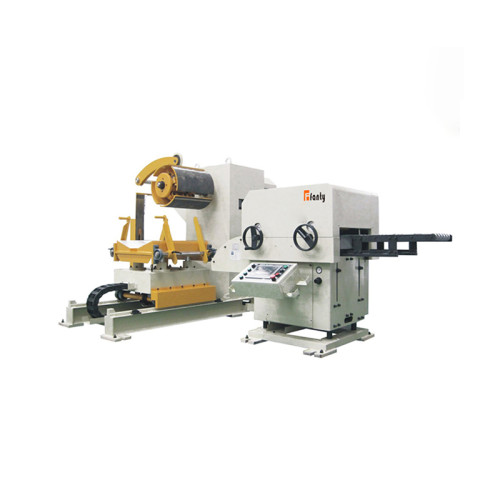
A published reference point helps here. The coil line range we publish lists capacity, coil weight, thickness range and roll configuration line by line.
Compare your draft specification against one of those sheets. Anything the sheet states and your document leaves open is a future acceptance argument.
Where to go next
If the acceptance clause is still being drafted, the decisions that set what the test can prove sit one level up: capacity, roll count and control architecture. Read that layer before fixing the wording.
The Coil Line Guide LibraryAt what feed length drift should a line fail acceptance?
Above 0.10 mm accumulated over 200 strokes on 1.2 mm mild steel, the cause is usually roll slip rather than encoder error. Measure a single shot first, then the accumulated run.
How many speed points does a stepped acceptance run need?
Four is enough: 25, 50, 75 and 100 percent of rated SPM. Three cannot show a trend, and five rarely adds information you would act on.
Does a 0.05 mm flatness promise survive a 340 MPa coil?
Usually not on the same roll settings. High-strength strip needs more penetration, and a machine sized on mild steel may run out of adjustment before it reaches the number.
Who pays for the scrap coil used during the test?
The buyer, in most contracts, unless the failure is mechanical. Budget 300 to 500 kg of strip for a full acceptance sequence and price it into the project.
Can the acceptance test run at the supplier's plant instead?
Yes, and it is cheaper, but it only proves the machine. Voltage, air supply and slab stiffness account for a large share of failures and none of them travel with the machine.
What if the line passes at 100 SPM but the job needs 200 SPM?
Then the test measured a different machine than the one you bought. Rated speed belongs in the acceptance clause, not in the brochure.