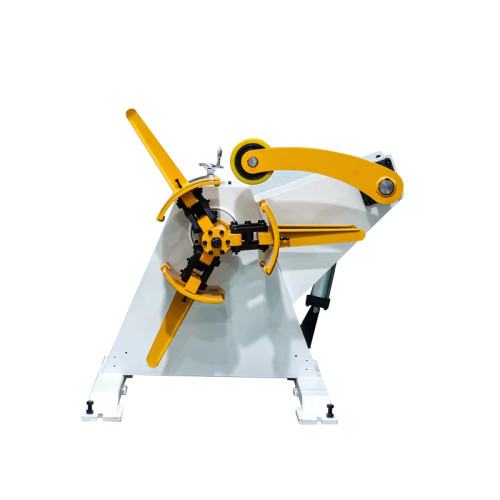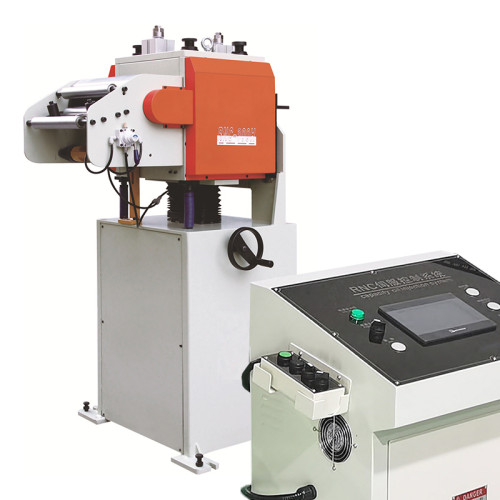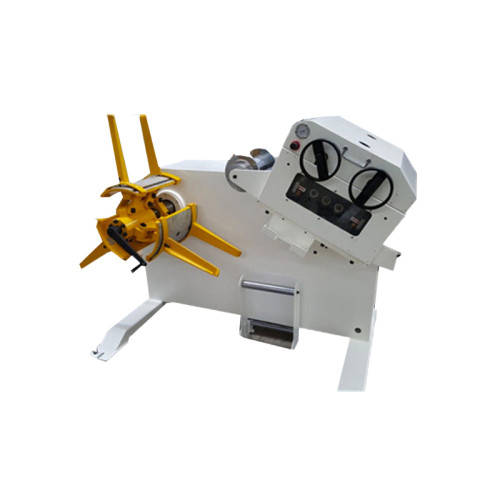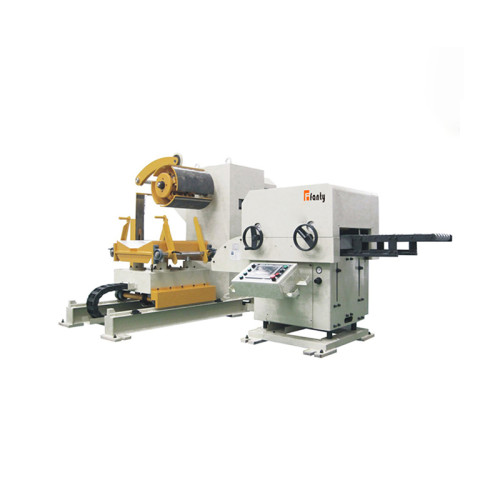
Which Spare Parts Does an NC Straightener Feeder Need?
The line stopped at 06:40 on a Monday. The fault was a proximity sensor at the straightener entry, a part that costs less than a tank of fuel.
It sat in a distributor's warehouse for eleven days while a 200-tonne press sat idle. That arithmetic, not wear rate, is what should drive an NC straightener feeder spare parts list.
This is the stocking sequence we hand to buyers, the items that genuinely earn shelf space, and the ones that only look urgent until you price the delay.
The specification choices that fix your downtime exposure before the machine ships are covered in the coil line guide library, and the machine range sits under our machines.
Sort Spares by What Stops the Line, Not by What Wears
Every machine wears parts. Very few parts stop the machine.
A work roll loses a few microns a year and the line keeps producing good strip. A servo drive fails once and the line is dead until a replacement clears customs.
So the first cut on a spares list is not "what fails most often". It is "what failure takes the line down and cannot be worked around".
- It stops the line. The machine cannot run at all without it, and no manual sequence carries you through the shift.
- The lead time is long. Anything sourced overseas and quoted at four weeks or more, including the shipping week that nobody counts.
- There is no local substitute. A standard bearing can be bought in town this afternoon. A matched encoder and its cable cannot.
A part has to clear all three tests before it earns cabinet space. Anything that clears one or two belongs on a standing order list instead.
There is a second sorting question that catches buyers out. A consumable that is cheap and local, such as a filter element or a length of hose, feels urgent because it is used often.
It is not critical. It can be replaced tomorrow from a hydraulic shop, and stocking it in depth only ties up cash and shelf space.
Critical means rare and fatal, not frequent and annoying. Buyers who mix the two end up with a full cabinet and a stopped line.
One test settles most arguments inside a maintenance meeting. Ask what the operator would do at two in the morning if that part failed.
If the answer is "call the service line and wait", the part is critical. If the answer is "drive to the industrial estate when it opens", it is not.
The Cabinet Itself: Six Items That Clear the Test
On a 3-in-1 line feeding a 200-tonne press, six items account for the large majority of unplanned stops we are called out to look at.

- Entry and exit sensors, two of each. Proximity and photoeye types fail from coolant mist and metal dust. Typical lead time is one to two weeks.
- Encoder and its cable. The cable fails far more often than the encoder, and a generic replacement changes the count resolution.
- Servo drive or the matching control module. The single most expensive shelf item, and the one with a six to ten week lead time.
- Straightener roll gap wedges and adjusting screws. Cheap, small, and the reason a line runs out of adjustment range halfway through a coil.
- Seal kits for the mandrel and hold-down cylinders. A weeping seal becomes a pressure fault, then a stop with a coil still on the mandrel.
- Die protection cable and connectors. The most abused cable on the line, and the cheapest item on this list.
Six lines of stock, one shelf, and roughly the cost of a single day of lost production.
How the parts are stored matters as much as which parts are chosen. Sensors and control boards belong in a sealed cabinet with a sachet of desiccant, not on an open shelf beside the press.
Every item should carry a label with its part number, the date it was bought and the machine it fits. A spare that cannot be identified in the dark is not a spare.
Where a Longer Lead Time Beats a Bigger Stock
Not everything on the list should be bought in the same depth. Depth should follow lead time, not price.
| Part group | Stock depth that pays | What it gives the run | Where it costs you |
|---|---|---|---|
| Sensors, connectors, cables | Two of each | Covers the failure that stops the line most often | Small money, but two sensors can sit untouched for three years |
| Roll gap wedges and screws | One set | Keeps adjustment range available without a machine stop | Must match the roll head exactly; a near-fit is scrap |
| Seal kits | One set | Converts a two-day leak into a two-hour fix | Elastomer ages on the shelf, so replace at five years |
| Servo drive or module | One, on critical lines only | Removes the longest lead time from the equation | Capital tied up in a board that may never be used |
| Work roll set | Order, do not stock | Avoids paying for matched rolls years early | Reconditioning takes four to six weeks, so plan wear |
The pattern is simple. Cheap and fast-moving, stock two. Expensive and slow-moving, buy one only where the line cannot be idle for a month.
Lead time is the number most buyers underestimate, because the quoted figure usually covers manufacture only. Sea freight adds three to five weeks, and customs clearance adds a few days on top.
A part quoted at four weeks is realistically six to eight weeks from the day the fault appears. That gap is what the cabinet is really buying.
Where two machines share a plant, the maths changes. A single spare drive can serve both if the production schedule allows a swap, so the case for stocking two rarely stands up.
Keep a simple usage log in the cabinet. A part that has not moved in three years is telling you the depth is wrong, not that the list is wrong.
What a Spares Cabinet Cannot Protect You From
A cabinet is insurance against part failure, not against every stop.
It does nothing for a control firmware revision that no longer matches a replaced board, or for a machine that was damaged by a crash. Those are engineering and training problems.
It also cannot cover an obsolete control platform. If the machine is more than ten years old, the correct answer may be a planned control retrofit rather than a shelf of parts that no longer exist.
Grey-market parts are another trap. A cheaper drive bought outside the authorised channel can arrive with older firmware, or without the parameter set the machine needs.
Be honest about one more limit. A stocked drive only helps if someone on site can fit it, commission it and re-enter the recipes.
Without that person, the part buys nothing but a shorter wait. Training and documentation belong in the same budget as the cabinet, and often matter more.
What the Cabinet Costs Against One Stopped Day
A first cabinet for a mid-size 3-in-1 line typically lands between 1.5 and 3 per cent of the machine price. On a line feeding a 200 SPM press, that is often less than two days of lost output.
The comparison is easy to run. A press running a two-out die at 200 strokes a minute produces roughly 240,000 parts over an eight-hour shift.
Two days lost to a part that could have been on a shelf costs more than the whole cabinet. The cabinet only stops being good value once the parts start ageing faster than they are used.
Set the budget against your own numbers rather than a rule of thumb. Multiply the line's daily output by the contribution per part, then compare that figure with the cabinet cost.
Where the payback period falls under two years, stocking is usually justified. Where it runs past four, an on-call arrangement with the machine builder is the better answer.
Three questions buyers put to us most often when the cabinet is being specified.
How much should a first spare parts cabinet cost?
Budget 1.5 to 3 per cent of the machine price. Below 1 per cent you are usually missing the sensors and seals that cause most stops.
Which spare has the longest lead time?
A servo drive or control module, typically six to ten weeks from order. Sensors run one to two weeks, and a matched work roll set four to six weeks.
Is a spare servo drive worth 6,000 dollars?
On a line that cannot be idle for a month, yes. On a two-machine shop with a sister line, the money is usually better spent on training.
Should I stock a spare work roll set?
Only if you run abrasive or coated material. Stock one set when roll life is under 18 months; otherwise plan reconditioning into the maintenance calendar.
How often should the cabinet be checked?
Twice a year. Seal kits and elastomers should be replaced at five years whether used or not, and sensors should be tested against a known-good unit.
Where to go next
This article covers what to keep on the shelf. The decisions that set what a coil line can be specified for, and what each specification line really costs, are set out in the guide library.
the coil line guide library