Which Payment Terms Are Best for an NC Straightener Feeder?
Buying a coil line is a long-term decision, and the payment terms on your contract decide how much risk each side carries.
Whether you are importing an NC Straightener Feeder for the first time or replacing an aging line, the difference between a 30 percent deposit and a 70 percent deposit can mean thousands of dollars of exposure if anything goes wrong.
This guide explains the standard payment methods used in the stamping equipment trade, what deposit levels are normal, and how to structure a deal that protects your factory without slowing down the supplier.
FANTY Machinery has exported coil feeding equipment to customers in more than 60 countries over the past 12 years, so the payment structures below are exactly what international buyers and sellers actually use every day. We are not giving legal advice, but we can tell you what is normal, what is risky, and what questions to ask before you sign.
Why Payment Terms Matter as Much as Price
A quoted price tells you what an NC Straightener Feeder costs. Payment terms tell you when you pay, how much you pay upfront, and what leverage you keep if the machine arrives late, damaged, or different from the specification.
Payment terms also influence the real total cost. A Letter of Credit adds banking fees, a delayed payment plan may add financing cost on the supplier side, and unusual payment requests are often the first signal of a high-risk supplier.
Reading the payment clause carefully is part of reading the quotation carefully, and it belongs in the same checklist as capacity, accuracy, and after-sales support.
Common Payment Terms for Stamping Equipment
International equipment sales normally use one of the payment methods below. Each one balances risk differently between buyer and seller, and the right choice depends on the order value, the supplier history, and the country of export.
| Payment method | How it works | Typical use |
|---|---|---|
| T/T (Telegraphic Transfer) | Buyer pays a deposit by bank transfer, then the balance before shipment or after inspection. | Most common for NC Straightener Feeder orders and mid-value coil feeding equipment. |
| L/C at sight (Letter of Credit) | Bank pays the exporter when compliant shipping documents are presented. | Higher-value orders, first-time transactions, or buyers who need document control. |
| D/P (Documents against Payment) | Shipping documents are released to the buyer only after payment. | Used when buyer and seller trust each other but still want document security. |
| Western Union or cash | Direct transfer with almost no buyer protection. | Only sensible for small spare-part orders, never for a full NC Straightener Feeder line. |
The table shows a broad pattern, but the detail inside each method matters more than the name. For a T/T deal, ask exactly what triggers the balance payment: is it a copy of the Bill of Lading, a pre-shipment inspection report, or a video test of the machine running?
For an L/C, check the expiry date, the required documents, and whether a soft clause allows the supplier to be paid before you receive the machine.
What Deposit Levels Are Normal?
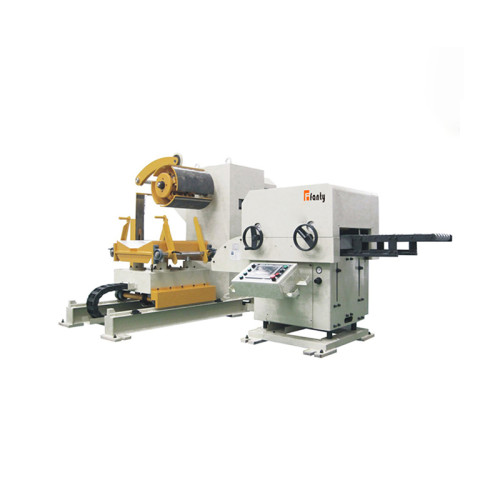
For a custom-built NC Straightener Feeder or a complete 3-in-1 decoiler straightener feeder line, a 30 percent deposit with the balance against the shipping documents is a widely accepted structure.
Be cautious when a supplier asks for more than half the value before production starts.
A reputable factory with an existing customer base does not need your deposit to fund its operations, and FANTY, with its 45,000 square meter plant and 370 employees, builds standard coil feeding equipment against normal deposits because it has the working capital to do so.
The safest position for a buyer is a small enough deposit to be acceptable, and a large enough balance to keep the supplier motivated through production, inspection, and shipment.
When a Letter of Credit Is Worth the Cost
A Letter of Credit adds bank charges on both sides and takes time to arrange, but it is worth considering when the order value is high, when you are buying from a new supplier, or when your company policy requires document-based payment.
That said, an L/C does not guarantee the machine quality. It guarantees documents.
The practical way to protect quality is to combine an L/C or balance payment with a pre-shipment inspection: a video walk-around of the machine running at the rated speed, a check of the CE certification, and confirmation of the feeding accuracy before the container is sealed.
FANTY routinely provides factory test videos and third-party inspection support so that buyers can confirm the NC servo feeder and straightener performance before balance payment falls due.
Red Flags in Payment Requests
Most payment problems come from a small number of repeatable patterns.
Another quiet red flag is an unusually cheap price combined with demanding terms. Equipment that undercuts every comparable quotation by 30 percent is usually cutting something invisible: thinner steel frames, weaker servo drives, no genuine CE testing, or no after-sales support.
A fair price for a quality NC Straightener Feeder is one that lets the factory pay for real components, real engineers, and real warranty service, and the payment terms should reflect that balance rather than fight it.
A Safe Payment Checklist for Your Next Order
- Agree on the deposit level in writing before production starts, typically 30 percent for standard equipment.
- Define exactly what triggers the balance payment: inspection report, test video, or Bill of Lading copy.
- Confirm the machine specification, CE certification, and spare parts list in the same contract as the price.
- Verify the supplier bank account matches the company name and keep all documents in writing.
- Arrange a pre-shipment inspection or a live video test of the NC Straightener Feeder running at speed.
- Clarify the warranty period and which freight terms (FOB, CIF, EXW) apply before you sign.
Frequently Asked Questions
What deposit percentage is normal for an NC Straightener Feeder order?
Most international suppliers ask for around 30 percent as a production deposit, with the balance due against the shipping documents or after pre-shipment inspection. Fully custom lines may require more because special tooling cannot be reused for other buyers.
Is it safe to pay 100 percent of an NC Straightener Feeder cost in advance?
It is not recommended. Paying everything upfront removes your leverage if the machine is delayed or does not match the specification. Keep a meaningful balance tied to production completion, inspection, or shipment so the supplier stays motivated.
What is the difference between T/T and L/C payment?
With T/T you transfer funds directly to the supplier, usually in two or more installments. With an L/C, your bank guarantees payment to the exporter against compliant shipping documents. L/C gives stronger document control but adds banking fees and lead time.
Can I inspect the NC Straightener Feeder before paying the balance?
Yes. Reputable manufacturers such as FANTY support pre-shipment inspection and provide factory test videos showing the machine running at rated speed and accuracy. Agree on the inspection method in the contract so both sides know what to expect.
What freight terms should I use when buying coil feeding equipment?
FOB (Free on Board) and CIF (Cost, Insurance and Freight) are the most common for press shop equipment. FOB gives you more control over the shipping agent, while CIF lets the supplier arrange freight and insurance. Choose based on your experience with local customs and logistics.
Related reading
- how much floor space a coil line needs
- how to select the right model
- what each specification line really costs
Part of the the coil line guide library — the full library of coil handling, straightening and feeding guides from FANTY.
Get a transparent quotation with fair payment terms
FANTY has supplied coil feeding equipment to stamping plants in 60+ countries for 12 years. Our sales engineers will send a detailed quotation, payment structure, and machine specification with no hidden clauses.
Send Inquiry to FANTY