What Does a Coil Line Electrical Hook-Up Really Cost?
A 41 kW coil line needs a 48 A supply, a cable run, a panel, an earth and an electrician. On a 30-metre run in an existing bay that package costs less than 3% of the machine price.
Move the same line to a new building 120 metres from the substation and the hook-up can reach 9%. The machine is identical; the coil line installation budget is not.
Start With the Nameplate, Not the Building
Every quote should carry a connected-load table. Ask for it before anyone walks the bay with a tape measure.
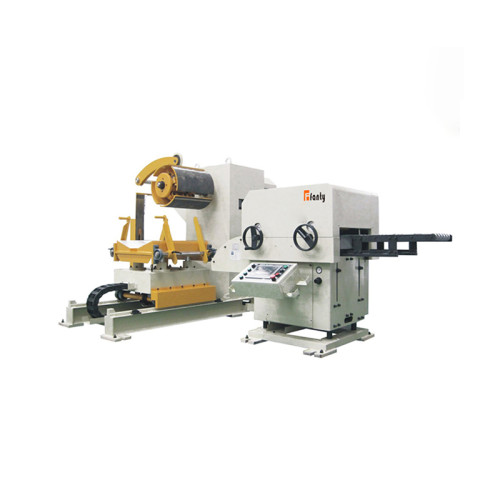
A typical 600 kN line lists a 5.5 kW decoiler, a 15 kW straightener, a 7.5 kW feed drive, 11 kW of hydraulics and about 2 kW of controls. That is 41 kW connected.
Connected load is not demand. Nobody runs the straightener, the hydraulics and the feed drive at full torque at the same instant, so a diversity factor of 0.6 to 0.7 is normal.
At 0.65 the design demand is 27 kW. Divide by a power factor of 0.85 and the supply has to deliver about 31 kVA.
That kVA figure is what the electrician sizes cable and protection against. Quoting a machine in kW and a supply in amps is where the first mismatch appears.
Ask the supplier for the kVA at the terminals, not the sum of motor ratings. The difference between the two is the power factor and the control transformer.
Two entries in that table matter more than the rest: the largest single motor and the simultaneous peak. A 15 kW straightener starting direct-on-line draws five to six times its rating for a fraction of a second.
That peak is what trips a shared breaker, and it is why soft-start or a star-delta arrangement changes the supply requirement even when the kVA figure does not move.
Four Cost Lines Arrive With the Cable
Most buyers budget for the machine and the freight, then treat power as a site detail. It is four separate purchases.
| Cost line | What it buys | Where it costs you |
|---|---|---|
| Supply capacity | Spare kVA at the board or a dedicated transformer | A 63 kVA step-down unit adds a lead time of 6 to 10 weeks to a project that was quoted at 12 |
| Cable and containment | Copper section, tray, glands, labour | Cost scales with the run, not the machine, so a relocated bay can double it |
| Panel and protection | Isolator, breakers, RCD, control interlocks | Local rules on isolation and lock-off differ, and the supplied panel may not comply |
| Earthing and bonding | Earth electrode, bonding of frame and tray | Resistance testing fails late if the slab is already poured |
Add commissioning labour as a fifth line even though it is not hardware. An electrician and a controls engineer on site for three days is a real number.
In Western Europe and North America, a 30-metre run with tray, panel and earthing commonly lands between 6,000 and 12,000 EUR installed. At 120 metres the same scope can reach 20,000 EUR.
Those ranges move with local labour rates, so treat them as a shape rather than a quote. The ratio between the short and long run holds in most markets.

What 100 Metres of Cable Does to the Number
Voltage drop is the quiet line item. A cable sized for current alone will still lose volts over distance, and a drive that sees 355 V instead of 380 V trips on undervoltage under load.
The usual design target is 3% at the machine terminals, with 5% total from the origin of the installation. Beyond that, starting current on the hydraulic pump pulls the bus down further.
For a 48 A load at 380 V, a 4 × 16 mm² copper cable is comfortable at 30 metres. Stretch the same cable to 100 metres and the drop passes 3%.
Going to 4 × 35 mm² fixes the drop and adds roughly 900 EUR of copper at current prices, before the larger glands and a wider tray.
Aluminium is cheaper per metre and needs one size up for the same drop. It also needs bimetallic lugs, which site electricians in some regions refuse to fit.
Ask the supplier for the terminal tolerance band. Most drives accept ±10%, which sounds generous until a weak supply and a long run both lean the same way.
Ask the supplier for the terminal tolerance band. Most drives accept ±10%, which sounds generous until a weak supply and a long run both lean the same way.
Cable is also the one electrical item a buyer can price before the machine arrives. Measure the run, add 15% for routing, and ask two contractors for the same scope.
Quotes that differ by 40% on identical scope usually differ on whether tray, glands and terminations are included. Normalise the scope before comparing the number.
Where 380 V Meets a 480 V Plant
Voltage mismatch is the most expensive surprise in the list, because it is usually discovered after the machine has shipped.
A 380 V 50 Hz machine landing in a 480 V 60 Hz plant needs a step-down transformer. A 63 kVA unit costs 4,000 to 7,000 EUR and occupies floor space near the line.
Frequency is the second half of the problem. A 50 Hz motor on a 60 Hz supply turns 20% faster, so every gear ratio and cam timing in the line shifts with it.
Modern lines with vector drives absorb most of that in software. Lines with fixed-speed hydraulics and mechanical cam timing do not, and the fix is a pulley change or a new motor.
Ask two questions in the enquiry: what voltage and frequency the machine is built for, and whether the drives are rated for both. The answer belongs in the contract, not in an email.
| Site supply | What the line needs | Where it costs you |
|---|---|---|
| 400 V 50 Hz | Direct connection, drives set for 400 V | Nothing, if the panel is built to local practice |
| 480 V 60 Hz | 63 kVA step-down transformer | 4,000 to 7,000 EUR, floor space and a 6-week lead time |
| 380 V 50 Hz at 5% low | Drives derated, cable one size up | Undervoltage trips on the hydraulic start |
| 208 V 60 Hz | Step-up transformer for a 380 V machine | Current roughly doubles, so cable and panel both change |
Ask two questions in the enquiry: what voltage and frequency the machine is built for, and whether the drives are rated for both. The answer belongs in the contract, not in an email.
The Case the Model Cannot Price
The percentages above describe a line dropped into an existing bay with spare capacity at the board. That is the easy case and it is not universal.
Utility connection fees are outside the model entirely. A new service from the grid can cost more than every item on the list above, and the lead time is measured in months.
Harmonic distortion is the second blind spot. Once a bay carries several drives, a harmonic study may be required, and the filter or active front end that follows is a five-figure item.
The model also ignores downtime. If the hook-up slips two weeks, the cost of a delayed start dwarfs the difference between a 16 mm² and a 35 mm² cable.
And it assumes the supplied panel suits local practice. Where it does not, the panel is rebuilt on site, which is the single most common overrun on an imported line.
Treat the numbers here as a way to ask better questions, not as a quotation. The only figure that counts is the one from an electrician who has stood in the bay.
Treat the numbers here as a way to ask better questions, not as a quotation. The only figure that counts is the one from an electrician who has stood in the bay.
One more boundary is worth stating plainly. Everything above assumes the plant has a spare way on the main board.
If it does not, the project acquires a switchgear upgrade that costs more than the hook-up and takes longer than the machine build.
Six Clauses to Fix Before Signing
Electrical scope is where purchase orders and site contracts quietly disagree. Six clauses close the gap.
- Connected load schedule. Every motor, its rating and its starting method, attached as an annex.
- Terminal voltage and frequency. Stated as a range the machine must run on, with the drive tolerance.
- Scope split. Who supplies cable, who terminates, who provides the isolator and who tests earth resistance.
- Panel compliance. The standard the control panel is built to, named, not implied.
- Commissioning days. How many are included, what triggers extra days and the day rate.
- Documentation. Wiring diagrams, terminal schedules and drive parameter backups handed over at acceptance.
Each of those six is cheap to write and expensive to argue about later. A supplier who resists them is telling you something about the site visit they plan to skip.
The wider question of which specification lines are worth paying for at all is covered in the coil line guide library, which maps each spec item to its landed cost.
How many kVA does a 200 SPM coil line need?
For a 41 kW connected load at a 0.65 diversity factor and 0.85 power factor, plan on 31 kVA of supply. Add 20% headroom if the same board feeds a second line.
Can a 380 V machine run on a 480 V supply?
Only through a step-down transformer, typically 63 kVA for this size of line. Direct connection destroys drives and voids the warranty on the first energisation.
How much does a 100 m cable run add over 30 m?
Two things: one cable size up, roughly 900 EUR of extra copper, and a larger tray. Installed, the difference is usually 6,000 to 9,000 EUR.
Who pays for the transformer, buyer or supplier?
By default the buyer, because it is site infrastructure. If the supplier quoted a voltage the plant does not have, that is a scope error and worth negotiating before signature.
Where to go next
Electrical scope is one of six cost blocks that sit between a machine price and a working line. The rest are mapped line by line in our coil line knowledge base.
The Coil Line Guide Library