Is a Used NC Straightener Feeder Worth Buying?
I walked into a tool room in northern Indiana last spring to look at a used NC Straightener Feeder listed at forty percent of new price. Nine years old, two shifts a day. The frame was straight, the servo was original, and the decoiler mandrel still turned true within 0.08 mm. What killed the deal was not the iron: the control cabinet ran a discontinued PLC with no spare parts channel, and the OEM had stopped supporting that generation eleven years earlier. We walked. Six months later the shop that bought it was quoted more for a control retrofit than the machine itself had cost.
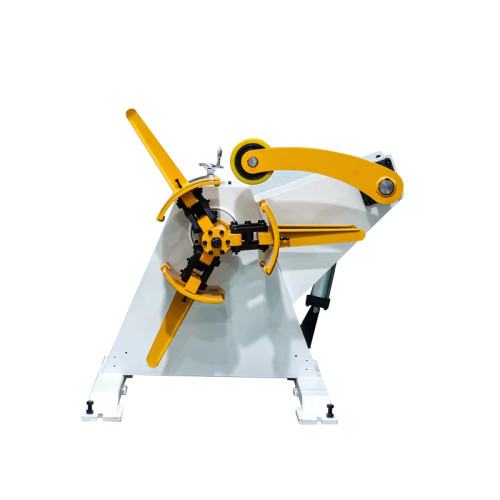
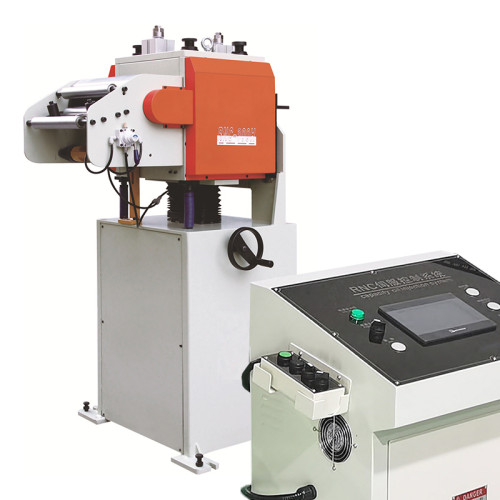
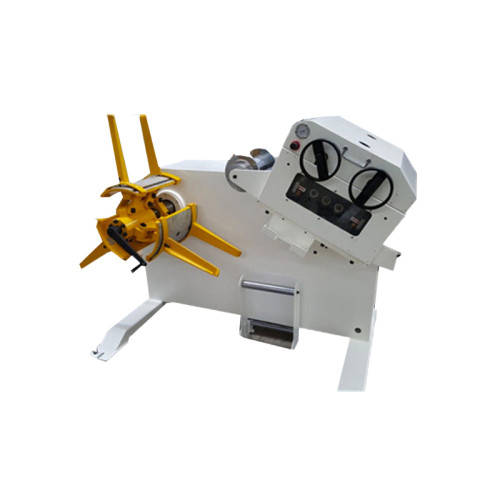
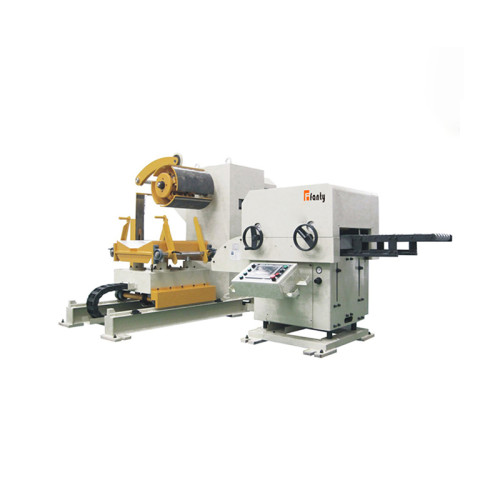
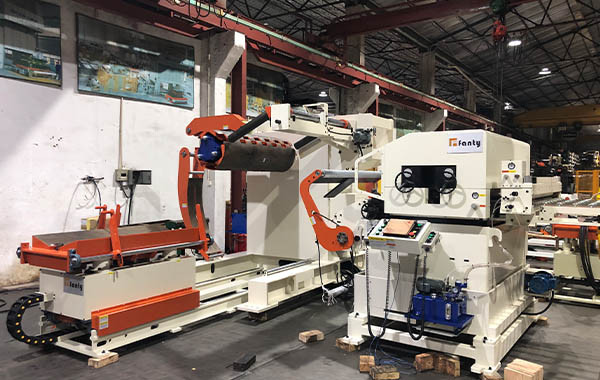
Buying a used NC Straightener Feeder or 3-in-1 decoiler straightener feeder is often the smartest money a stamping shop spends. It is also how shops end up with a machine that eats a maintenance budget for three years. The difference almost never shows up in the asking price. It shows up in the list of parts you replace in the first eighteen months. Here is the sequence I run through a used machine, and the numbers that should decide it for you. If you want a baseline for what a new line includes, our coil feeding equipment range is a fair starting point.
The Price Gap Is Not the Spec Gap
A used machine at 40 percent of new price sounds like a 60 percent saving. It is closer to a 20 to 30 percent saving once you count what you have to put back into it. The honest comparison is not "used price versus new price." It is "used price plus refurbishment plus downtime risk versus new price plus warranty."
Run that arithmetic on a typical 800 mm wide, 3.0 mm capacity line and the picture changes fast. A used unit at 40 percent of new price, needing new straightener rolls, a brake rebuild, a servo drive replacement and a control migration, lands at roughly 75 percent of new price. You have saved a quarter of the capital and taken on a machine with no warranty, a shortened service life and a parts supply you have not verified. That is a legitimate trade, but you should make it with your eyes open rather than because the invoice looked small.
The cases where used wins clearly are narrower than most buyers expect. They are: a machine under six years old from a maker who still supports it, a machine from the same family as equipment already on your floor so spares and knowledge carry over, and a machine you can inspect under power producing your own part. Miss any of those three and the discount has to be much deeper to compensate.
What Actually Wears Out First
Every component on a coil line has a different clock. Knowing which ones are consumable and which ones are structural tells you where to spend your inspection time.
| Component | Typical life | How to check it | Replacement cost |
|---|---|---|---|
| Straightener rolls | 4-8 years | Micrometer the crown at three points; look for a visible flat or polish band | Moderate |
| Feed roll coating | 2-5 years | Measure diameter at both ends; check for glazing or embedded swarf | Moderate |
| Mandrel segments and wedges | 6-10 years | Load a coil and watch for a 0.5 mm-plus radial runout | Low to moderate |
| Brake pads or disc | 3-6 years | Measure loop stability at low speed; listen for chatter on deceleration | Low |
| Servo motor and drive | 8-12 years | Read following error and peak current; compare to the original commissioning log | High |
| Control PLC and HMI | 7-12 years | Check the model number against the maker's active support list | High |
| Frame, base and guarding | 20+ years | Laser or dial-check the pass line against the datum pads | Structural |
Two patterns show up again and again in used-machine inspections. The first is a machine with fresh rolls and a tired control system, which means the seller replaced what was cheap and visible. The second is a machine with a clean cabinet and worn mechanicals, which usually means it sat idle and nobody maintained it because nobody ran it. Neither is disqualifying. Both tell you where the next twelve months of spending will land.
Three Measurements That Decide the Deal
You do not need a full teardown to judge a used machine. You need three numbers, taken with instruments you already own.
The first is pass line repeatability under power. Run the machine at production speed with a representative coil and measure the finished strip position across fifty strokes. A healthy NC servo feeder section holds within 0.10 mm; a worn one drifts 0.3 mm or more, and it usually drifts in one direction, which points at a single worn element rather than general wear. The second is mandrel runout with a loaded coil, taken at the coil face. Anything beyond 0.5 mm total indicated reading means the mandrel needs work before you trust it with narrow strip. The third is straightener roll crown. Pull a straightedge across each roll and feel for a gap; then micrometer the diameter at the ends and centre. A roll that is 0.15 mm smaller at the centre has lost its crown and will fight you on flatness forever.
Write the three numbers down, photograph the instruments, and put them in the offer. Sellers negotiate differently when they know you measured.
The Question Nobody Asks: Support Life
Mechanical wear is visible and negotiable. Electronics obsolescence is invisible and not negotiable at all. Before you commit, call the OEM with the machine serial number and ask four questions in writing: is this model still in the active support list, can you still supply the servo drive, can you still supply the PLC and HMI, and what is the firmware upgrade path. A vendor who answers those four questions in an email has given you something valuable. A vendor who says "we can probably still get parts" has told you the retrofit is coming out of your budget.
One more item worth checking: whether the machine's motion profile and parameter set can be exported. Some older controls store the feed and straightening recipe in battery-backed memory with no export function. When that battery dies, the setup dies with it, and you rebuild it by hand. Ask to see a parameter backup performed on the machine before you buy.
What a Proper Refurbishment Includes
If you buy used, price the refurbishment before you sign rather than after. A credible rebuild on a coil line covers the following, and anything missing from the quote will surface in month four.
- Straightener rolls ground or replaced, with crown restored and runout documented to 0.02 mm
- Feed rolls re-coated or replaced, with the new diameter entered in the control
- Mandrel wedges, segments and springs renewed, with a loaded-coil runout test as sign-off
- Servo drive capacitors and cooling fans assessed, since these fail on age not hours
- Every safety interlock and guard switch function-tested, with the results written into the handover file
- A parameter and recipe backup exported to a file you own, not just to the machine's memory
When Used Is Simply the Wrong Answer
There are three situations where I tell buyers to stop shopping the used market entirely. The first is a new product launch with a hard customer deadline. You cannot absorb an unplanned retrofit when the tooling is already late. The second is a capability step-up, not a capacity step-up. If your current line tops out at 2.0 mm and the new work runs 4.5 mm at 60 strokes a minute, a used machine in the old capacity class will not get you there no matter how well it is rebuilt. The third is narrow strip with tight camber limits. Camber control depends on the relationship between roll geometry, tension and the straightener frame's stiffness, and a frame that has been re-machined twice rarely holds the geometry a 25 mm wide part needs.
Used machines are also where expectations and physics collide on flatness. If your print calls for 0.4 mm total flatness over a 1,200 mm length on 0.8 mm material, buy the machine that was designed for that number, not the one that might reach it after a rebuild.
Structuring the Purchase So You Keep Leverage
Negotiating a used machine is a different exercise from negotiating a new one, because the seller's alternative is a machine sitting in a warehouse. Use that.
Pay a deposit against a documented inspection report rather than against the listing. Make the final payment conditional on a witnessed run producing your part to your print, with the acceptance numbers written into the agreement. Hold back a retention of ten to fifteen percent for thirty days after installation to cover anything the inspection missed. Ask for the maintenance history, not just a verbal assurance, and if there is no history, price the risk into the offer instead of accepting a discount on trust.
We have spent twelve years building coil handling equipment and there are more than 200 of our lines running in plants across the world, so I have seen both sides of this transaction. The buyers who do well on used machines are the ones who treat the inspection as an engineering task rather than a negotiation tactic.
Questions buyers ask about used coil lines
At what age does a used NC Straightener Feeder stop being a good buy?
Age alone is a weak signal. The practical cutoff is when the control platform drops out of active OEM support, which on most platforms lands between seven and twelve years. Past that point you are buying a machine plus a control migration.
Can I inspect a machine that is already disconnected and in storage?
Only mechanically. You can check runout, roll crown and frame geometry without power, but you cannot check feed repeatability, loop control or drive health. Ask for a temporary reconnection and a powered run, or discount the price for the risk you are taking.
How much should I budget for refurbishment on a nine-year-old line?
Plan on 25 to 40 percent of the used purchase price for a thorough job covering rolls, brake, mandrel and control. If the quote comes in below 20 percent, ask what was left out, because something was.
Is a rebuilt machine from a dealer safer than a private sale?
Only if the dealer documents the rebuild scope and offers a warranty on the specific items rebuilt. A dealer warranty that excludes the control system, which is the most expensive failure mode, is not much of a warranty.
What single document should I insist on?
A witnessed acceptance run report with measured feed repeatability, straightener roll runout and loaded-coil mandrel runout, signed by both parties. Everything else can be discussed later; that one page settles most disputes.
Comparing a used machine against new?
Send us your strip width, thickness range and target strokes per minute. We will give you a straight comparison of what a new NC Straightener Feeder delivers against the refurbishment cost of the used unit you are looking at.
Get a side-by-side comparison