Is a Servo Feeder Retrofit Worth It on an Old Press?
An old press with a cam-driven roll feed and a worn clutch is the classic candidate for an NC servo feeder retrofit. The arithmetic usually looks good, and sometimes it is.
The retrofit replaces the feed mechanism, not the press. That is the whole appeal and also the whole limit of it.
Where the payback is real, where it quietly disappears, and what has to be in the contract before anyone orders anything.
What the Retrofit Actually Replaces
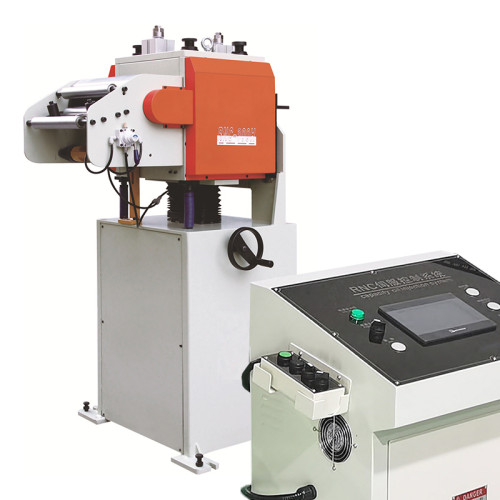
A servo feeder retrofit swaps the feed unit for a servo-driven one and keeps everything upstream of it.
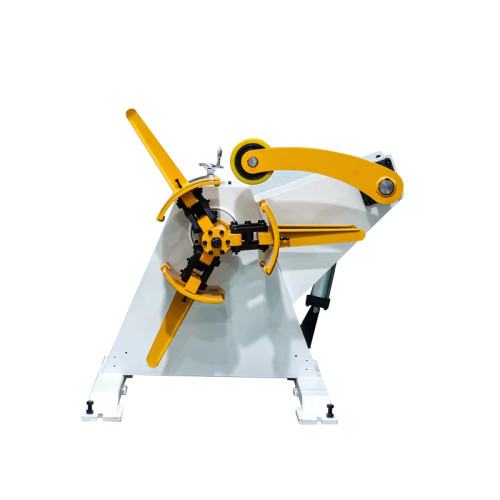
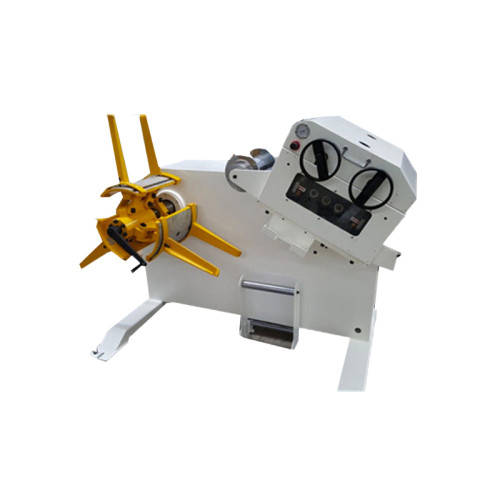
The decoiler stays. The leveling rolls stay, if the press has them. The press frame, the die and the tooling stay.
What changes is how the strip is advanced. Instead of a mechanical cam taking its motion from the press crankshaft, a servo motor drives the feed rolls on a programmed profile.
That single change buys three things. Feed length becomes a number on a screen instead of a gear change. Feed length can differ from job to job without touching the mechanism.
And the feed profile can be shaped so the strip is stationary before the pilot pins enter.
The third one is the real prize. Most of the accuracy gain from a retrofit comes from pilot release timing, not from the servo itself.
Everything else on the line keeps its old problems. A worn decoiler brake is still a worn brake, and a press with 0.3 mm of ram play still has 0.3 mm of ram play.
Where the Money Goes
A retrofit quotation is usually one line item. The project is not. Five cost blocks sit behind it, and only three of them are on the quote.
| Cost Block | Typical Share of Project | Where It Catches Buyers Out |
|---|---|---|
| Feed unit and servo drive | 55 to 65% | Quoted as the whole project; it is not |
| Mechanical adaptation to the press | 10 to 15% | Bracketry and roll height are always custom on a press built before 2005 |
| Control integration and press interlock | 8 to 12% | An old press relay panel may need replacing to accept a feed-ready signal |
| Installation and commissioning downtime | 10 to 20% | Lost production during the changeover is a real cost, and it never appears on a quote |
| Operator and maintenance training | 2 to 4% | Skipped most often, and the reason a good retrofit underperforms for six months |
The fourth row is the one that decides the project in a busy plant. A retrofit that takes nine days of downtime costs more than the machine if the press was running three shifts.
Schedule it against a seasonal lull or a planned die change window. A retrofit done during a quiet week pays back months earlier than the same retrofit done in peak season.

The Payback Arithmetic on a 45 SPM Press
Take a realistic case. A 60-tonne press running 1.2 mm SPCC at 45 strokes per minute, two shifts, 4,000 hours a year, on a progressive die.
The old cam feed holds about ±0.3 mm of feed length and needs a 45-minute gear and cam change for every new job. Scrap runs at 4%.
A servo feeder retrofit holds ±0.05 mm, changes job parameters in under 5 minutes, and typically drops scrap to around 1.5%.
The saving comes from two places. Scrap reduction of 2.5 percentage points on a part worth 0.40 USD, at 45 strokes per minute, is roughly 27 USD per running hour.
Changeover saving is the second. Forty minutes saved on two job changes a week is about 70 hours a year, which at a fully loaded rate of 45 USD per hour is 3,150 USD.
Add them and the annual benefit sits near 110,000 USD on a two-shift basis. A retrofit at 60,000 to 75,000 USD installed pays back in 8 to 12 months.
Change one input and the arithmetic moves. Run a single shift and the benefit halves while the retrofit price does not.
Three questions decide most retrofit projects before the first quotation is opened.
Do you need 2 shifts a day before a retrofit pays back?
Two shifts on a 45 SPM press is the usual threshold. On a single shift the payback stretches past three years and replacement often wins.
Does a servo feeder retrofit need 7 days of downtime?
Budget 7 to 10 working days including commissioning. Anything quoted under 4 days is usually counting installation only, not integration and trials.
Can a retrofit reach ±0.05 mm on a press with worn ram guides?
Not reliably. If the press has more than 0.15 mm of ram play, the feed accuracy gain is capped by the press rather than by the feeder.
The Hidden Costs Nobody Quotes
These five items appear on almost every retrofit we have been called in to finish, and none of them were in the original budget.
- Press control panel upgrades needed to accept a feed-ready and a fault signal
- Guarding and interlock work to bring the modified line back to CE compliance
- Foundation or floor work when the new unit changes the load path into the press
- Replacing the loop pit sensor and wiring when the old cam feed used no loop at all
- Spare feed rolls, because a retrofit machine has a different roll size to the old one
The second item stops more projects than cost does. Modifying a press means the line is no longer as certified, and bringing it back into compliance is not optional in most markets.
Budget the compliance work at the enquiry stage. Discovering it after installation turns a 10-month payback into a 20-month one.
Retrofit or Replace: The Comparison
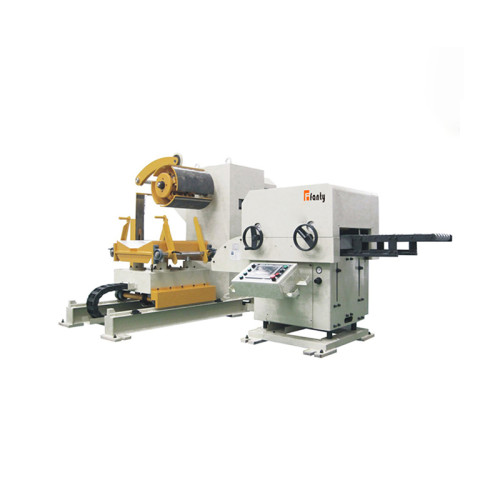
The alternative to a retrofit is not always a new press. It is usually a new feed line, and the two options fail in different ways.
| Option | What It Gives You | Where It Costs You |
|---|---|---|
| Servo feeder retrofit | ±0.05 mm feed length and fast changeover at the lowest capital cost | The press keeps its old ram play, clutch and frame stiffness |
| New feed line on the existing press | New feed unit plus a new decoiler and leveling section | Longer downtime and a bigger foundation job for a press that is still old |
| New press with an integrated feed line | Accuracy, speed and reliability all renewed together | Three to five times the capital, and a full production stop during installation |
| Do nothing, buy the parts out | No capital at all | Scrap rate and changeover cost stay on the books, and the gap widens each year |
The second row is the option plants choose when the press is sound but the feed and decoiler are both tired. It costs more than a retrofit and less than a new press.
The fourth row is more common than anyone admits, and on a part with 4% scrap it is the most expensive choice on the list.
When a Retrofit Is the Wrong Spend
A retrofit is a good answer in most plants and a poor one in four specific situations.
When the press is near the end of its life. Spending 70,000 USD on a press that will be replaced in three years is a write-off, not an investment.
When the ram guides are worn. Feed accuracy is a system property. A feeder holding ±0.05 mm cannot compensate for 0.2 mm of ram play at the die.
When the die is the problem. If scrap is coming from a die that is not shimmed correctly, the feeder will hold its tolerance and the scrap rate will not move.
When the volume is low and the changeover count is high. A retrofit shines on long runs with occasional changeovers. On a plant running twenty short jobs a week, the changeover gain is real but the payback is thin.
There is a fifth case that is harder to argue and just as common. If the plant has no one to own the new control, the retrofit will run below its capability for as long as that stays true.
The honest framing is this: a retrofit buys feed accuracy and changeover speed. It does not buy a new press, and it does not fix a die.
What to Put in the Retrofit Contract
Four clauses separate a retrofit that performs from one that runs below specification for a year.
Name the feed length accuracy at a stated speed and material. Write it as ±0.05 mm at 45 SPM on 1.2 mm SPCC, and state where it will be measured.
State the compliance scope explicitly. Who supplies the guarding, who signs off the interlock, and who confirms the modified line against the applicable directive.
Fix the acceptance trial conditions. Material, die, feed length, speed and the number of strokes the trial will run before sign-off.
Require a parameter backup and a training session. A servo feeder that only one person can set is a single point of failure for the whole line.
With those four in place, the payback calculation you made before the order is the one you will actually measure after commissioning.
FANTY has been building and retrofitting these lines for twelve years, and the projects that hit their numbers are the ones with a written acceptance trial.
How to Prove the Payback Before You Buy
You can validate the arithmetic in one week without buying anything, and it is worth doing.
Measure the current feed length variation over 200 strokes with a dial indicator against a fixed stop. Log the actual figure rather than the nominal tolerance.
Count the real changeover time on the next five job changes. Use a stopwatch, not the standard time from the route card.
Measure the scrap rate on the same five jobs and convert it to parts per hour, not to a percentage. Parts per hour converts cleanly into money.
With those three numbers, the payback calculation uses your plant rather than an assumption.
Half the retrofits we review turn out better than expected; the other half turn out to be a replacement project in disguise.
The wider picture of how each specification line drives cost, including the ones that are rarely worth paying for, sits in our coil line knowledge base.

Where to go next
Feed accuracy, retrofit economics and press-side integration belong to the same cluster. This article sits under it, one layer below the specification overview.
The Coil Line Guide Library