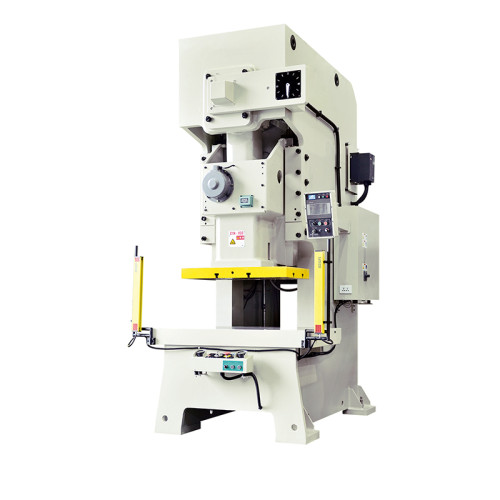
How to Move a Coil Line to a New Plant
Moving a plant is a project with a schedule, a budget and a foreman. Moving a coil line inside that project is a different task, and it usually gets neither the schedule nor the budget.
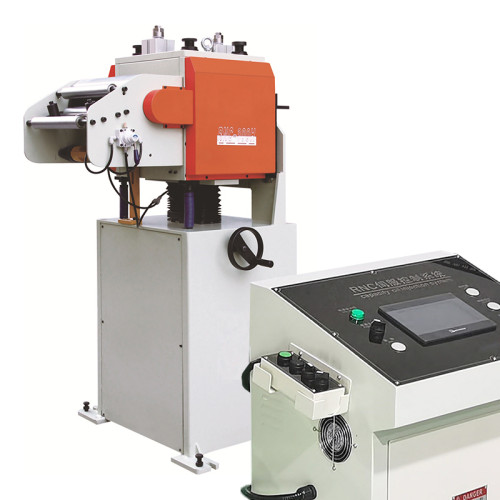
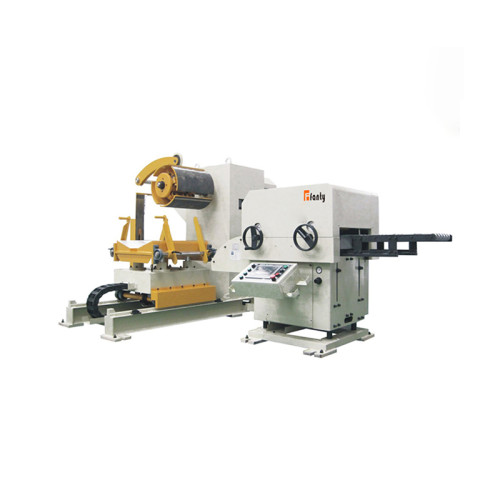
An NC straightener feeder is three machines on one base, aligned to a tolerance measured in hundredths of a millimetre, then bolted to a slab that took a week to cure.
Take it apart, move it 400 kilometres and put it down on a new floor, and the alignment you had is gone. The work is to get it back in a predictable number of days.
What Moves and What Should Stay Behind
The machine moves. The foundation does not, and neither do the anchor bolts, the shims or the grout.
Plan for new anchor bolts and new shims as a line item. Reusing bolts pulled out of a slab is false economy and a common cause of a loose base six months later.
Electrical panels move, but the cable between them usually should not. Cable aged by ten years of plant heat is cheaper to replace than to pull through a new tray.
Hydraulic hoses are the third item. A hose that has held pressure for a decade will often fail within a month of being re-routed, because the bends fall in new places.
Anything with a rubber element is a candidate for replacement: mounts, couplings, seals. They travel badly and they age faster than the steel around them.
Write that list before the rigger quotes. It changes the scope from a transport job to a refit, and the quote should reflect that.
A move is also the moment to replace what you have been meaning to replace. Doing it in the new building avoids paying for rigging twice.
Keep one crate for every small part that comes off. Bolts, keys, shims and sensor brackets fit in a single box and none survive a loose parts bin.
The Week Before: Three Measurements That Decide the Rigging Plan
Measure the door. Not the widest door, the narrowest opening on the route, including any ramp or step that changes the clearance.
Measure the heaviest lift. A 3-in-1 unit at 1,300 mm can run 9 to 14 tonnes, and that number decides crane size rather than truck size.
Measure the new bay. Length, width, headroom under any crane, and the distance from the door to the final position.
Those three numbers decide whether the line travels assembled or broken down, and they decide it before anyone prices a crane.
Add a fourth measurement that is easy to forget: the slab cure time in the new building. Anchors set in green concrete will move.
Check the new slab's flatness before the machine arrives. A 4 mm dip over three metres becomes a pass line problem no adjustment removes.
Let the machine sit overnight on the new floor before final levelling, especially after travelling in cold weather.
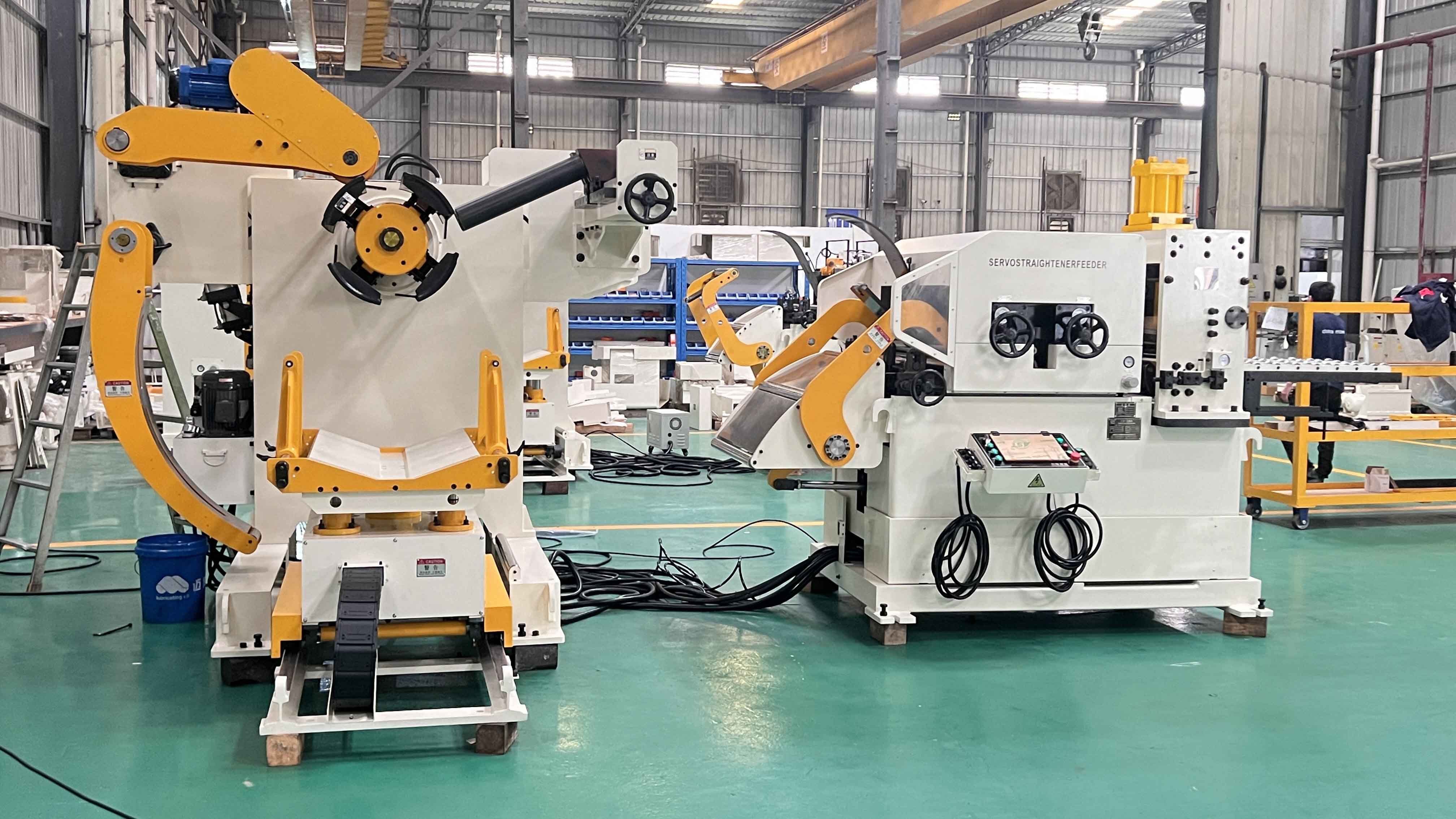
Breaking the Line Down Without Losing the Alignment Record
Before a single bolt comes out, record the alignment. Straightedge gaps at the decoiler, pass line height, and shim stacks under each pad.
Photograph every pad with its shim stack still in place and a tape measure in frame. That single set of photographs saves a day of guessing at the other end.
Mark the roll positions, guide positions and brake settings with paint before disassembly. Settings that look obvious in a lit shop are not obvious in a new building.
Label every cable at both ends with the same tag. A hundred cables labelled at one end only is a two-day puzzle.
Remove the rolls and pack them separately if the line travels by road. Rolls left in a frame that flexes on a truck bed take a set that shows up as flatness error.
Photograph the electrical panel before a single wire comes out. Terminal numbers photographed in place beat any drawing.
Rigging chains should never touch a machined surface. Soft slings at every contact point, and a spreader bar above 6 tonnes.
Rigging Options and What Each Costs You
Three broad approaches, and the cheapest one is rarely the cheapest once downtime is counted.
| Approach | Typical cost driver | Downtime | Where It Costs You |
|---|---|---|---|
| Assembled on a low-bed | Crane at both ends, permits | 3 to 5 days | Any overhead obstruction can stop the move |
| Broken down to modules | Rigging labour, re-alignment time | 7 to 10 days | Alignment record has to be rebuilt from measurements |
| Container, sea freight | Packing, crating, port handling | 5 to 8 weeks | Moisture damage and a long window with no machine |
| Hire a temporary line | Weekly rental plus installation | None | Rental cost usually exceeds the rigging saving |
The assembled option is only viable when the route allows it, and the route almost never allows it in a leased industrial unit.
Ask the rigger for a route survey in writing, with the height and width at every tight point. Verbal assurances cost nothing and prove nothing.
Broken-down moves are the default for a reason. The extra days are spent on alignment that would have been needed anyway.
Reassembly: What Has to Be Re-Machined, Not Just Re-Bolted
Level the base first, then shim to the pass line, then check the roll alignment. In that order, because each step depends on the one before.
Grout comes after levelling, not before. Grout under a base that is already out of level simply locks the error in place.
Keep the old shim stacks in a labelled bag. They are the best evidence of what the machine needed on the previous slab.
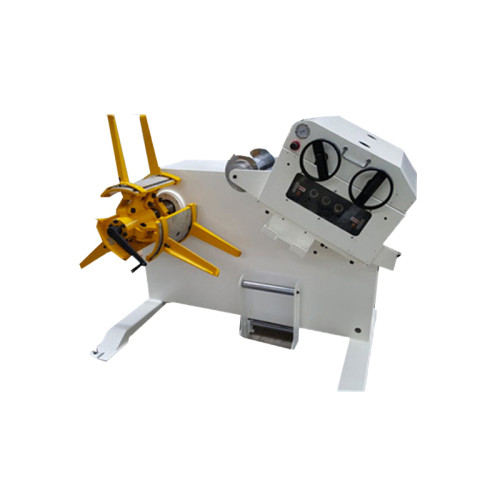
Check the coupling alignment between decoiler and straightener with a dial indicator, not with a straightedge. The tolerance is typically 0.05 mm.
Run the line empty for an hour before running strip. Temperature stabilises the frame and reveals anything that moved in transit.
Then run a strip sample and measure flatness before the die, exactly as you would for a new machine acceptance.
Keep the alignment record with the machine's own file, not the project file. The next move will need it and the project file will be gone.
Plan a spare day. Every move finds one thing that does not fit, and a schedule without slack turns that into a week.
- Level base and record shim stacks at every pad, with a photograph of each one.
- Check pass line height against the old plant record, not against the die alone.
- Dial-indicate the coupling between decoiler and straightener to 0.05 mm.
- Run empty for an hour, then run strip and measure flatness before the die.
- Re-torque anchors after the first week of production, because new grout settles.
Where a Move Kills the Machine
A frame that was shimmed to correct a machining error in the original build will not repeat that alignment on a new slab.
Rolls that were reground in place cannot be re-reground without the original setup, and a move usually destroys that setup.
Machines over fifteen years old often have stress locked into the base by their original anchor pattern. A new pattern releases it, and the frame moves.
And a move does not restore a worn machine. A line that was at 70 percent of its original capability arrives at 70 percent, on a better floor.
Budget the move as a relocation, not as a rebuild. If the machine needs a rebuild, do it in the new building and plan the downtime accordingly.
Tell the insurer before the machine moves. Machinery in transit needs cover that a general plant policy often excludes.
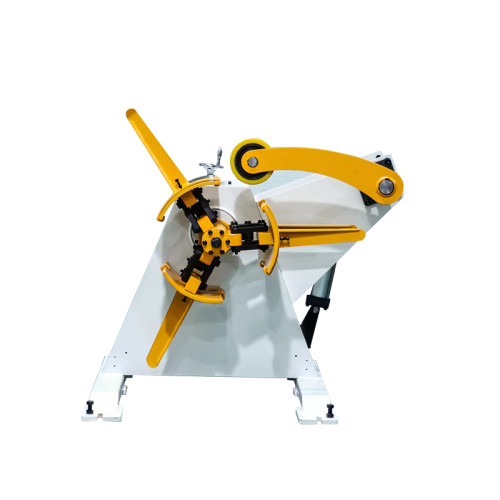
The coil line range lists machine weight and overall dimensions per model, which is the data a rigging quote actually needs.
Where to go next
Relocation is a specification problem as much as a logistics one.
The capacity and coil range guide covers what has to be recorded on the machine before it is ever moved, which is the document most plants wish they had.
The Coil Line Guide LibraryHow long does it take to move a 3-in-1 coil line?
Seven to ten working days when broken down to modules, including re-alignment. Assembled moves run three to five days if the route allows it.
Does a coil line need re-grouting after a move?
Yes. The old grout stays with the old slab. Budget new grout and a 72-hour cure before anchors are torqued.
Can the original anchor bolts be reused?
Not safely. Pulled bolts do not repeat their torque and rarely sit within 1 mm of the new hole positions.
Is 0.05 mm the right coupling tolerance after a move?
0.05 mm at the decoiler-to-straightener coupling, and 0.5 mm per metre on pass line over the line length.
Is it cheaper to buy a new line than to move an old one?
Only if the old machine is below 60 percent of its original capability. A move costs 8 to 15 percent of replacement value.
How long before the line runs production again?
Allow two weeks from arrival to first good part on a broken-down move, and four weeks if the electrical installation is new.