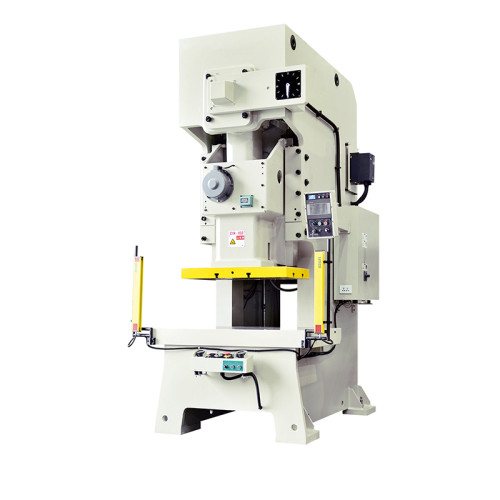
How to Justify an NC Servo Feeder Upgrade with Numbers?
Every equipment proposal eventually meets the same question from management: show me the numbers. An NC servo feeder upgrade is easy to justify emotionally, because everyone knows automatic feeding beats manual or pneumatic feeding, but emotional justification does not survive a budget review.
What survives is a calculation: this upgrade costs this much, and it saves this much per month through scrap, uptime, labor, and energy, so it pays back in this many months.
This guide shows you how to build that calculation honestly, with the specific saving categories that apply to coil-feeding upgrades and a worksheet you can fill with your own plant's numbers.
The method matters more than the result. If you quantify each benefit separately, document your assumptions, and present the payback alongside the risks, you give decision-makers a case they can defend to their own management, which is what actually gets budgets approved.
Do not forget the softer benefits that support the numbers even when they resist precise valuation. Consistent automatic feeding reduces the variation between operators, so a line that previously produced differently on each shift now produces the same quality on every shift.
That consistency has a value in customer confidence and in fewer quality disputes, and while it is hard to put on the same worksheet as scrap, it is often the reason the plant manager pushed for the upgrade in the first place.
Present these benefits as the context around the calculation rather than padding the numbers with them, and the case becomes both rigorous and human.
The Four Saving Categories
A servo feeder upgrade creates value in four measurable categories, and each one needs its own calculation.
- Scrap reduction. Better feed accuracy means fewer short feeds, fewer misfed parts, and less material wasted.
- Uptime gain. Fewer feeder-related stops and faster changeovers add running time to every shift.
- Labor saving. Automatic feeding removes the operator from the feeding task, freeing time for quality and setup work.
- Energy and tooling cost. Consistent feeding reduces die wear and the energy wasted on stops and restarts.
Not every category applies to every plant.
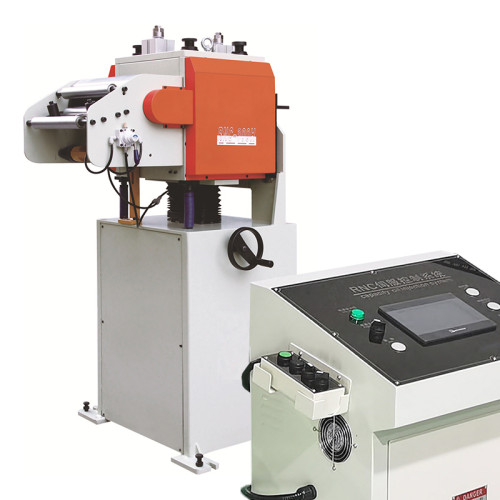
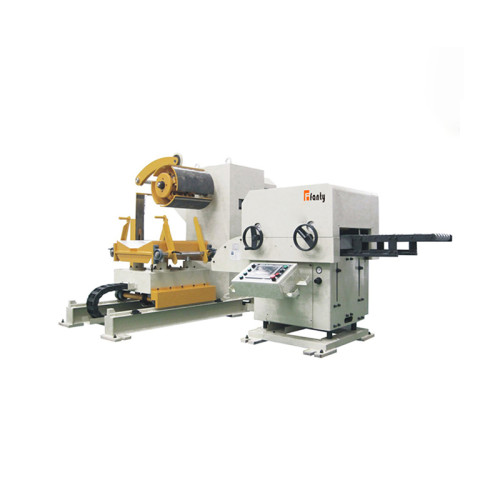
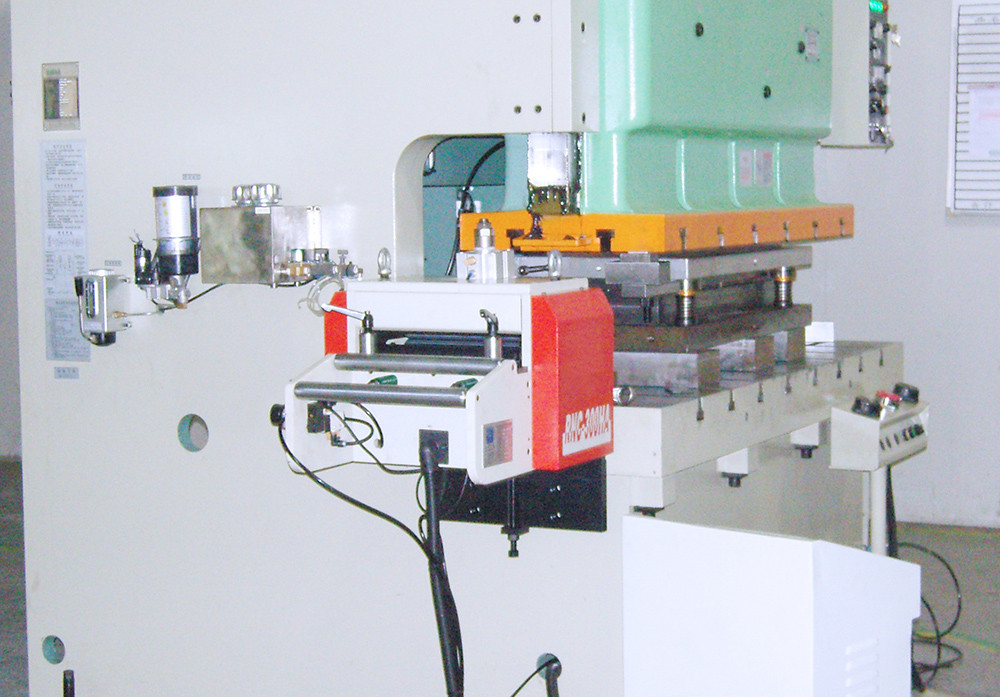 servo feeder works with puncher
Scrap Reduction: The Calculation
Start with your current scrap rate and the value of the material being scrapped. A realistic starting assumption for a line moving from manual or pneumatic feeding to servo feeding is a scrap reduction of one to three percentage points, but measure your own baseline first.
Example: a line runs 8,000 kilograms of strip per month at an average material cost of 1.20 dollars per kilogram, with a current scrap rate of 6 percent. Scrap currently costs 8,000 x 0.06 x 1.20, about 576 dollars per month. Reducing scrap to 4 percent cuts that to 384 dollars, a monthly saving of 192 dollars.
Across twelve months that single category is worth about 2,300 dollars, before counting the labor that was spent sorting and reprocessing the scrap.
| Saving category | Monthly saving example | How it was calculated |
|---|---|---|
| Scrap reduction (6% to 4%) | 192 | 8,000 kg x 2% x 1.20 / kg |
| Uptime gain (30 min/day) | ~480 | 15 hours/month x 32 dollars/hour contribution |
| Labor (0.5 operator/shift) | ~600 | Half an operator's loaded cost on two shifts |
| Die wear and energy | ~150 | Longer die life and fewer stop-restart cycles |
| Total estimated saving | ~1,420 per month | Sum of the four categories |
Adjust every line to your own numbers. The structure is what matters: each saving is a separate, defensible line, and the total is the machine's monthly value.
Uptime and Changeover: Often the Biggest Number
For many shops, the largest benefit is not scrap but time. A servo feeder with recipe storage changes jobs in minutes instead of the half hour that a mechanical setup requires, and it eliminates the micro-stops that pneumatic feeders cause at speed.
Quantify it like this. Count the job changes per month and multiply by the minutes saved per change. Add the minutes of feeder-related stops that would be eliminated.
Convert the total minutes into hours, and multiply by the contribution margin of the line per hour, which is the revenue from the parts minus the variable costs. This number is often larger than the scrap saving, because an hour of a busy stamping line is worth far more than the material it consumes.
Be conservative in the assumption. If the line is rarely the bottleneck, an hour saved on the line may not become an hour of extra parts, because the constraint is downstream. In that case, value the time as cost avoidance rather than added revenue, which is still a real number but a smaller one.
Labor: The Honest Count
Labor saving must be counted carefully, because automation rarely eliminates a whole job. What a servo feeder usually eliminates is a portion of an operator's attention: the operator no longer stands at the feeder watching the strip, and can run additional machines, inspect parts, or manage the die area.
Count the labor saving as the fraction of an operator's loaded cost that the upgrade frees. If one operator previously watched the feed on a line and can now handle the line plus a second machine, the saving is half an operator per shift.
Multiply by the loaded hourly cost, which includes wages, benefits, and overhead, not just the base wage. If the freed time is used to run more machines and make more parts, count it as added revenue; if it simply makes the work less stressful, count it as cost avoidance or not at all.
The Payback and the Presentation
Once the monthly saving is estimated, the payback period is the total installed cost divided by the monthly saving. If the installed cost is 45,000 dollars and the monthly saving is 1,420 dollars, the payback is about 32 months. Compare that with the machine's expected life of fifteen or more years, and the investment returns many times over.
When you present the case, show the calculation, the assumptions, and a sensitivity check: what happens if the scrap saving is half the estimate, or if the labor saving does not materialize? A proposal that survives its own pessimistic case is the one management approves.
Also present the non-financial benefits briefly, quality consistency, operator safety, and the ability to run jobs the current equipment cannot handle, as supporting arguments rather than the main case.
Frequently Asked Questions
What is a typical payback period for an NC servo feeder upgrade?
On a busy line with measurable scrap and changeover savings, payback is commonly 18 to 36 months. On a lightly loaded line the payback stretches, which is why the calculation must use your own production numbers rather than a general claim.
Do I need to include installation and training in the cost?
Yes. The payback calculation must use the total installed cost: machine price, freight, installation, commissioning, training, and any foundation or electrical work. Leaving out these costs flatters the payback and weakens your credibility.
How do I get a reliable scrap baseline?
Use the recorded scrap from the last three to six months rather than a single month, because scrap varies with the job mix. If records are poor, run a two-week measurement of the actual scrap weight and count before the upgrade.
What if my line is not the bottleneck?
Value the time savings as cost avoidance rather than added revenue, and be honest about it. The upgrade still reduces cost and improves quality, but the payback will be longer, and the proposal should say so.
Should I include the feeder's ability to run new jobs?
Yes, as a separate line if you can quantify it. If the servo feeder lets you quote work that the current equipment cannot feed accurately, estimate the annual revenue from that work and present it as an opportunity, clearly separated from the cost-saving calculation.
Related reading
Part of the the coil line guide library — the full library of coil handling, straightening and feeding guides from FANTY.
Build Your Own Servo Feeder Business Case
FANTY will help you quantify the value of an NC servo feeder on your line, with the accuracy data, changeover comparisons, and a quotation you can use directly in your payback calculation. Send us your current scrap rate, job-change frequency, and line utilization.
Request a Payback AnalysisFanty · NC Straightener Feeder
Still Fighting Strip Memory After Straightening?
Send the strip thickness, material grade and target flatness. We specify roll diameter, roll count and NC feed pitch so the line holds tolerance from the first coil, not the fiftieth.
Get a Free QuoteFANTY Machinery · 13 years on stamping automation · 2,000+ coil lines installed · engineers reply within 24 hours