How to Compare Two Coil Line Bids With Different Specs?
Two quotations for the same coil line landed on the same desk, one at $214,000 and one at $272,000.
The part was identical on both: 1.2 mm SPCC, 320 mm wide, 42 strokes a minute, a 400-tonne press.
Five lines on the two specification sheets did not match, and none of them was the machine frame.
The $58,000 gap sat almost entirely in scope that neither buyer nor supplier had agreed to price the same way.
That is the normal condition of coil line buying. Suppliers quote what they build, not what you asked for.
Normalising the two bids takes about three hours, and it usually changes the ranking.
Why Two Bids on the Same Part Land $58,000 Apart
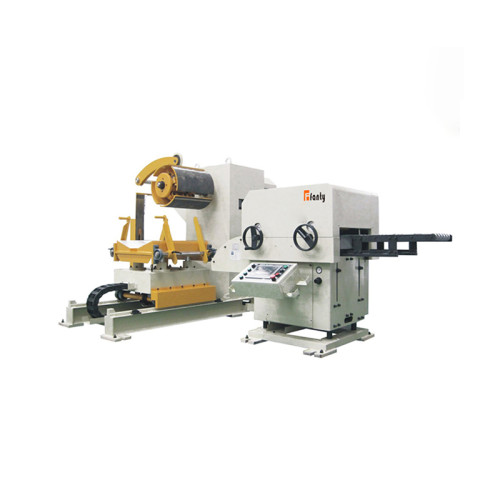
A coil line is sold as a system and priced as a list of modules. Two suppliers can both answer your drawing and still deliver different machines.
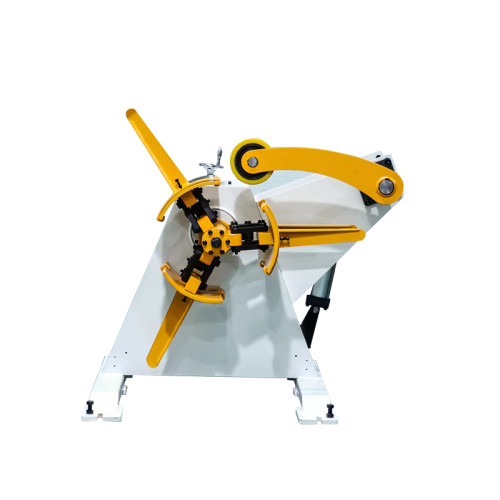
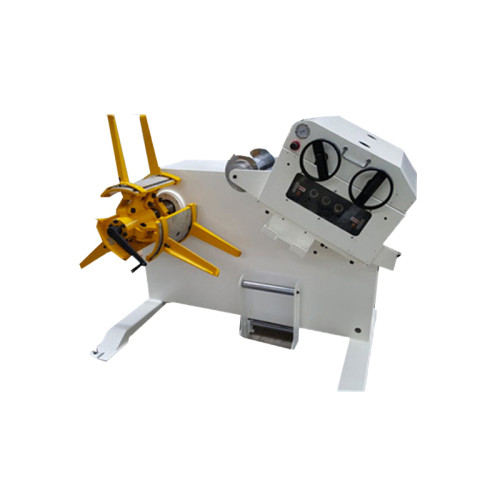
One quotes a 7-roll leveler, the other a 9-roll. One includes a coil car, the other expects your forklift and your operator.
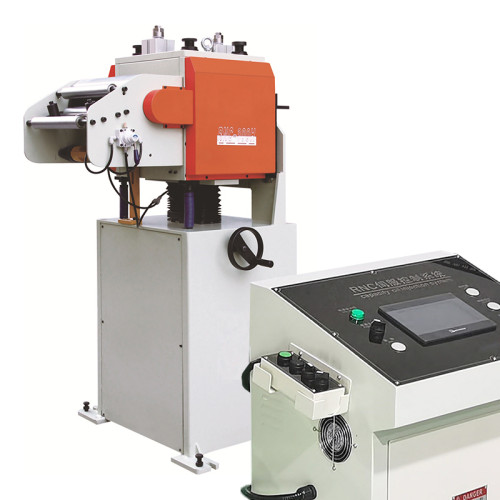
One prices a servo control with a 15-inch screen, the other ships a PLC with a 7-inch screen and calls it standard.
None of that is dishonest. It is what happens when the enquiry describes a part instead of a duty.
The gap widens on items nobody photographs: spare roll sets, commissioning days, training, and the freight term.
A 27 percent spread is roughly the range between a fully specified build and a stripped one. It is not a discount.
Treat any gap under 10 percent as two suppliers agreeing on scope. Above 20 percent, assume the scope differs until the sheet proves otherwise.
- Leveler geometry. Roll count and roll diameter set what flatness you can hold, and they are the hardest items to change later.
- Control platform. Axis count, encoder type and HMI size decide how much of the setup your operator can do without a technician.
- Coil loading. A car, a ramp or a forklift changes cycle time, headcount and the foundation drawing.
- Guarding and CE file. Two copies of the risk assessment cost little at the factory and a lot from a consultant at your site.
- Commissioning days. Three days and six days are different projects, not different prices.
Step 1: Put Both Quotations on One Specification Sheet
Build one row per physical function, not one row per supplier heading. Suppliers group their prices differently, and that grouping hides the comparison.
Each row gets four cells: what the function is, what bid A includes, what bid B includes, and what the difference costs you in operation.
| Function | Bid A | Bid B | What the gap costs you |
|---|---|---|---|
| Leveler | 7 rolls, 48 mm | 9 rolls, 42 mm | About 0.3 mm flatter at equal penetration; +$9,000 |
| Control | Servo, 4 axes, 15-inch HMI | Servo, 4 axes, 7-inch HMI | No output difference; 20 minutes more per setup change |
| Coil loading | Coil car included | Forklift, no car | 6 minutes per coil, plus a second operator on wide coils |
| Width capacity | 400 mm | 500 mm | +$12,000 now, zero later unless the next part grows |
| Documentation | CE file, two sets | CE file, one set | $600 to copy; three weeks if the set is lost |
| Commissioning | 6 days | 3 days | 3 days of your electricians at $1,100 a day |
The last column decides the purchase. A price difference is a fact; an operational cost is a forecast you can argue with.
Fill the sheet from the quotation text, not from the sales call. Where a line reads "standard guarding", write it exactly and mark it unverified.
Unverified rows are the ones to send back as written questions. A supplier who answers in writing has committed to a scope. One who answers on the phone has not.

Step 2: Price the Options Each Supplier Left Out
Options are where bids drift, because every supplier decides for itself what belongs in the base price.
Take the cheaper bid and add every option the other bid carried as standard. Then run the exercise in reverse.
The two numbers usually converge, and where they converge is the real market price for that scope.
- Coil car or loading ramp. Frequently quoted as an option and almost never priced into the comparison.
- Spare leveler rolls. A set costs 4 to 7 percent of the machine and saves a two-week stop when a roll is scored.
- Mandrel expansion. Hydraulic against manual changes changeover time and the hydraulic pack on the frame.
- Loop pit steelwork. Civil work that lands on your contractor's invoice, not the machine supplier's.
Price each omission at the supplier's own option rate where you can get it. Where you cannot, use a second supplier's rate and label it an estimate.
Two items on that list cost more after delivery than at the factory, because they touch the frame, the foundation or the hydraulics.
Retrofitting a coil car means new foundations and a re-pour. Retrofitting a hydraulic mandrel means a new mandrel, not a kit.
Anything that touches structure belongs in the first order. Anything that touches software or guarding can wait a year without penalty.
Step 3: Normalise Delivery, Duty and Commissioning
Delivery terms hide more money than most buyers expect. FOB, CIF and DAP differ by freight, insurance, port charges and the customs broker.
On a 12-tonne shipment from Shenzhen to Rotterdam, the spread between FOB and DAP is typically $6,000 to $9,000, plus three to five days of clearance.
Duty is separate again and depends on the tariff code your broker applies. Ask for the code in writing before you compare landed cost.
Commissioning is the second hidden line. Six days of an engineer's time is not three, and neither figure includes your own electricians.
Count your own labour at your own rate. A 400-tonne cell idle for three extra days costs more than the airfare that caused it.
Payment terms shift the comparison as well. Thirty percent deposit against sixty percent is a working-capital difference, not a price difference.
Convert it: on $250,000 at 7 percent, ninety days of extra exposure is about $4,300.
Put every one of these on the sheet in currency. Adjectives do not survive a capital approval meeting.
When a Line-Item Comparison Stops Being Useful
The sheet works when two suppliers solve the same problem with similar architecture. It fails when the architecture differs.
A line built around a loop pit and a line built around a free loop with a dancer are not comparable line by line. The floor plan, the foundation and the control logic all differ.
In that case compare the two concepts on floor space, changeover time and the cost of a wrong part, then compare prices inside the winning concept.
The sheet also misleads when your part will change. A 400 mm line bought for today's bracket is the wrong purchase if the next programme runs 550 mm.
Width, thickness and stroke rate are the three specifications that cannot be cheaply upgraded afterwards. Everything else can be added.
And the sheet says nothing about support distance. A supplier 9,000 km away with a two-week spares lead is a different proposition from one with a regional partner.
FANTY ships to more than 60 countries and keeps a spares list for every line, but a buyer in Brazil still waits for a flight, not for a warehouse.
Price that risk explicitly: one week of downtime a year at your contribution margin, multiplied by the probability you are willing to assign.
What to Put in the Enquiry Before the Next Round
The next enquiry should carry the sheet, not the drawing alone. Give each supplier the same rows and ask for a price against each one.
State the part, the material grade, the coil size and weight, the stroke rate, and the tolerance you will measure at acceptance.
State what you will supply: foundations, power, air, crane, and the labour for unloading.
State what you expect inside the base price: coil car, spare rolls, CE file, training days and commissioning days.
Ask for the tariff code and the freight term in the same document. A bid that cannot state its own landed cost is not a bid yet.
A supplier who will not answer row by row is telling you something useful about how the project will run after the deposit clears.
Model ranges and standard inclusions are listed in the coil line equipment range, which is a faster starting point than a blank sheet.
Each specification line is also priced in the coil line guide library, if you want the arithmetic before the next round of talks.

Can two coil line bids differ by 27 percent without a scope difference?
Almost never. At that spread the gap is normally leveler geometry, coil loading, documentation or commissioning days. A 27 percent discount on identical scope is a margin decision, and margins rarely move that far.
Does a 9-roll leveler really add $9,000 to a 400 mm line?
Typically $8,000 to $12,000 depending on roll diameter and bearing class. It buys about 0.3 mm of flatness at equal penetration, which matters on visible panels and not on brackets.
How many commissioning days should a 400-tonne cell budget?
Five to seven working days including alignment, loop tuning and a first-article run. Three days is enough to power up and prove rotation, not enough to hold ±0.05 mm at production speed.
Is a 3 percent price difference worth changing suppliers?
No. On a $250,000 line, 3 percent is $7,500, which one extra week of commissioning or one scored roll set will consume. Change suppliers over scope, support or lead time instead.
Where to go next
This article sits in the buying cluster, where every specification line is priced against the tonnage it has to earn back.
If the sheet shows a scope gap you cannot price, the pillar page sets out what each line actually costs and which ones can be added later.
Read the specification cost breakdown