How Much Spare Capacity Should a Coil Line Carry?
Twenty-five percent is the number most coil line quotations quietly assume. Nobody writes it down, and almost everybody pays for it.
An NC straightener feeder ordered for a 2 mm job usually arrives rated for 3 mm, and the difference is priced into the machine, the foundation and the power connection.
The question worth asking is not whether headroom is good. It is which kind of headroom is worth buying, because two of the four kinds cost almost nothing and one of them is unrecoverable if you skip it.
Spare Capacity Is Bought Once and Paid For Forever
Capital cost is the visible half. A machine rated for 3 mm instead of 2 mm costs perhaps 18 to 25 percent more, and the foundation grows with it.
The invisible half is running cost. Heavier rolls, a larger motor and a bigger brake all consume more energy per hour whether the line runs 2 mm or not.
A 30 kW drive running at 40 percent load draws more than a 15 kW drive running at 80 percent, because efficiency falls away at light load.
Over ten years and two shifts, that difference is rarely smaller than the capital gap. It simply never appears in the same document.
So headroom has a purchase price and an annual rent. Both belong in the same comparison before either is accepted.
Four Kinds of Headroom, and Only One Is Expensive
Thickness headroom is the first, and it is the one that cannot be added later. Roll diameter, frame stiffness and drive torque all set a ceiling that no field modification moves.
Width headroom is the second. Guide travel and roll face width are fixed at build time, though a wider machine costs less to oversize than a thicker one.
Speed headroom is the third, and it is the cheapest. A larger servo motor and a different pulley ratio cost a fraction of a frame rebuild.
Automation headroom is the fourth, and it is nearly free. An extra input card and a recipe store cost hundreds, not thousands.
Ranked by cost of retrofit, the order reverses: automation, speed, width, thickness. Buy the expensive one first and the cheap one last.
Worked Example: A 1,300 mm Line at Three Headroom Levels
Take a line specified for 1,300 mm by 2.0 mm mild steel at 150 SPM, with a quoted price of USD 210,000 for the 3-in-1 unit.
Ten percent headroom means 2.2 mm and 165 SPM. It costs about USD 12,000 and changes nothing else in the project.
Twenty-five percent means 2.5 mm and 190 SPM. It costs USD 34,000, adds 800 kg to the machine and requires a thicker slab under the decoiler.
Fifty percent means 3.0 mm and 225 SPM. It costs USD 78,000 and pushes the foundation, the crane and the power connection up with it.
| Headroom | Rated thickness and speed | Capital delta | Where It Costs You Every Year |
|---|---|---|---|
| 10 percent | 2.2 mm at 165 SPM | USD 12,000 | Negligible, same frame family |
| 25 percent | 2.5 mm at 190 SPM | USD 34,000 | Roughly USD 1,800 in energy and wear |
| 50 percent | 3.0 mm at 225 SPM | USD 78,000 | Roughly USD 4,600, plus slab and crane |
| 100 percent | 4.0 mm at 300 SPM | USD 160,000 plus | A different building, not a different line |
The tenth-percent row is almost always worth taking. It costs less than the freight on the machine and removes the most common future argument.
The fifty-percent row is worth taking only when a specific contract already exists. Buying it against a hope is how plants end up with a line that runs at 35 percent load forever.
Where Headroom Pays Back Fastest
Headroom pays back when it removes a second machine, a second shift or a subcontract. Those three are the only places it returns capital quickly.
It pays back slowly when it merely reduces cycle time on work you already run, because cycle time is rarely the constraint in a stamping cell.
It does not pay back at all when the bottleneck sits downstream. A faster line feeding a press that cannot keep up simply idles more efficiently.
Before pricing headroom, measure the constraint. If the press, the die or the operator sets the rate, capacity on the coil line buys nothing.
The Headroom That Cannot Be Retrofit
Thickness ceiling is structural. Roll diameter sets the bending moment available to straighten a given section, and a small roll cannot be made larger.
Frame stiffness is the same story. A frame designed for 2 mm flexes under 3 mm loads, and the flex arrives as a flatness error that no adjustment removes.
This is why buyers are advised to oversize thickness and undersize speed, which is the opposite of what most quotations propose.
A machine with too much speed runs slower and survives. A machine with too little thickness cannot be helped by any control setting.
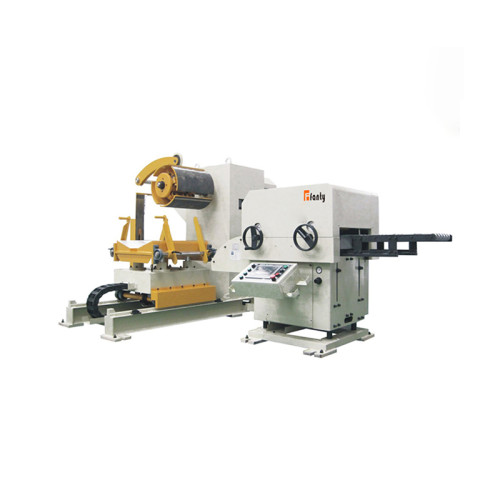
The coil line range we build publishes rated thickness, speed and coil weight per model, which turns the headroom question into a comparison rather than a guess.
What Each Ten Percent Costs Over Ten Years
Ten-year cost is where the argument becomes concrete. Capital, energy, wear parts and floor space all accumulate differently.
Energy scales with motor rating, not with work done. A larger drive at light load is a standing cost, and it never appears in a payback model.
Wear parts scale with roll diameter and with the forces at the roll gap. Bigger rolls last longer in tonnage but cost more per regrind.
| Cost line, ten years | 10 percent headroom | 25 percent headroom | Where It Costs You |
|---|---|---|---|
| Capital | USD 12,000 | USD 34,000 | Paid once, financed or not |
| Energy at 40 percent load | USD 21,000 | USD 39,000 | The line you never see on a quote |
| Roll regrind and wear | USD 9,000 | USD 14,000 | Bigger rolls, fewer regrinds, higher each time |
| Foundation and crane | Unchanged | USD 11,000 | Slab thickness and hook height |
| Residual value at resale | Small premium | Small premium | Buyers discount unused capacity |
The last row is the one buyers forget. Unused capacity does not resell at the price it was bought for, because the next owner has their own idea of what they need.
A Specification Skeleton With Two Numbers
Two numbers carry most of this decision: the thickest strip in the next five years, and the fastest line speed you can actually feed downstream.
- State the thickness ceiling as a real material, not a round number. 2.5 mm at 340 MPa is a harder requirement than 3.0 mm at 250 MPa.
- State speed at the die, not at the machine. The feeder can only run as fast as the press and the die allow.
- Price the ten percent option on every quotation. It is the cheapest insurance in the project and it is usually declined by habit rather than analysis.
- Ask what the retrofit path is for speed. A pulley change is a weekend; a new frame is a new machine.
- Record the assumed headroom in the acceptance documents, so the next engineer inherits the decision rather than re-deriving it.
Where Extra Capacity Turns Into a Liability
Oversized machines bring oversized rolls, and large rolls straighten thin strip badly. On 0.4 mm material a 3 mm-rated machine has more roll than the section can use.
They also bring a control loop tuned for heavy work. Achieving 0.05 mm on thin strip with a heavy-duty head takes more setup time than the job is worth.
And they change the maintenance economics. A larger machine has more lubrication points, heavier components and longer repair times.
A plant running 0.5 to 1.0 mm work most of the year should not buy a 3 mm machine for one occasional job. Subcontracting that job is usually cheaper than carrying the capacity.
Where to go next
Headroom is one line in a specification that has eight or nine others competing for the same budget. The selection and import cost guide treats them together, which is the only way the trade-offs stay visible.
The Coil Line Guide LibraryHow much thickness headroom should a coil line carry?
Ten to twenty-five percent over the thickest material in the current job book. Above that, roll diameter starts to hurt thin strip work.
Is speed headroom cheaper than thickness headroom?
Substantially. A 20 percent speed increase is usually a motor and pulley change at 4 to 6 percent of machine price, against 15 percent or more for thickness.
Does unused capacity reduce resale value?
It rarely adds value. Buyers discount machines sized for work they do not run, so the premium is largely lost at resale.
What does 25 percent extra capacity cost per year to run?
About USD 1,800 in energy and wear on a mid-size line, before foundation and crane costs are counted.
Can speed be retrofitted later?
Usually yes, with a motor, drive parameter set and sometimes a pulley ratio change. Budget two days of downtime and 5 percent of machine value.
When is a 4 mm-ready machine the wrong purchase?
When most of the work is under 1.5 mm. The roll diameter that makes 4 mm possible is what makes 0.6 mm difficult.