How Much Labor Does a 3-in-1 Feeder Line Need?
Coil line labor is the smallest line on most purchase budgets and the largest surprise in the first year of running one.
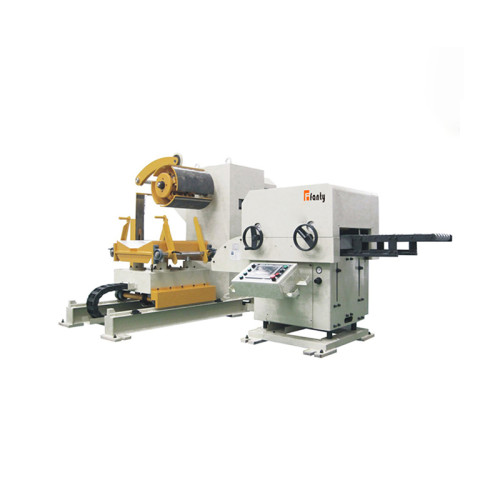
A 3-in-1 feeder line rated at 200 SPM does not need a crew of four, and it does not run itself either. The real number sits in between, and it moves with how the coil gets onto the mandrel.
Start With the Tasks, Not the Headcount
Every credible labor figure comes out of a task list. Write down what has to happen between a coil landing on the floor and a pallet of stamped parts leaving it, then count how often each task repeats.
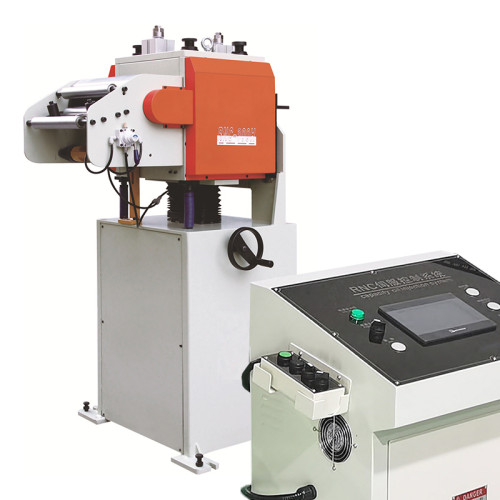
On a 3-in-1 NC straightener feeder line the list is short: load the coil, thread the strip, set the line, run it, inspect what comes off, and clear scrap. Only two of those six repeat every hour.
That is why the same machine is quoted as a two-operator line by one supplier and a one-operator line by another. They are counting different tasks, not different machines.
What One Operator Actually Runs on a 200 SPM Line
Take a typical job: 1.2 mm SPCC, 1,250 mm wide, 5-tonne coils, a progressive die, and a target of 200 strokes per minute. The line runs unattended for long stretches.
During a steady run, one operator watches the loop, the strip position and the first-off sample. That is a monitoring job, not a handling job, and it leaves hands free for the next coil.
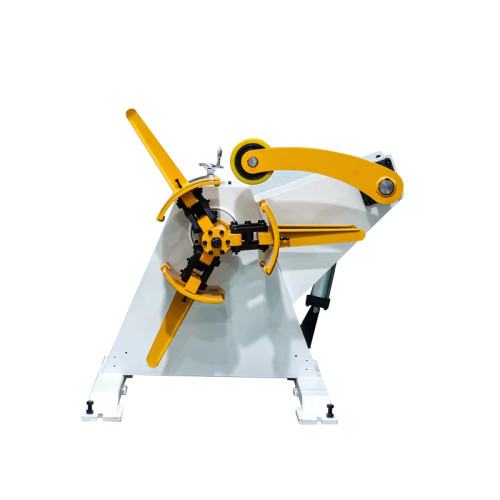
Loading is the hinge. With a coil car and a hydraulic mandrel, the operator loads, threads and restarts without help.
With a crane and a manual mandrel, the same job needs a second pair of hands and a stop of 8 to 12 minutes.
Changeover is the other spike. A die change on a well-tooled line takes 15 minutes with two people and closer to 30 with one, because nobody can hold the strip and adjust the entry guide at the same time.
Add those two spikes across a shift and the practical answer is one operator for the run and a second person available for loading and changeover. Call it 1.4 to 1.6 operators per line per shift.

A Worked Labor Model for a Three-Shift Plant
The model below uses a 3-shift pattern, 250 working days, and a fully loaded cost of USD 9 per operator-hour. Change the wage and the ranking of the options does not move.
| Line Configuration | What It Saves in Labor | Where It Costs You |
|---|---|---|
| Manual loading, manual threading | Lowest machine price | 2 operators per shift; 25% of shift time lost to coil changes |
| Coil car plus hydraulic mandrel | 0.4 operator per shift; faster coil changes | Floor space for the car track and a higher base price |
| Motorised payoff with loop control | Operator leaves the line during the run | Control tuning effort and a spares item you must stock |
| Two lines, one operator | Halves the labor per stamped part | Only works if both lines share a loading point and a die-change window |
At USD 9 per hour, moving from two operators per shift to 1.5 saves about USD 33,750 a year across three shifts. That is the number to hold against the price difference of the loading equipment.
Watch the assumption underneath it. The saving only materialises if the plant can actually run with 1.5 operators, which in practice means a shared floater rather than a dedicated second person.
- Count coil changes per shift before quoting any headcount saving
- Time one coil change by stopwatch, not from the manual
- Separate run tasks from setup tasks in the model
- Price the floater into the model rather than assuming free capacity
Where the Headcount Hides After Year One
The first-year number is the easy one. Three tasks grow quietly and pull hours back onto the line.
Scrap handling. A progressive die running at 200 SPM produces a steady river of skeleton and slugs. If the scrap conveyor is undersized, someone walks the bins every hour.
First-off inspection. Any plant shipping to automotive or appliance customers inspects the first part after every coil change. Six changes a shift means six inspections, not one.
Tooling wear. As dies dull, feed length has to be checked more often. A line that held ±0.05 mm with a fresh die may need a check every 30 minutes once the die is at 80% of its life.
Those three do not show up in a labor quote. They show up in the shift roster six months in, usually as one extra person on nights.
| Task That Grows | Hours It Adds per Shift | What Replaces It If Automated |
|---|---|---|
| Scrap bin changes | 0.5 to 1.0 | A scrap conveyor or a bin with a level sensor |
| First-off inspection after every coil change | 0.7 to 1.2 | An in-die sensor plus a documented sampling plan |
| Feed length checks as dies dull | 0.4 to 0.8 | Length monitoring with an alarm band on the control |
| Waiting on an overhead crane | 0.6 to 1.5 | A coil car on a rail, or a second mandrel position |
Those four lines add between 2.2 and 4.5 operator-hours a shift. On three shifts that is the difference between a 1.5-operator line and a 2-operator line.
Each item looks small on its own, which is why none of them get budgeted. Nobody buys a scrap conveyor because bin changes cost 40 minutes a shift.
They buy it after the third bin overflow under the press, and by then the labor number on the original quotation has already moved.
Build the model from your own coil-change times and it will survive the first year. Build it from a supplier figure and it will not.

Buyers tend to ask the same handful of questions about line labor. The honest answers depend on how the coil is loaded.
Can one operator run two 200 SPM lines at once?
Yes, if both lines load from a shared coil car position and the dies change on a schedule rather than on demand. Two simultaneous coil changes by one person is where the arrangement breaks down.
How many minutes does a coil change take on a 5-tonne coil?
With a coil car and hydraulic mandrel, 4 to 6 minutes. With an overhead crane and a manual mandrel, 10 to 15 minutes plus the wait for the crane to be free.
Does a 3-in-1 feeder need a dedicated operator at 200 SPM?
It needs someone within sight of the loop, but not necessarily standing at the machine. On a 3-in-1 NC straightener feeder the run is stable, so the operator can be at the press or at the inspection bench.
Does a second operator pay for itself above 10 coil changes a shift?
When coil changes exceed about 10 per shift, or when changeover time passes 25% of the shift. Below that, a floater shared across the department is cheaper than a dedicated head.
Does a coil line cut feeding labor by 60%?
Typically 60 to 70% of the feeding hours, because coil feeding removes the blank stacking and destacking steps entirely. The remaining hours shift to coil handling and inspection.
What Changes When the Line Is Only Half Automated
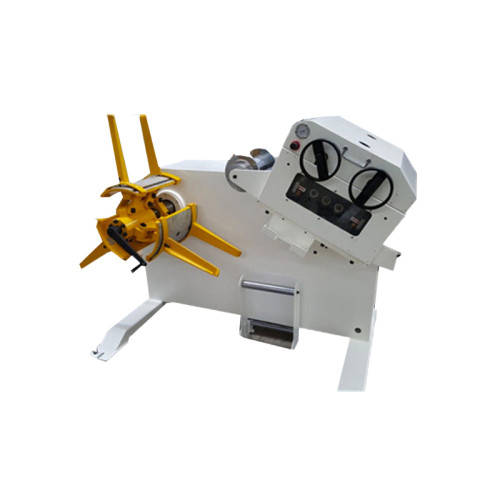
Half automation is the most common configuration we see, and it is also the one buyers misread. A motorised payoff with a manual mandrel is not the same as a fully automatic line.
If the mandrel is manual, the coil still has to be expanded by hand and the hold-down arm still has to be swung into place. The operator gains the payoff speed control and loses nothing else.
The gain is real but narrower than the brochure suggests. Expect to recover the running hours, not the loading hours, which is roughly a third of the total saving on a fully automatic line.
This matters when a supplier quotes labor savings for a configuration that does not include automatic coil loading. Ask which of the six tasks the automation actually removes.
When a Labor Model Misleads You
A labor model is a planning tool, and it has three blind spots worth naming before anyone signs a machine order on the strength of it.
It assumes a stable mix. A plant running four die changes a day and one running four a month are not the same labor problem, even with identical machines. High-mix work pushes the number up fast.
It ignores skills. One operator who can set a straightener roll gap is worth more than two who can only load coils. The wage line in the model flattens a real difference.
It cannot price downtime. If a coil change takes 15 minutes and the press is idle for all of it, the true cost is the press rate, not the wage. On a 200 SPM line that is often ten times the labor figure.
Use the model to compare machine options, not to predict a payroll.
After more than 200 coil lines shipped to over 60 countries, the pattern is consistent. Plants that measured their own coil-change time landed within 10% of the model.
Plants that used the brochure figure did not.
Where to go next
Labor is one line of the cost sheet. The full map from a spec line to landed cost sits in the coil line knowledge base, alongside the buy-too-much traps and the ten-minute payback test.
What Each Spec Line Really Costs