How Much Does It Cost to Ship a Coil Line Overseas?
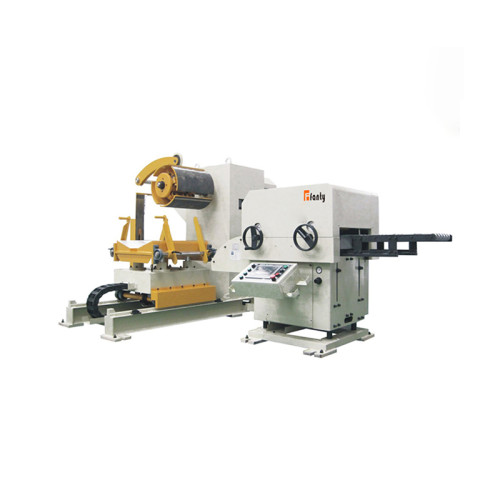
A 12-tonne coil line does not ship as a machine. It ships as three or four crated units, a bundle of guards, and a crate of spares, and the freight bill follows the packing rather than the machine price.
This breaks the real coil line shipping cost into its five parts, with ranges you can hold against a forwarder quote this week.
It also shows which leg of the journey is where cheap numbers fall apart. It is almost never the ocean crossing.
Start With What Actually Goes in the Container
Ask for the packing list before you argue about price. It sets everything downstream: how many containers, whether you need a flat rack, and what the crane has to lift at the destination.
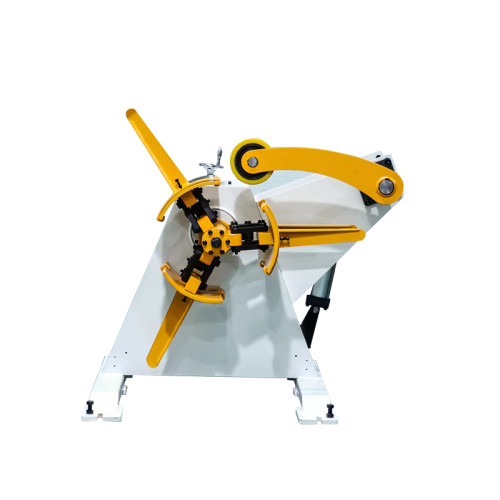
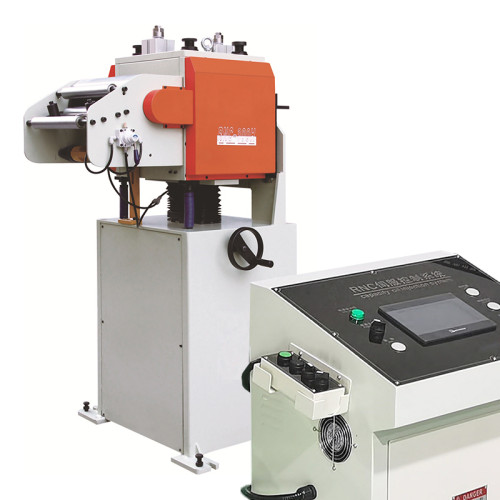
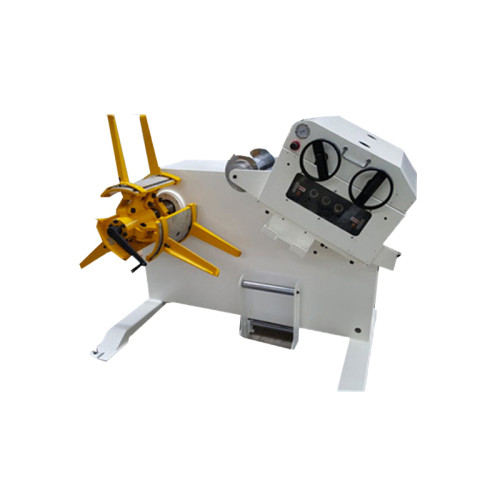
A 600 mm line with a 5 t decoiler normally leaves as three packages. The decoiler sits on its own skid, the straightener and feeder share a bolted frame, and the control cabinet and spares travel in a crate.
That is roughly 9-11 t of steel, 25-35 m³ of volume, and a centre of gravity that sits high on the skid unless the supplier blocks it down properly.
Width is the constraint nobody checks early. A 40HQ gives you 2.35 m of internal width and 2.69 m of door height, so anything assembled wider than 2.3 m has to be split or shipped open-top.
| Shipping unit | Internal length | What fits from a coil line | Where it costs you |
|---|---|---|---|
| 40HQ | 12.03 m | Assembled line up to 2.3 m wide, three units | Loading sequence must match unloading |
| 40 open top | 12.03 m | Tall control cabinets, overhead crane loading | Tarp surcharge and slower port handling |
| 20GP | 5.90 m | Decoiler alone, or spares and guards | Two containers cost more than one 40HQ |
| Flat rack | 12.00 m | Frames over 2.35 m wide | No weather protection, rust risk on the ways |
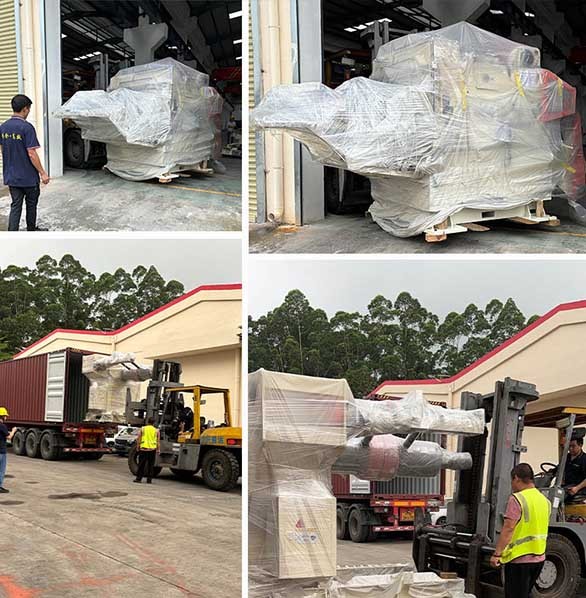
Photograph the loading, not just the finished container. If a guard arrives bent, the loading photos are the only evidence that separates a packing failure from a handling failure.
Freight Arithmetic on a 12-Tonne Line
Take three 40HQ containers from Shanghai to Rotterdam. Ocean freight in 2026 has ranged from 1,800 to 4,200 USD per 40HQ on that lane, depending on the month and the carrier.
So the ocean leg alone is 5,400 to 12,600 USD, and that is the part buyers negotiate hardest and control least.
The rate you are quoted may exclude BAF, low-sulphur surcharge, and peak-season surcharge. Ask for an all-in figure with the surcharges named, or you will meet them at invoice stage.
Volume matters more than weight here. A 12 t line at 32 m³ is a volume shipment, so knocking the frame down to 22 m³ can save a container before any rate negotiation starts.
Rates move weekly. The number that holds is the structure of the quote, not the number itself, so keep the quote itemised and re-quote at booking rather than at order.
Port Charges and the Fees Between the Quotes
Terminal handling, documentation, security fees and broker charges are where a 6,000 USD quote becomes a 9,000 USD invoice.
Origin terminal handling runs 150-300 USD per container. Destination handling runs 250-450 USD, and some forwarders bill it at cost plus 15% without saying so.
Add bill of lading and documentation at 50-150 USD, ISPS and security at 20-60 USD per container, and a customs broker at 100-250 USD per entry.
- Ask for each charge as a named line, not as "local charges".
- Confirm whether the quote is per container or per shipment.
- Check demurrage and detention free days; 7 days is not enough for a machine that needs a crane.
- Get the destination agent's name before you pay, not after arrival.
Duty and the Landed Cost Nobody Quotes
Duty is charged on the customs value, which is the goods value plus freight and insurance to the border. Suppliers habitually quote duty on the machine price alone, which understates it by 5-15%.
Coil handling and stamping lines usually land under HS 8462.29 or 8462.90 depending on the destination ruling. Rates commonly run 0-8%, and the classification decides which.
Ask your broker to classify before the order, not at the port. A reclassification after arrival costs storage, and storage on three containers runs 40-90 USD a day.
Import VAT is usually recoverable, but it is still cash out for four to eight weeks. On a 120,000 USD line at 20% that is 24,000 USD of working capital sitting in a tax account.
| Cost line | Typical range, 12 t line to Europe | Where it surprises you |
|---|---|---|
| Ocean freight, 3 x 40HQ | 5,400-12,600 USD | Surcharges quoted separately at booking |
| Origin and destination charges | 1,400-2,800 USD | Billed per container, not per shipment |
| Duty | 0-8% of CIF value | Classification, not the invoice, sets the base |
| Inland haul and crane | 1,200-4,000 USD | Crane reach and permits, not distance |
| Sea-worthy packing | 1.5-3% of machine value | Cut to save 800 USD, then claimed back at 6,000 |
Budget the whole table as a percentage of the machine. For a line in the 100,000-150,000 USD bracket, freight, duty and handling usually land between 9% and 16% of the purchase price.
That percentage is also the reason over-specifying the machine is expensive twice. The extra tonne is paid for at the works, then paid for again on the water, then again in crane capacity.
The cost structure of each spec line is set out in the coil line guide library, which is worth reading before the enquiry goes out.
Inland Haul and the Last 300 Metres
The port-to-door leg is where a plant discovers it cannot receive what it bought. A low-bed trailer needs a route survey, and a 12 m trailer with a 3.1 m load needs permits in most of Europe.
A 25-50 t mobile crane is the usual unloading tool, at 600-1,500 USD for a half day including the operator. A gantry or forklift only works if the machine is knocked down and under 8 t per piece.
Measure the door before you book anything. A 3.0 m roller door and a 4.2 m clear height will stop a line that is 2.4 m wide and 2.9 m tall on its skid, and no crane solves that.
Check the ground as well. A 12 t load on four skid feet is a point load of 3 t per foot, which is fine on 200 mm reinforced slab and not fine on asphalt or a suspended mezzanine.
Sequence the crane and the riggers on the same day. Two mobilisations cost 40-60% more than one, and the machine sits in the yard in between.
Packing Choices That Move the Number
Sea-worthy packing costs 1.5-3% of machine value and prevents the most common claim on a coil line: rust on machined surfaces after four weeks at sea.
That means ISPM 15 heat-treated timber, VCI film on the rolls and mandrel, desiccant at 1 kg per 2 m³ of container volume, and a vapour barrier under the skid.
Skip the VCI and the straightener rolls arrive with surface rust that has to be polished out. Polishing a hardened roll changes its diameter and its grip, which is a warranty argument nobody wins.
Knock-down packing saves 20-30% of freight on a wide line. It also adds three to five days of assembly and re-alignment on site, and the alignment is the part that decides whether the line feeds straight.
Insure at 110% of CIF value as a minimum. Standard marine cover excludes inadequate packing, and a rust claim on an unprotected machine is exactly the claim that gets refused.
Where the Freight Estimate Misleads You
Freight is 3-8% of the machine price on a full container load, and buyers who optimise it first are usually optimising the smallest number in the deal.
An "all-in DDP" price hides the duty base, the classification and the broker's fee inside one figure. When the classification is wrong, the buyer pays the correction, not the seller.
Transit time is quoted as 28-45 days port to port and is really 35-60 days door to door once booking, trucking and customs are counted. Plan the installation date from the door-to-door figure.
LCL looks cheaper per cubic metre and is not, for machines. Heavy units are charged on weight or measure, whichever is greater, and a 12 t machine at 32 m³ pays on both.
Finally, freight never justifies a weaker machine. A line that arrives cheaply and cannot hold ±0.05 mm at 200 SPM has saved 4,000 USD on a problem that costs 40,000 a year.
What does it cost to ship a 12-tonne coil line to Europe?
Typically 9,000-20,000 USD door to door before duty, on three 40HQ containers from Shanghai. Duty adds 0-8% of the CIF value on top.
Is one 40-foot container enough for a 600 mm coil line?
Rarely. Three packages at 25-35 m³ total usually need two 40HQ containers, or one 40HQ plus a 20GP if the frame is knocked down.
Does knock-down packing really save 20-30% on freight?
On wide lines, yes, because volume drops by roughly a quarter. It adds three to five days of site assembly and a full re-alignment afterwards.
Who pays duty when the order is CIF?
The buyer. CIF ends at the destination port, so duty, import VAT, terminal charges and inland haul sit with the buyer even though the seller booked the freight.
How much does sea-worthy packing add to the machine price?
1.5-3%. On a 120,000 USD line that is 1,800-3,600 USD, against a rust remediation bill that typically starts at 5,000 USD.
Contract Terms to Fix Before the Container Loads
The Incoterm decides who owns the risk at each point, and it is worth choosing deliberately rather than accepting the supplier's default.
FOB gives you control of the forwarder and a clean duty base. CIF is easier to administer and hides the freight margin inside the goods price. DAP is convenient until the truck cannot reach the door.
Put the packing specification in an annex with the VCI, desiccant and timber treatment named. "Export packing" on its own means whatever the supplier decides on the day.
Require loading photos and a pre-shipment inspection report, and hold 10% of the value against them. That single clause prevents most of the damage arguments that arrive six weeks later.
If you want the machine and the freight quoted as one number, ask for the freight as a separate line anyway. A supplier who will not separate it is pricing a risk you cannot see.
Then look at the site before the order. A line that fits the container but not the door is the most expensive kind of correct purchase.
Site preparation is covered in the coil line guide library, and it starts with the same measurements the crane needs.
Where to go next
Freight is the last line in a longer cost model that begins with the spec. The spec-by-spec cost map, and what each line adds to the machine price, is in our coil line knowledge base.
The Coil Line Guide Library