Can an NC Servo Feeder Handle Pre-Painted Coil?
Pre-painted coil arrives at the press with the finish already applied: a 20 to 25 micron polyester or PVDF layer over a conversion coating and a zinc substrate. The strip is a finished product before it is even formed. That single fact changes almost every decision at the feeder, because the surface you are handling is now the surface the customer will see.
So can an NC servo feeder handle pre-painted coil? Yes, and several hundred coil lines do it every day. But the setup that works for cold-rolled steel will mark, scuff or crack the coating on pre-painted material, and the failure usually shows up as a reject at final inspection rather than a stoppage at the press. Our engineering group, more than 80 people, spends a surprising share of its time on exactly this class of problem, and the machine still carries CE marking because the guarding and interlock design does not change with the material. Here is what does change.
What Actually Changes When the Strip Is Already Finished
Three physical properties shift at once, and they interact.
First, the surface is softer than the substrate. A polyester topcoat measures roughly 2H to 3H on a pencil hardness scale, and a hardened steel feed roll at normal pressure will emboss its own surface finish into it. Second, the coating is brittle in tension. It will tolerate a generous bend radius but will craze at a tight one, which matters at every roll contact and every die radius. Third, the friction coefficient drops. A smooth coated surface with a film of forming lubricant on top gives the feed rolls noticeably less grip than dry cold-rolled steel, so the natural reaction of increasing roll pressure makes the marking problem worse.
That last point is where most pre-painted coil projects go wrong first.
The Two Failure Modes You Are Actually Fighting
Surface marking and coating fracture. They have different causes and different fixes, and confusing them wastes a lot of trial time.
Surface marking is a pressure and contact-area problem. It appears as roller marks, gloss variation or a faint stripe pattern running along the strip, and it is almost always concentrated at the feed rolls or the straightening rolls. Coating fracture is a strain problem. It appears as fine crazing, hairline cracks or flaking at bends and sheared edges, and it is driven by bend radius, roll diameter and the amount of deformation you are asking the coating to accept.
Marking tells you to reduce contact stress. Fracture tells you to reduce strain per pass. On a combined decoiler straightener feeder line, those two instructions sometimes pull in opposite directions, which is why the geometry of the rolls matters more than the tonnage of the press.
Roll Pressure Has to Come Down, Not Up
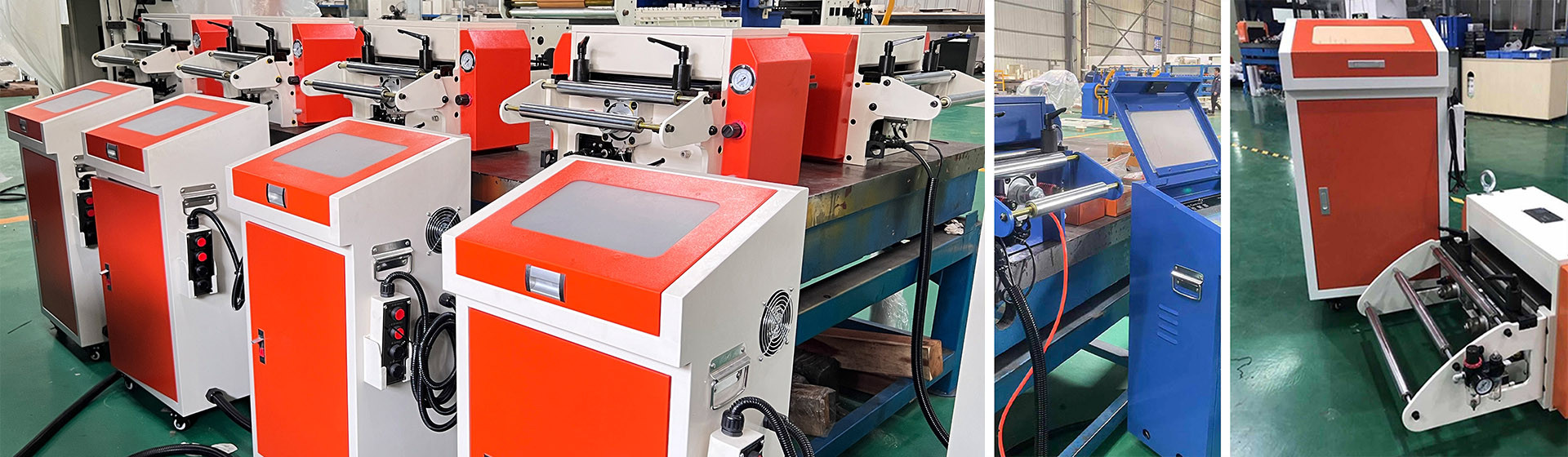
On bare steel, if the feeder slips you add pressure. On pre-painted strip, adding pressure converts a slip problem into a marking problem, and then you have two problems.
The correct move is to hold contact stress below the coating's yield point and recover grip elsewhere. The table below shows where the grip actually comes from once you stop leaning on roll pressure.
| Lever | Effect on grip | Effect on coating | Practical range |
|---|---|---|---|
| Roll pressure | Large but saturating | Direct marking risk | Reduce 30-40% versus bare steel |
| Contact width | Moderate, linear | Spreads stress, lower peak | Wider rolls, 2-3 mm radius minimum |
| Roller material | Moderate | Decisive | Polyurethane or nylon facing over steel core |
| Roll count in contact | Additive | Multiplies strain events | Use the minimum that holds the strip |
| Lubricant film | Reduces grip | Protects surface | Light film, then compensate elsewhere |
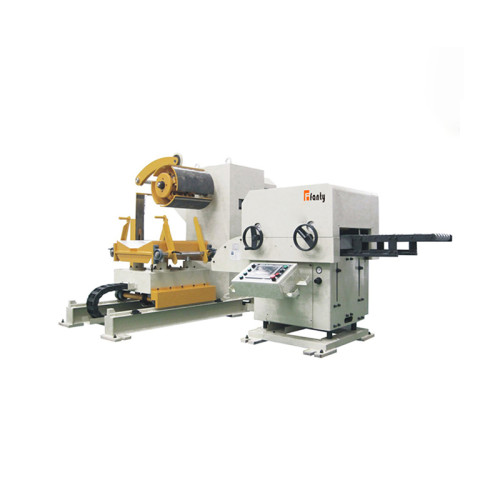
A polyurethane-faced roll at 40 percent lower pressure usually out-grips a hardened steel roll at full pressure, and it leaves no impression. That is the trade you are trying to make. Our own coil feeding equipment range is built with interchangeable roll facings for exactly this reason.
Contact Geometry: Fewer Rolls, Wider Faces, Softer Surfaces
Coating fracture follows the strain you impose at each roll, and strain scales inversely with roll diameter. Going from a 60 mm roll to a 90 mm roll on the same strip thickness cuts the peak surface strain by roughly a third. That is a meaningful reduction for a 25 micron topcoat that has very little elongation to give.
On the straightening section, the instinct is to add rolls for flatness. With pre-painted strip the calculation changes: every extra roll is another strain cycle on a brittle layer. In practice, most pre-painted applications are run with fewer straightening rolls at lower penetration depth than an equivalent bare steel job, and the flatness requirement is met by controlling coil set at the decoiler rather than by brute-forcing it in the leveler.
Edge condition matters as much as face condition. Burred or nicked roll edges concentrate stress and produce the longitudinal scratches that show up most clearly on a dark topcoat. A 2 mm radius on every roll edge, polished and kept clean, prevents most of them.
Die Protection and the Scrap Economics
Pre-painted coil raises the cost of every reject. A scrapped part is no longer just a piece of steel with labour in it; it carries the full cost of coil coating on a strip that has already been paid for. In a typical appliance or architectural panel job, the coated substrate can run two to three times the cost of bare steel per kilogram, so the acceptable scrap rate is lower by roughly the same factor.
This shifts the argument for die protection. A pinched or mis-fed part that would be a minor quality event on bare steel can be a coating defect that only appears after the part is formed and inspected, which means you discover it after the value has been added. Feed monitoring that stops the press on a position error pays for itself faster on coated material than on any other substrate, because the cost of one bad part is so much higher.
What to Test Before You Commit to a Line
Run these checks on your own material before you accept a machine setting. Each one takes under an hour and they will find the problem that matters.
- Tape test at the roll contact. Press a strip of adhesive tape onto the coated surface directly under each feed roll after a run. Lifting pigment means the roll is marking, regardless of what the eye sees under factory lighting.
- Bend test at the tightest die radius. Bend a sample to the smallest radius the part will see and inspect at 10x. Crazing at the bend is a strain problem and no amount of pressure reduction will fix it.
- Gloss measurement before and after. A gloss meter reading taken before and after the feeder catches the low-level marking that visual inspection misses.
- Coil eye condition. Check the inner wraps for transit damage before loading. A dented inner wrap will mark every revolution of the decoiler, and no feeder setting can compensate for it.
- Lubricant compatibility. Confirm the forming lubricant does not soften the topcoat. Some synthetic lubricants attack polyester over a weekend of contact, and the defect appears on Monday.
When Pre-Painted Coil Is the Wrong Choice
There is a point where the process should stop trying. If the part requires a draw of more than about 15 percent surface elongation, the coating will not survive it and post-forming coating is the correct route. If the part has a sheared edge exposed on a visible face, expect edge corrosion and plan for touch-up or a different finish strategy.
The other honest limitation is speed. A line that runs 200 SPM on bare steel will often be set lower on coated material, not because the feeder cannot keep up but because the transfer and handling downstream must be gentler. If a project's business case depends on holding bare-steel takt with a coated substrate, the assumption deserves a second look before the machine is ordered rather than after.
Get the contact stress, the roll geometry and the strain budget right and pre-painted coil runs on the same equipment as everything else. Get them wrong and the line produces parts that pass the press and fail the customer.
Pre-painted coil questions from production teams
Will a standard hardened steel feed roll mark a painted surface?
Usually yes, at pressures that work fine on bare steel. Switch to polyurethane or nylon facing over a steel core and reduce pressure by 30 to 40 percent; grip is normally better and marking disappears.
How much roll pressure should a coated strip line use?
Start at 60 to 70 percent of the pressure you would use on the same gauge of cold-rolled steel, then increase only until feed length holds. If you have to go above 70 percent to stop slipping, the problem is grip geometry rather than pressure.
Does a coated strip need more or fewer straightening rolls?
Fewer, in most cases. Each roll imposes another strain cycle on a brittle coating. Control coil set at the decoiler and use the minimum number of rolls that delivers the flatness the part actually needs.
Can the same line run coated and bare steel?
Yes, but not with one stored recipe. Keep two parameter sets, one for each substrate, and make the change part of the die-change procedure. Operators who adjust pressure by feel between materials are the main source of marking defects.
Why does the coating defect only show up after forming?
Because the strain is applied at the die, not at the feeder. The feeder may leave the coating intact while the die radius cracks it. Inspect at the tightest bend radius in the part, not at the coil.
Running coated or pre-painted coil?
Tell us the substrate, coating type, gauge and the tightest bend radius in your part. We will recommend roll facing, contact geometry and pressure settings, and confirm whether your target takt is realistic on coated stock.
Talk to an application engineerFanty · 3-in-1 Compact Line
Short on Floor Space? One Machine Does Three Jobs
A 3-in-1 unit replaces three standalone machines and gives back four to six metres of floor. Send your coil width, thickness and press tonnage and we confirm the model.
Get a Free QuoteFANTY Machinery · 13 years on stamping automation · 2,000+ coil lines installed · engineers reply within 24 hours