Can a Servo Feeder Pay for Itself in 18 Months?
Every servo feeder quotation carries a payback figure. Most of them are between twelve and twenty-four months, and almost all of them are built the same way.
The numbers come from scrap reduction, changeover time and uptime. Only the second one usually survives an audit, and it is the one that carries the case.
Here is a worked example on a 1,200 mm progressive job, with the figures a plant can actually measure before signing.
Payback Is Three Numbers, and One Is Always Wrong
Scrap reduction is the first number and the one that inflates. A feeder that feeds accurately does not by itself reduce scrap, because most scrap comes from the die and the material.
Changeover time is the second and the most reliable. A servo feeder removes threading time and makes feed length recall instant.
Uptime is the third and the hardest to measure, because nobody records the hours a line spends waiting for a manual adjustment.
A payback built on all three looks impressive. A payback built on changeover alone is smaller and far more defensible.
Buy on the defensible number. If the project still works at changeover-only savings, it works.
Ask the supplier which of the three the quoted payback depends on. The answer shows how much diligence went into the model.
A model that only works on one input is fragile. One that still works on two is a decision.
Worked Example: A 1,200 mm Progressive Job
Six die changes a day, two shifts, 240 days a year. The old feeder takes 22 minutes to thread and prove; the servo takes 9.
That is 13 minutes saved per change, six times a day, which is 78 minutes a day or 312 hours a year at 240 days.
At a fully loaded line rate of USD 1,570 an hour, 312 hours is roughly USD 490,000 of released capacity a year — far more than the feeder costs.
That figure is only real if the released time turns into output. In a plant selling everything it makes, it does. In a plant with slack, it does not.
Time the changeover yourself, three times, before accepting any figure. Variance between operators is usually larger than the saving.
Include the re-qualification run in the changeover time. First-piece approval is part of the change, not part of production.
| Payback input | Measured figure | Annual value | Where It Costs You |
|---|---|---|---|
| Threading time saved | 13 min per change | 312 hours | Only real if the time becomes output |
| Scrap reduction | 0.2 percent, if any | USD 4,800 | Usually attributable to the die, not the feeder |
| Setup reject reduction | 12 parts per change | 17,280 parts | Real, and easy to verify from the reject log |
| Downtime for manual adjustment | 1.5 hours a week | 72 hours | Hard to measure, easy to overstate |
| Operator training | One day less per hire | USD 600 each | Small, but it appears in every quotation |
Note the second row. Scrap reduction is usually the smallest honest number in the table and the largest one in the sales deck.
What Scrap Reduction Is Really Worth
A feeder that holds feed length removes one cause of scrap among several. Die wear, material variation and handling damage all survive a better feeder.
In practice, a plant moving from a worn mechanical feeder to a servo typically sees 0.1 to 0.3 percent scrap reduction, not the 2 percent in a proposal.
On 3,000 tonnes a year at USD 780 a tonne, 0.2 percent is about USD 4,700. Real money, and nowhere near a payback on its own.
Setup reject reduction is bigger and more verifiable. Fewer trial strokes means fewer scrapped parts at every change.
Setup reject reduction is the most verifiable line in the table, because the reject log already exists and nobody edits it.
The Changeover Component Nobody Counts
Threading a coil by hand into a mechanical feeder takes 12 to 20 minutes depending on line length and operator.
A servo feeder with a powered assist and a stored recipe reduces that to 6 to 10 minutes, and the variance between operators almost disappears.
Consistency matters as much as the average. A changeover that always takes nine minutes is easier to schedule than one that ranges from eight to twenty-two.
Plants that schedule tightly get more value from reduced variance than from reduced average, and that value never appears in a payback calculation.
Reduced variance is worth more in a plant that schedules tightly and less in one that does not, which is why the same machine pays back differently.
The Assumptions That Break an 18-Month Payback
The first assumption is that released time becomes output. In a plant running at 70 percent utilisation, it does not.
The second is that the old feeder is the constraint. If the press or the die sets the rate, a faster feeder changes nothing.
The third is that changeover count stays constant. A plant that reduces die changes from six to three a day cuts its own saving in half.
The fourth is that nobody counts the installation. Three days of downtime and a re-qualification run belong in the model.
Check all four before signing. Each one has sunk a payback case that looked obvious on paper.
Utilisation is the assumption that decides most paybacks. Write it down, then have somebody else challenge it.
If the plant cannot sell the released hours, the case is a capacity story rather than a cash story, and it should be presented as one.
When the Payback Is Genuinely Eighteen Months
Eighteen months is realistic when there are six or more die changes a day, the plant sells what it makes, and the existing feeder is the documented constraint.
It is realistic in a plant running two shifts with a third shift available and unfilled orders, because released time converts directly.
It is not realistic in a job shop with variable demand, where the same investment might take four years and still be a good decision.
The payback period is a property of the plant's demand, not of the machine. Two identical feeders can pay back in eighteen months at one site and four years at another.
It is also realistic on a line running worn mechanical feeding, where short feeds and setup rejects are already documented in the reject log.
Two cost lines get left out of payback models and both push the period longer.
The first is maintenance: a servo axis needs a drive and an encoder that a mechanical feed does not, and the spare parts holding is real money even if it is rarely spent.
The second is the interaction with tooling.
Shorter feeds and steadier pitch reduce die wear on progressive work, but the saving lands on the tooling budget and is invisible to whoever signs the feeder purchase order.
Separate rework from scrap when building the case.
Scrap is strip that cannot be sold; rework is good parts that need a second operation, and plants routinely count the second as the first, which doubles the apparent saving.
A payback model that survives those three corrections is worth acting on. One that only works with inflated scrap and no maintenance line is a model that will be re-run in year two with a different conclusion.
What to Ask For Before Signing
- Measured threading time on your own line, three changes, timed with a stopwatch rather than estimated.
- The reject log for the last six die changes, so setup reject reduction is a real number rather than a claim.
- A written statement of what the feeder will not fix, which is the fastest way to see whether the supplier understands your process.
- Installation duration and the downtime it requires, including re-qualification of the first die.
- A payback model with the utilisation assumption stated explicitly, so the number can be challenged.
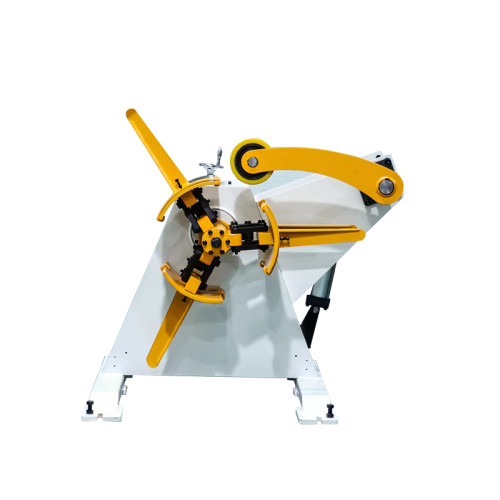
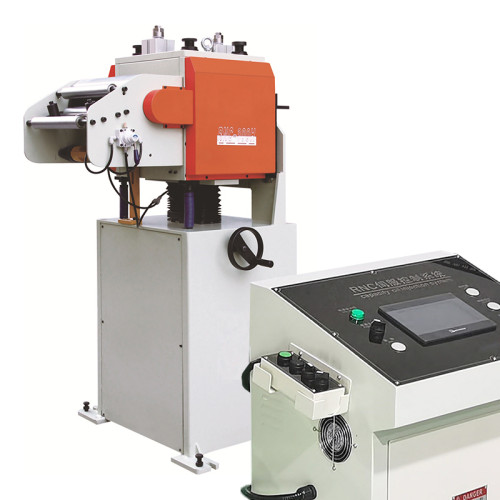
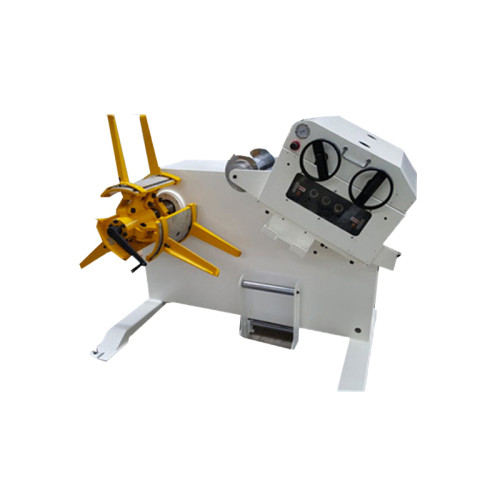
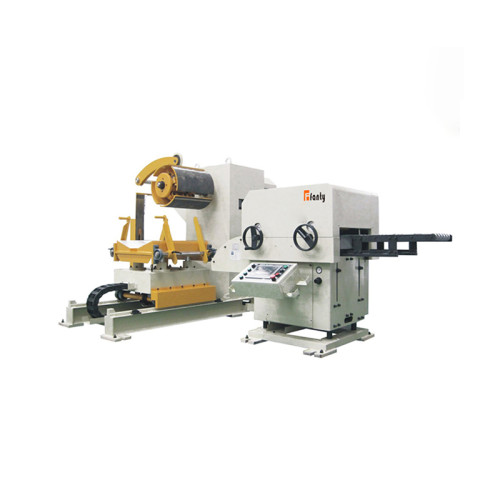
The press feeder range lists feed length, motor rating and threading assist per model, which is what a payback model has to be built on.
Where to go next
Payback arguments are settled by measurement, and measurement starts with the error budget. The feed accuracy guide shows how much tolerance a feeder can hold, which every payback model assumes.
The Coil Line Guide LibraryIs an 18-month payback realistic for a servo feeder?
Yes, at six or more die changes a day in a plant that sells what it makes. Below three changes a day, expect three to four years.
How much threading time does a servo feeder actually save?
Ten to thirteen minutes per change on a 1,200 mm line, and the variance between operators drops to almost nothing.
What scrap reduction should a proposal assume?
0.1 to 0.3 percent. Anything above 1 percent is usually attributing die and material scrap to the feeder.
Does released changeover time count as saving if output is flat?
No. It only converts to money when demand exists to fill the released capacity.
Does a feeder retrofit need 3 days of installation?
Two to three days, plus one production run to re-qualify the first die. Budget both in the payback model.
Can a payback be built on uptime alone?
Rarely, because uptime is the least measurable of the three inputs. Use it as a margin, not as the case.