Can a 3-in-1 Straighten Strip Stored Below Freezing?
At 06:15 in February the line started on a coil that had spent the night in an unheated bay at minus 6 °C. The first twenty parts failed the flatness gauge.
By 09:00 the same coil, the same die and the same settings were producing good parts. Nothing had been adjusted in between except the temperature of the steel.
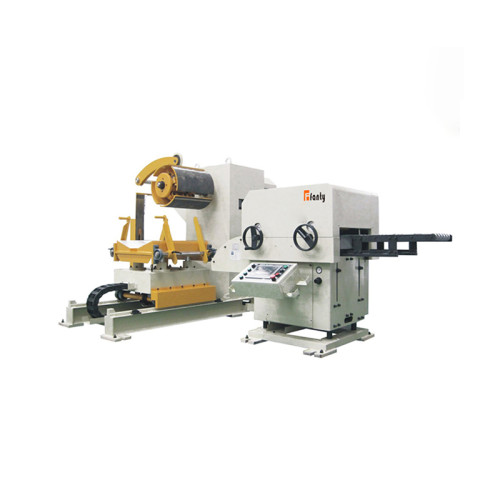
A 3-in-1 decoiler straightener feeder is set for the strip it expects. When that strip arrives at 3 °C instead of 18 °C, every setting is slightly wrong at once.
This is what happened, how the cause was traced, and the setting sheet the plant now uses on cold mornings.
Straightener capacity and roll geometry for each frame are listed in the straightener feeder data sheets.
The Morning Twenty Parts Failed
The job was a 1.5 mm SPHC bracket, 1,250 mm wide, running at 55 strokes a minute with a 310 mm feed. It had run clean for three weeks.
The failure was not dimensional. Length and hole position were inside tolerance. The parts were bowed across the width by 0.9 mm over 300 mm, and the die would not close cleanly on the next station.
The operator did what most operators do: added intermesh. That made the bow worse in the middle and put a visible roll mark along both edges.
The setter then checked the rolls, the gap, the back tension and the level. All correct against the setting sheet that had been used since the job started.
By 08:40 the coil had been running for two and a half hours and the parts were coming out flat. The machine had not changed. The strip had.
What 3 °C Strip Did to the Yield Point
Mild steel gets stronger as it gets colder, and the change is measurable well before anyone would call it cold.
SPHC at 235 MPa yield at 20 °C reads around 248 MPa at 3 °C, a rise of roughly 5.5 percent. At minus 10 °C the same grade is closer to 260 MPa.
Five percent sounds small. The straightening force needed to push the strip past yield scales with that number, so a setting that put 2.1 percent fibre strain into the surface now puts 2.0 percent.
That is enough to leave residual curvature. The strip leaves the last roll still partly elastic, and the bow appears 200 mm downstream rather than at the roll.
Two other things move at the same time. The strip is stiffer in bending, so it bridges the roll gaps instead of wrapping them, and the oil on the surface is thicker and less mobile.
The combination explains the symptom exactly: a bow that appears with no setting change, gets worse when intermesh is added, and disappears once the coil warms.
Tracing It to the Yard, Not the Machine
The proof took one instrument and twenty minutes. An infrared thermometer on the strip surface at the straightener entry read 3.2 °C at 06:30 and 11.8 °C at 09:00.
The bay had been at minus 6 °C overnight and the coil had been delivered at 17:00 the previous day, straight off a truck.
A 5 tonne coil at 1,250 mm width holds a lot of thermal mass. Left in a cold bay it takes 20 to 30 hours to reach ambient, and it does not warm evenly.
The outer wraps warm first because they see air on both sides. The core stays cold for a day longer, which is why the problem often returns at the start of a second coil.
Confirming the cause is a matter of running the same coil twice. The plant ran the second half of the coil at 14:00 with identical settings and got flat parts.
That test is worth doing before any adjustment. It costs four hours and it separates a material problem from a machine problem without touching a single roll.
What Fixed It, and What It Cost
The permanent fix was a heated holding area for four coils, 12 kW of fan heaters and a rack that keeps coils off the floor.
That cost 2,400 USD in hardware and about 60 USD a month in power through the winter. It brings a coil to 12 °C in 18 hours.
The temporary fix, used for the two weeks before the rack was built, was a cold-morning setting sheet with four changes.
The bow itself cost about 1,200 parts over three mornings, at 0.42 USD of material and processing each. That is roughly 500 USD, which is less than the rack.
The real cost was the two hours of production lost each morning while the setter chased a setting that was not wrong. Three mornings of that is a shift.
That is the pattern with cold strip: the scrap is affordable and the diagnosis is not. A plant that knows the cause in ten minutes saves the two hours.
Why Warming the Coil Is Not a Cure
| Approach | What it buys you | What it costs to hold | Time to effect |
|---|---|---|---|
| Heated holding area at 12 °C | Stable yield, no setting change, repeatable flatness | Floor space, 12 kW of heat, 18 hour soak per coil | 18 to 24 hours |
| Cold-morning setting sheet | Runs a cold coil without scrap, at reduced speed | 15 to 25 percent slower for the first 20 minutes | Immediate |
| In-line induction heater | Strip at temperature at the roll, no waiting | 80,000 to 150,000 USD and 60 to 120 kW of load | Immediate |
| Do nothing and accept scrap | No capital, no routine | 0.5 to 1.5 percent scrap for four winter months | Not applicable |
The third column is the part buyers skip. Warming a coil takes a day of floor space and a routine that survives a busy Monday.
It also does not fix everything. Warming changes yield and stiffness, and it does not remove coil set, cross bow or a crown profile rolled into the strip at the mill.
A coil that came off the mill at low tension and sat in the yard for a year keeps its curvature at any temperature. That is a straightening problem, and it needs roll settings rather than heat.
Warming also creates a condensation risk. A coil brought from minus 6 °C into a warm, humid bay sweats on every wrap, and wet strip rusts in the coil within two days.
Bring it up slowly, keep the dew point in mind, and do not park a cold coil next to a heater outlet. The 18 hour figure assumes gradual warming, not a blast.
A Cold Morning Setting Sheet
For plants that cannot build a heated bay, four changes carry a cold coil through the first twenty minutes.
- Close the roll gap by 0.02 mm. Cold strip springs back further, so the gap has to be tighter to reach the same fibre strain.
- Add 0.06 mm of intermesh on the last two pairs. Not on the first pair, which is where the operator usually starts.
- Raise back tension by 1.5 to 2 kN. Cold strip resists bending, and a slack entry lets it wander before the first roll.
- Cap speed at 40 strokes a minute for the first 20 minutes. Lower speed gives the strip time to yield rather than spring.
These four are a bridge, not a setting. Once the coil reaches 12 °C the original sheet applies, and leaving the cold settings in place will over-straighten and mark the strip.
Write the strip temperature on the run card at the start of each shift. It takes ten seconds and it turns a mystery into a reading.
What the Next Winter Should Look Like
The plant that had this problem now runs four coils ahead through December and January, and the heated rack holds the buffer.
It also measures strip temperature at the entry once a shift rather than once a week, and the reading goes on the run card beside the coil number.
None of that is sophisticated. It is the difference between a line that is trusted in February and a line that is blamed for a material problem twice a year.
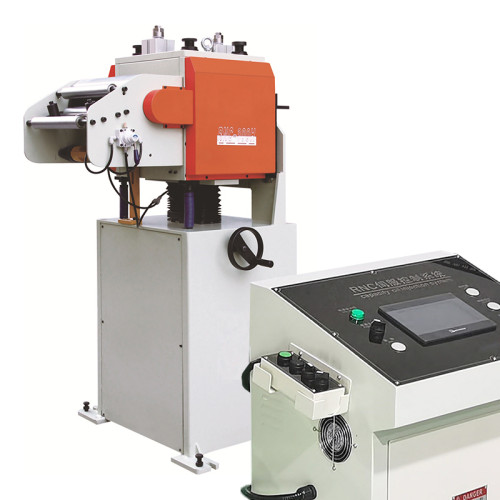
On a NC straightener feeder, most of the settings that matter are set once and checked monthly. Strip temperature is the one input that changes every morning without anyone touching the machine.

Temperature is one of several inputs that shift the flatness result without shifting the setting. The rest, from roll count to penetration, are worked through in the flatness setting guide.
How much does yield rise when strip cools from 20 °C to 3 °C?
About 5.5 percent on SPHC, from 235 to 248 MPa. At minus 10 °C the same grade reads near 260 MPa.
How long does a 5 tonne coil take to warm from minus 6 °C to 12 °C?
18 to 24 hours in a heated bay at 15 °C. The core lags the outer wraps by roughly a day.
Does closing the roll gap by 0.02 mm fix a cold strip bow?
It helps on 1.5 mm stock. Combined with 0.06 mm of extra intermesh on the last two pairs, it removed the bow in this case.
Is 40 strokes a minute enough on a cold coil?
For 1.5 mm at 310 mm feed, yes. Below 30 strokes the cycle cost outweighs the scrap saving on most jobs.
Where to go next
Strip temperature is the input nobody writes on the setting sheet. Roll count, pitch and penetration are the ones that are written down, and they decide the flatness spec.
Check the flatness settings