3-in-1 Decoiler Straightener Feeder vs Separate Units?
If you are planning a new press line or upgrading an existing one, one of the biggest capital decisions you will make is whether to buy a 3-in-1 decoiler straightener feeder or purchase separate decoiler, straightener and feeder units.
This guide, written for stamping plant managers and purchasing engineers, compares both configurations honestly and helps you decide which one delivers lower total cost of ownership for your specific coil width, material thickness, press speed and floor space.
By the end you will know exactly which layout fits your production reality and how to avoid the most common buying mistakes. If you are evaluating machines right now, you can browse our complete range of NC Straightener Feeder solutions and compare specifications side by side.
Understanding the Two Configurations
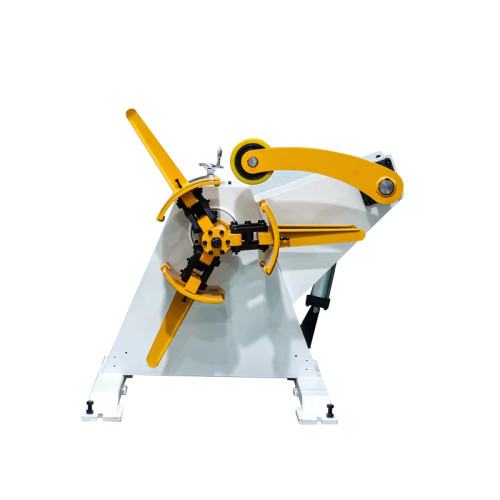
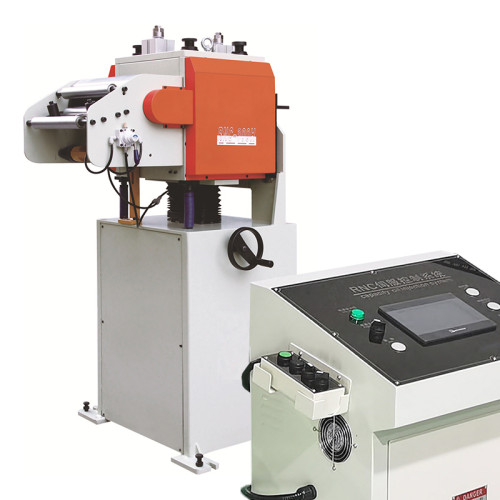
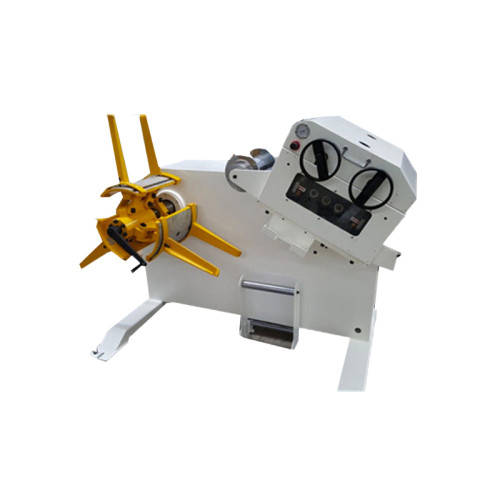
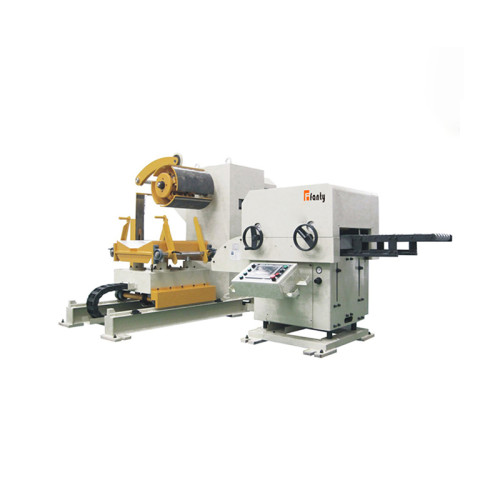
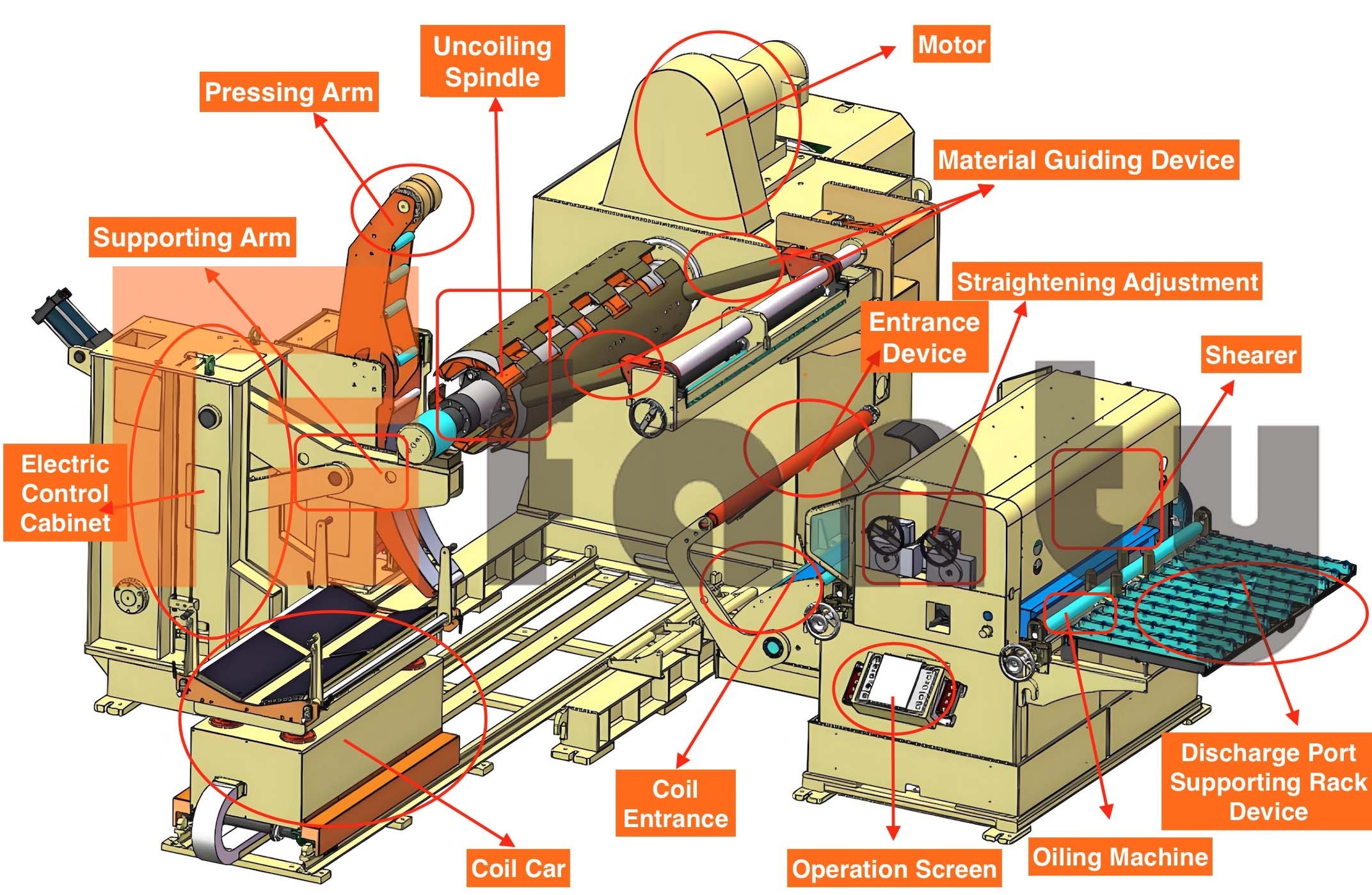
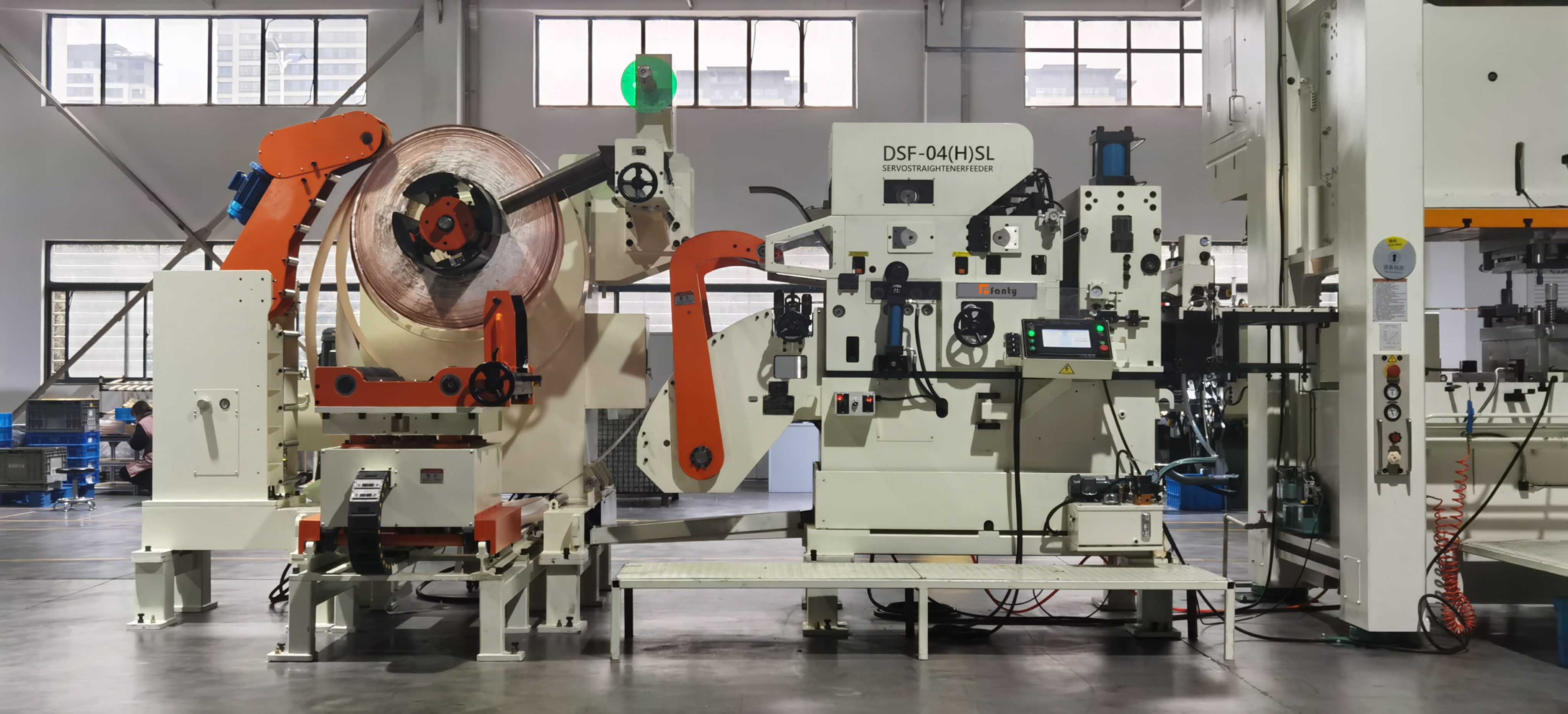
Before comparing prices, you need to understand what each configuration physically is. A 3-in-1 decoiler straightener feeder integrates the coil holder (decoiler), the roller leveler (straightener) and the servo feed mechanism into one compact machine frame.
A separate configuration, by contrast, uses three independent machines: a decoiler (motorized or hydraulic), a separate straightener, and a separate NC servo feeder. These units are lined up in sequence on the shop floor and connected by strip guides and loop sensors.
Each machine has its own motor, its own control box and its own maintenance schedule. This layout gives you more flexibility to mix brands or upgrade one station at a time, but it also consumes significantly more floor space and requires careful alignment between units to prevent strip looping, snaking and feed errors.
Key Factors That Decide the Right Choice
The decision between a 3-in-1 decoiler straightener feeder and separate units comes down to five practical factors: available floor space, coil size and material range, press speed and feed length, operator skill level, and budget strategy.
Floor Space and Line Length
Floor space is usually the decisive factor. A 3-in-1 decoiler straightener feeder typically occupies roughly half the footprint of three separate units because the straightener and feeder share one frame. In a crowded press shop, that saved space can be used for coil storage, die racks or a second press.
Measured from coil to die, a separate line can be two to four meters longer, which also means more strip material is exposed between stations and more surface area where scratching or buckling can occur.
Coil Width, Thickness and Material Strength
Separate units are generally easier to oversize for very wide, thick or high-tensile coils because each machine can be specified independently. If you routinely process 6mm thick high-strength steel, a heavy-duty decoiler plus a dedicated heavy straightener is often the more robust approach.
A 3-in-1 decoiler straightener feeder handles the common stamping range of 0.3mm to 3.2mm steel, stainless, aluminum and copper very well, and modern designs with hardened straightening rolls and servo-driven expansion handle most automotive and appliance stamping jobs comfortably.
Press Speed and Feed Length
When it comes to high-speed stamping, the compact strip path of a 3-in-1 machine is a genuine advantage. With the straightener positioned close to the feed rolls, the strip remains stable during short-pitch, high-SPM operation, which reduces pitch deviation and improves die protection.
Separate configurations can achieve high speeds too, but they depend on well-tuned loop controls and precise alignment; if the loop height fluctuates, feed accuracy suffers. For typical applications running 60 to 200 SPM, both work, but the integrated machine is easier to keep consistent.
| Comparison Item | 3-in-1 Decoiler Straightener Feeder | Separate Units |
|---|---|---|
| Floor footprint | Compact, single frame | Large, three machines in line |
| Initial investment | Higher per machine, fewer auxiliaries | Lower entry price, more cables and guards |
| Installation time | Fast, one foundation, minimal alignment | Longer, needs precision alignment and loop controls |
| Strip path length | Short, stable at high speed | Long, loop control required |
| Material range | Best for 0.3–3.2mm common stamping | Easier to oversize for thick/high-tensile |
| Operator skill needed | One touchscreen, one setup | Three separate setups and synchronizations |
| Maintenance | One machine, one service point | Three machines, three service schedules |
| Upgrade flexibility | Integrated, replace as a whole | Can upgrade one station independently |
When a 3-in-1 Decoiler Straightener Feeder Wins
Based on hundreds of installations, the 3-in-1 decoiler straightener feeder wins clearly when your production profile matches these conditions:
- You are short on floor space. The integrated frame can free up 40–50% of the line length, which often lets you fit a second press in the same bay.
- You run frequent changeovers. One screen remembers all your job parameters, so coil change and pitch change take minutes instead of re-tuning three machines.
- Your operators are not specialists. A single interface reduces training time and the risk of setup errors that cause scrap.
- You need consistent high-speed feeding. The short strip path keeps the strip stable, protecting your die and holding ±0.05mm pitch accuracy at speed.
- You want one supplier accountable for the whole system. FANTY builds all three functions in-house, so there is no finger-pointing between vendors when a problem appears.
FANTY has manufactured stamping feeding equipment for 12 years in a 45,000 square meter factory with 370 employees, including more than 80 engineers in research and development.
When Separate Units Make More Sense
There are still legitimate cases where buying separate decoiler, straightener and NC servo feeder units is the smarter move.
None of this changes the fact that for the vast majority of progressive die stamping work, the 3-in-1 decoiler straightener feeder delivers lower total cost per part.
Before you decide, we recommend you list your maximum coil OD and ID, the widest and thickest material, the fastest press speed, the longest feed length, and the exact floor space available.
Send that list to a supplier who can quote both configurations, and compare not just the machine price but the installation cost, the electrical work, the safety guarding and the projected scrap rate.
If you want a structured way to compare quotes, our NC Straightener Feeder product pages include specification tables you can use as a checklist.
Frequently Asked Questions
Is a 3-in-1 decoiler straightener feeder less reliable than separate units?
No. In an integrated machine, the decoiler, straightener and NC servo feeder are engineered as one system, so the control logic and mechanical alignment are designed together. FANTY has built these machines for 12 years and ships them to more than 60 countries with CE certification; field data shows the integrated design reduces, rather than increases, the number of adjustment points that cause downtime.
Can a 3-in-1 decoiler straightener feeder handle stainless steel?
Yes. With hardened straightening rolls, sufficient roll pressure and a properly sized servo motor, an NC Straightener Feeder handles stainless, aluminum, copper, galvanized steel and cold-rolled steel in the common 0.3mm to 3.2mm range. For thicker high-tensile grades, specify the heavy-duty version or consider separate units with independent sizing.
How much floor space does a 3-in-1 machine save compared with separate units?
Typically 40–50% of the line length. A separate decoiler, straightener and feeder line can run 2 to 4 meters longer overall, including the loop space between units. The integrated frame of a 3-in-1 decoiler straightener feeder eliminates that intermediate loop entirely.
What is the payback period for choosing a 3-in-1 decoiler straightener feeder?
Most buyers see payback in 12 to 24 months through faster changeovers, lower scrap, reduced floor space cost and simpler maintenance. If you run two shifts at 200 SPM with frequent job changes, the savings from setup time alone usually justify the difference in initial price within the first year.
Related reading
- how much floor space a coil line needs
- how to select the right model
- what each specification line really costs
Part of the the coil line guide library — the full library of coil handling, straightening and feeding guides from FANTY.
Not Sure Which Configuration Fits Your Line?
Send us your coil width, material thickness, press speed and floor space, and our engineers will recommend the most cost-effective layout for your shop.
Get a Free Line Layout Proposal