How to Prevent Coil Wobble with a Motorized Decoiler?
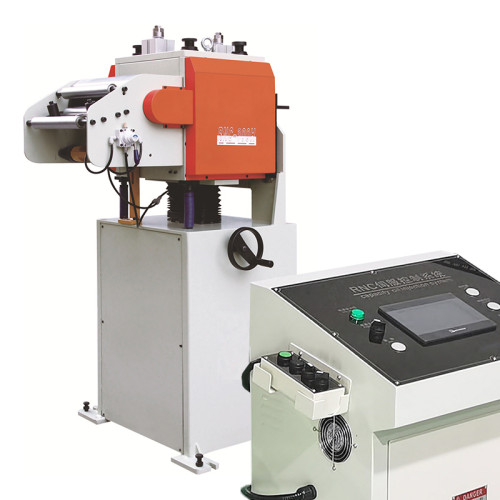
Coil wobble is one of those problems every stamper knows but few stop to diagnose properly. The coil on the decoiler starts oscillating side to side, the strip rubs against the straightener entry guide, and suddenly you are dealing with edge scratches, uneven strip tension, and parts that reject for surface defects that had nothing to do with the die. On a line feeding a high-speed press, the wobble compounds at every stage downstream, and by the time it reaches an NC Straightener Feeder or NC servo feeder, the damage is already done to the strip edge. The good news is that coil wobble on a motorized decoiler is a fully preventable condition — it comes from a handful of identifiable causes, and each one has a straightforward fix. This guide explains where wobble comes from, how to diagnose it in under ten minutes, and how to set up and maintain a motorized decoiler so the coil tracks dead straight into the straightener every time.
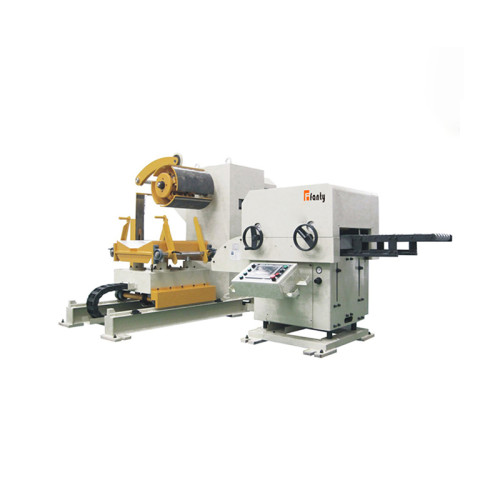
Coil wobble is never "normal." If the coil oscillates side to side while unwinding, something in the setup, the coil, or the machine is out of tolerance, and it will cost you in scrap and rejects until it is fixed. FANTY builds motorized decoilers, 3-in-1 decoiler straightener feeders, and complete coil handling lines from a 45,000 m² factory with 370 staff and 80+ R&D engineers, supporting 200+ active line installations in 60+ countries — and the troubleshooting routine below is the one our field engineers actually run on site.
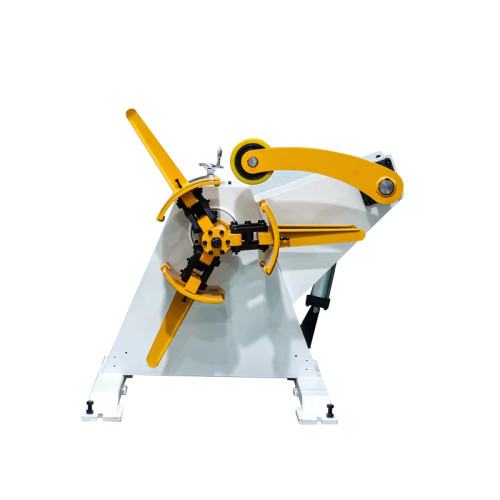
 A motorized decoiler feeding strip into the straightener — the coil must track straight or everything downstream suffers.
What Actually Causes Coil Wobble on a Motorized Decoiler?
Before you reach for tools, understand the mechanics. A coil is a heavy, flexible ring of steel spinning on a mandrel. It wobbles when the forces around it are unbalanced — when the coil is not centered on the mandrel, when the mandrel is not level, when the expansion is uneven, or when the coil itself has telescoping layers. Each cause produces a slightly different wobble pattern, and reading that pattern is the fastest way to the fix:
| Symptom | Most Likely Cause | Quick Check |
|---|---|---|
| Wobble at coil start, settles later | Coil not centered on mandrel | Re-center the coil, check ID vs. mandrel size |
| Constant wobble at all speeds | Mandrel or base not level | Check with a spirit level, shim the base |
| Wobble only at high unwind speed | Coil out of balance / telescoped layers | Inspect coil edges for telescoping |
| Strip edge rubs one guide consistently | Straightener entry misaligned with decoiler | Align centerlines with a string line |
| Wobble gets worse as coil empties | Expansion fingers not gripping evenly | Verify all segments expand to the same OD |
If you can name the pattern, you are already 80% of the way to the fix. The remaining steps are mechanical adjustments, all of which are covered below.
Center the Coil on the Mandrel — the #1 Wobble Cause
Most wobble starts at coil loading. When the coil ID is significantly larger than the mandrel, operators often load it slightly off-center, and the coil spins like an unbalanced wheel. On a motorized decoiler with hydraulic expansion, the fix is to center the coil visually on the mandrel axis before expanding, then expand the fingers so every segment grips the coil ID evenly.
- Match mandrel size to coil ID. The mandrel should be close to the coil ID so the expansion travel is small and even.
- Load against the back stop. Slide the coil fully against the back plate so the strip unwinds in one consistent plane.
- Expand evenly. On hydraulic units, cycle the expansion twice and confirm all segments contact the coil ID with equal pressure.
- Watch the first wrap. The first 2–3 wraps after loading show immediately whether the coil is true — fix it before starting production.
A coil that is loaded dead center on the mandrel and square against the back stop almost never wobbles, regardless of unwind speed.
Level the Decoiler and Align It with the Line
The second classic cause is a machine that is not level or not aligned with the downstream equipment. If the decoiler base tilts even a degree, the coil wants to walk to the low side as it spins. The same happens when the decoiler centerline is offset from the straightener entry — the strip enters at an angle and constantly fights the guide rollers.
Alignment takes ten minutes and a spirit level plus a string line:
- Check the base. Place a spirit level across the base plate front-to-back and side-to-side; shim until both read level.
- Check the mandrel. With no coil loaded, confirm the mandrel itself is level — a bent or drooping mandrel is a machine repair, not a shim job.
- String-line the line. Run a string from the decoiler center to the straightener entry center and to the feeder; all three should touch the string.
- Lock the position. Once aligned, mark the floor and bolt the decoiler down so a coil change never shifts it.
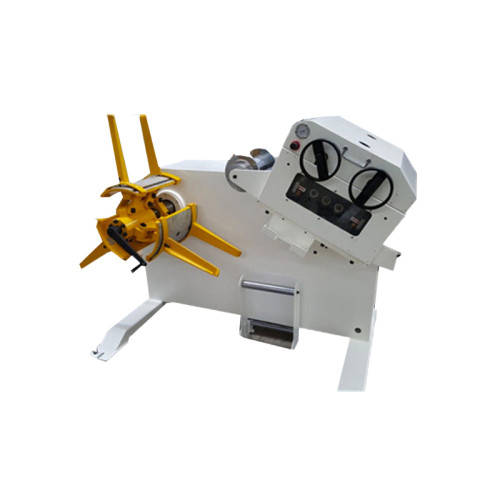
 Level and align the decoiler with the straightener and NC servo feeder — a ten-minute job that eliminates most wobble.
Balance Speed Against Coil Condition
Some wobble only appears at higher unwind speeds, and the cause is usually the coil itself — a coil with telescoped layers, a slightly distorted ID, or uneven winding has its own natural wobble that gets amplified as RPM rises. On a motorized decoiler with speed control, the practical fix is to run the lowest unwind speed that keeps up with the press, letting the loop control do its job rather than spinning the coil at maximum speed.
If your line must run fast and the coil still wobbles, check whether the coil supplier is delivering telescoped coils — reject them at the receiving dock rather than fighting them on the line. A telescoped coil will never run straight, no matter how well the decoiler is set up.
Inspect and Maintain the Expansion System
The expansion system is the heart of a motorized decoiler, and uneven expansion is a silent wobble generator. Over years of service, expansion fingers wear, hydraulic seals bleed pressure, and grease dries out — and the coil starts to grip on only one or two segments instead of all of them. The symptom is a slow wobble that worsens as the coil weight drops, because the remaining friction is concentrated in one spot.
Include these checks in your preventive maintenance schedule:
- Verify full expansion. With a coil loaded, check that all segments extend to the same diameter using the built-in scale or a caliper.
- Check hydraulic pressure. Confirm the expansion pressure holds when the pump cycles off — a leaking valve shows as a coil that loosens during the run.
- Grease the slides. Follow the manufacturer's schedule for the sliding surfaces; dry slides bind and cause uneven grip.
- Look at the fingers. Replace fingers that are worn, scored, or burred — they mark the coil ID and grip unevenly.
A motorized decoiler with a healthy expansion system grips the coil ID with even, distributed force, and an evenly gripped coil simply cannot wobble.
Loop Control: Let the Feeder Pull, Not the Decoiler Push
One more cause of instability is driving the decoiler harder than it needs. The decoiler's job is to pay out strip at the rate the line consumes it, controlled by a loop sensor between the decoiler and the straightener. If the loop control is set too aggressively, the coil jerks forward and starts oscillating; if the sensor is misaligned, the decoiler overruns and the coil whips. On FANTY lines, the motorized decoiler is tuned to maintain a gentle, consistent loop so the downstream NC Straightener Feeder or NC servo feeder pulls strip under steady tension.
- Set the loop sensor window. The sensor should cover the full working loop so the decoiler starts and stops smoothly, never in jerks.
- Use speed matching. Modern motorized decoilers ramp speed to match consumption instead of running on-off cycles.
- Check for overrun. If the coil overruns when the line stops, the braking is insufficient — a wobble and a safety hazard in one.
When to Call the Builder
If you have re-centered the coil, leveled and aligned the machine, balanced the speed, and serviced the expansion system and the wobble is still there, the fault is likely internal — a bent mandrel, a worn bearing, or a misaligned drive. That is the point to stop adjusting and bring in an experienced service engineer. Continuing to run a wobbling coil damages the strip edge, the straightener rolls, and the die, so the cost of a service call is almost always less than the damage it prevents.
Frequently Asked Questions About Decoiler Coil Wobble
Is some coil wobble acceptable on a motorized decoiler?
No. A correctly loaded, level, and maintained decoiler runs a coil dead straight. Any visible oscillation means something is out of tolerance, and every millimeter of wobble translates into edge rubbing and strip damage downstream. Fix the cause rather than accepting the symptom.
Can a telescoped coil be fixed on the decoiler?
Not really. Telescoping is a coil defect from the mill or the slitter — the layers are already offset. You can reduce the symptom by running slower and keeping tension gentle, but the reliable fix is to reject telescoped coils at incoming inspection and hold the supplier accountable.
Does wobble damage the straightener rolls?
Yes. The strip enters the straightener at a slight angle when the coil wobbles, and the edge constantly impacts the same spot on the entry rolls. Over time that creates wear grooves and can even crack a roll surface. Protecting the straightener starts with a straight feed from the decoiler.
How often should the expansion system be serviced?
As a rule, inspect the expansion fingers and hydraulic pressure every month, and service the slides and seals every 6–12 months depending on duty. Lines running three shifts should be on the aggressive end of that range. Log the checks so wear trends are visible.
What is the best way to load a coil to prevent wobble?
Center the coil on the mandrel before expansion, slide it against the back stop, and expand in two cycles so the segments grip evenly. Then hand-rotate the coil one full turn to confirm it runs true before engaging production. That 60-second check prevents most wobble problems.
Decoiler Wobble Troubleshooting Checklist
Print this and keep it at the decoiler — it turns a vague "the coil is wobbling" complaint into a five-step fix:
- Is the coil centered on the mandrel and square to the back stop?
- Is the decoiler base level front-to-back and side-to-side?
- Is the decoiler centerline aligned with the straightener and feeder?
- Are all expansion segments gripping the coil ID evenly?
- Is unwind speed matched to line consumption, not maxed out?
- Is the loop sensor window set for a gentle, consistent loop?
- Is the coil free of telescoping defects from the supplier?
- If all checks pass, has the builder inspected the mandrel and bearings?
Wobble is a symptom, and symptoms have causes. Fix the cause, and the coil runs straight, the strip edges stay clean, the straightener rolls last longer, and your rejects drop — which is what a properly engineered coil feeding line should do every single shift.
Need Help with Your Decoiler Setup?
Send us your coil sizes, line layout, and the wobble symptom you are seeing. FANTY's engineers will help you diagnose the cause and recommend the right motorized decoiler or 3-in-1 decoiler straightener feeder configuration for your line.
Talk to an Application Engineer