How to Diagnose and Fix Coil Camber with an NC Straightener?
Coil camber is the silent quality thief of the stamping industry. It is the lateral curvature of a strip — the way the strip drifts sideways like a banana when laid on a flat surface — and it exists in almost every coil to some degree, hidden by the tension of the wound coil. The moment the strip unwinds and enters the press line, that latent curve becomes a live problem: the strip wanders in the die guides, parts cut near the edge come out incomplete, and the operator responds by slowing the line or adding strip width as a safety margin. Both responses cost money every single shift. The fix is not more guide pressure; it is coil camber correction with an NC straightener, a machine specifically designed to bend the strip back to flat before it reaches the die. This guide explains how to diagnose camber reliably, how a servo straightener removes it, and how to verify the correction so the die always sees a straight strip.
FANTY Machinery builds NC servo straighteners with precision-ground rolls and servo-driven roll-gap adjustment, and we have spent twelve years measuring how strip shape defects behave on real stamping lines. The diagnostic method below is the one our field engineers use during commissioning.
What Camber Is and How to Measure It
Camber is measured by laying a fixed length of strip on a flat surface and measuring the deviation of the strip edge from a straight reference line. A common shop test uses a 1-meter length: if the edge deviates more than a few millimeters over one meter, the strip will cause trouble in a die with tight guides. The defect comes from asymmetric rolling or processing at the mill — one edge of the strip is effectively longer than the other, so the strip curls toward the shorter side. No amount of downstream tension can remove it, because tension straightens the strip only along its length; camber is a shape error across the width, and it needs bending, not pulling.
Diagnosing camber in production requires a second measurement as well: the behavior of the strip as it leaves the coil. A coil with latent camber shows a telltale pattern — the strip edge alternately presses against one guide and then the other, or the scrap skeleton curls noticeably to one side. Operators often describe this as "the strip never runs straight," and they compensate by widening the guides, which makes accuracy worse. If you see uneven edge wear on the die, one-sided burr, or inconsistent part dimensions from the same coil, camber is a prime suspect — measure the strip on the bench to confirm before adjusting anything on the line.

Do not confuse camber with crossbow or edge wave. Crossbow is a transverse curvature across the width, like a shallow trough; edge wave is a wavy edge, usually from uneven tension at the mill. Each defect requires a different correction strategy, and a good straightener addresses them together: roll-gap settings bend the strip through alternating rolls to remove crossbow and edge wave, while the overall roll configuration and entry geometry handle camber. The diagnostic skill is knowing which defect you are looking at, and the equipment skill is knowing how much bend to apply.
How an NC Straightener Corrects the Strip Shape
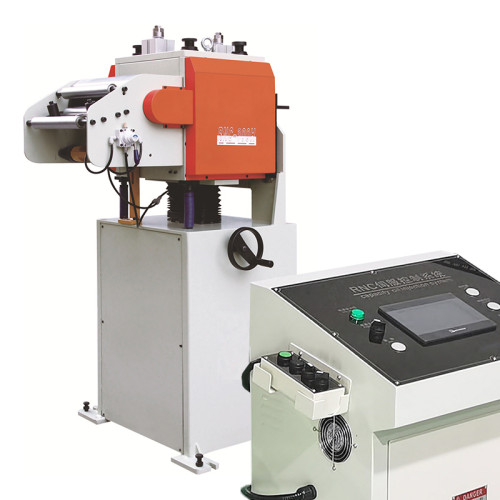
A straightener removes shape defects by bending the strip around a series of staggered rolls. As the strip snakes through the machine, each roll pair applies controlled bending, and the accumulated plastic deformation rebuilds the strip's internal stress balance so that, when it exits, all fibers across the width are effectively the same length — which is exactly what "flat and straight" means. The number of rolls, their diameter, and the roll gap determine how much correction the machine can deliver. More rolls mean gentler, more uniform bending, which is why precision straighteners for thin, sensitive material use nine, eleven or even more rolls rather than three or five.
The NC in NC straightener matters for two reasons: precision and repeatability. Servo-driven roll-gap adjustment sets the penetration of each roll into the strip to within fractions of a millimeter — the difference between over-bending the strip into reverse camber and barely touching it. And because the settings are stored digitally, the operator recalls the proven setup for each material and thickness at changeover instead of re-tuning by trial and error. On a line running multiple jobs per day, that repeatability converts a skilled operator's intuition into a documented, reliable process:
- Measure first — bench-test a strip sample to identify the defect type and its magnitude before touching the machine settings.
- Set entry roll gap — start with the penetration the material thickness suggests, then adjust in small increments, feeding short samples between each change.
- Verify on the bench — re-test the corrected sample for camber and crossbow; the target is a deviation of roughly zero over one meter.
- Save the recipe — store the validated settings under the material and thickness code so the next changeover takes minutes, not hours.
- Monitor in production — check the outgoing strip edge alignment every few hours; drift indicates material change or roll wear, both of which are fixable early.
Roll Settings by Material: A Practical Reference
The table below shows typical starting roll-gap relationships for common stamping materials. Treat these as starting points only — the correct setting for your exact coil must be verified by the bench test, because hardness, thickness tolerance and incoming shape all shift the optimum:
| Material | Typical thickness range | Starting roll penetration | Common defect after correction |
|---|---|---|---|
| Mild steel | 0.5–3.0 mm | Medium | Over-bend if set too deep — watch for reverse camber |
| Stainless steel | 0.4–2.5 mm | Medium-high (harder material needs more bend) | Work-hardening — avoid excessive passes |
| Aluminum | 0.5–4.0 mm | Low-medium (soft material marks easily) | Roll marks — keep pinch force low |
| Copper / brass | 0.3–3.0 mm | Low | Scratches — verify roller surface condition |
| High-strength steel | 0.8–3.5 mm | High (springback is significant) | Insufficient correction — may need more rolls |
The relationship between material hardness and required bend explains the most common straightener mistake: applying a mild-steel recipe to high-strength steel, then wondering why the camber is still there. Springback — the material's tendency to return toward its original shape after bending — increases with yield strength. High-strength steel needs deeper roll penetration and often more rolls to achieve the same flat result. This is why the roll count and roll diameter of a straightener should be selected with your whole material portfolio in mind, not just your most common coil.

An often-overlooked detail is the straightener's own maintenance. Precision-ground rolls wear at the contact line, and a worn roll reintroduces shape defects even with perfect settings. Check roll surface condition at every scheduled service, measure roll parallelism with the strip in place, and verify that the entry and exit guides align with the die centerline. A straightener that drifts out of alignment will create camber rather than remove it — a failure mode that confuses operators because the settings look correct on the screen.
Building a Camber Control Routine That Sticks
Eliminating camber problems on a stamping line is less about any single adjustment and more about a routine that repeats every coil, every job and every shift. Start with receiving: spot-check a strip sample from each new coil for camber and record the measurement in the coil log. After six months, that log will tell you which suppliers and which storage conditions deliver the straightest strip, and you can negotiate or select accordingly. Then standardize the straightener setup: with NC servo settings stored by material code, the recipe is loaded in under a minute, and the operator's job becomes verification, not tuning.
Finally, tie the routine to quality data. If a part dimension drifts during the shift, check the strip before checking the die — a camber excursion is a ten-minute fix, while a die inspection can take hours. On the 200+ lines FANTY has commissioned in more than 60 countries, we have seen this habit transform lines that were chronically slow and scrap-heavy into predictable, high-speed producers. The equipment is only half of it; the other half is a team that measures, records and reacts. With the right straightener and the right routine, camber stops being a recurring headache and becomes just another controlled process variable.
Coil Camber: Frequently Asked Questions
How much camber is acceptable before it causes problems?
As a practical rule, a deviation under 2 mm over a one-meter sample is tolerable for most dies with reasonable guide clearance. Beyond that, expect scrap and guide wear. Tight-tolerance dies and high-speed lines demand effectively zero camber, which is why a straightener is standard equipment on any precision progressive line.
Can a straightener remove camber completely?
Within the machine's capacity, yes — the exit strip can be flat to nearly zero deviation. The limits are roll count and material: very thick or very high-strength strip may need a heavier straightener than the one installed. That is why sizing should consider your full material range, not just the thinnest coil you run today.
Why does my straightener settings work for one coil but not the next?
Coils vary in hardness, thickness tolerance and incoming shape even from the same supplier. The stored NC recipe is the starting point; verification with a bench sample tells you whether this particular coil needs a small adjustment. If every coil needs large adjustments, check the incoming material quality and your straightener's roll condition — the problem may be upstream or in the machine itself.
Is an NC servo straightener worth the extra cost over a manual one?
For a single-material, single-speed line, a manual straightener can be adequate. For mixed portfolios and high-speed production, the NC version pays for itself through repeatable setups, faster changeovers and consistent accuracy — the stored recipes eliminate the trial-and-error that consumes the first hour of every job change on manual machines.
Straighten the Strip, Stabilize the Line
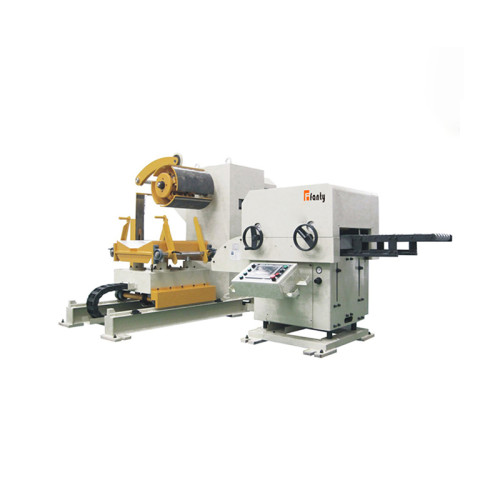
Send us your material list and current strip-shape issues, and FANTY will recommend the right NC straightener — roll count, roll gap control and integration with your decoiler and feeder.
Request a Straightener Sizing