What Is a 3-in-1 Decoiler Straightener Feeder? A Complete Guide for Stamping Lines
If you manage a metal stamping operation, you have likely seen three separate machines consuming valuable floor space — a decoiler holding the coil, a straightener leveling the strip, and a servo feeder pushing material into the press. A 3-in-1 decoiler straightener feeder, also known as an NC straightener feeder, integrates all three functions into one compact, synchronized system. This guide explains what it is, how it works, and how it can transform your stamping productivity.
What Is a 3-in-1 Decoiler Straightener Feeder?
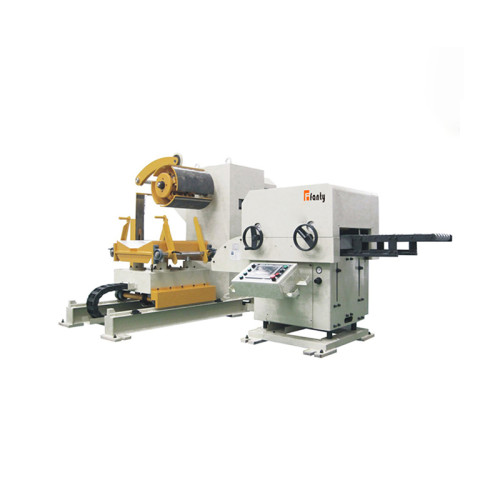
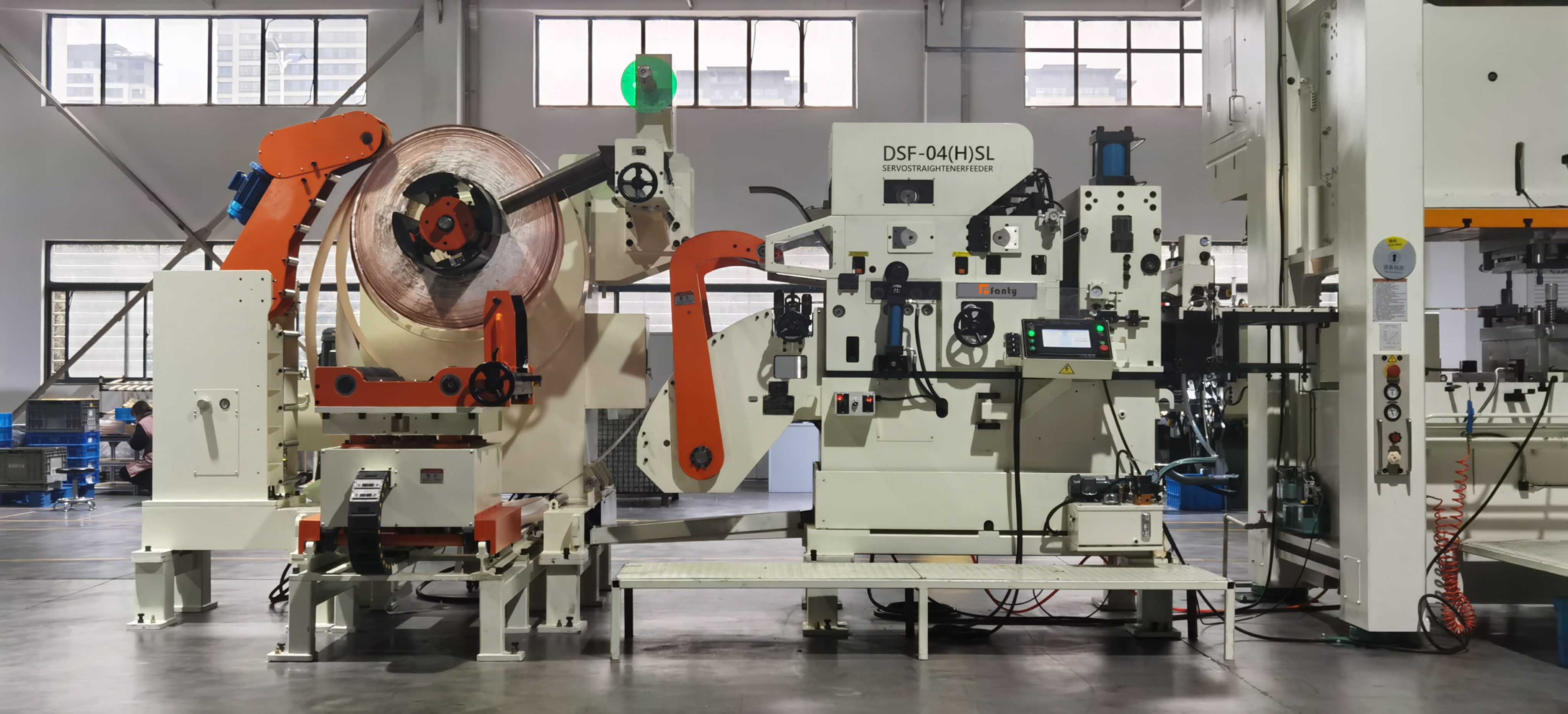
A 3-in-1 decoiler straightener feeder is a single integrated machine that performs three sequential operations on metal coil stock. First, it unwinds the coil (decoiling). Second, it flattens the strip and removes coil set (straightening). Third, it advances the material into the press at a precise, programmable length (feeding). Unlike traditional systems that use physically separate units for each function, the 3-in-1 design delivers the material through a continuous, gapless path from the coil to the die.
This integrated design eliminates several sources of variation that plague separate systems. In a traditional setup, each machine has its own alignment, drive system, and control interface. The material must travel through loop pits or free-loop arcs between machines, introducing tension variation and potential for edge damage. The 3-in-1 design eliminates these transition points, delivering a shorter, more controlled material path that improves accuracy and reduces setup time.
How the Three Functions Work Together
Understanding how the three functions interact helps explain why the integrated design is so effective:
1. Decoiling (Unwinding)
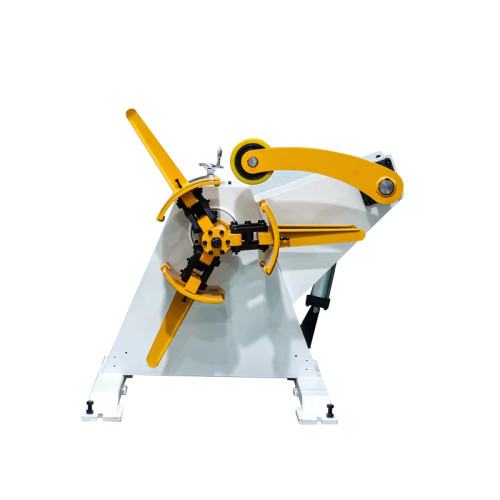
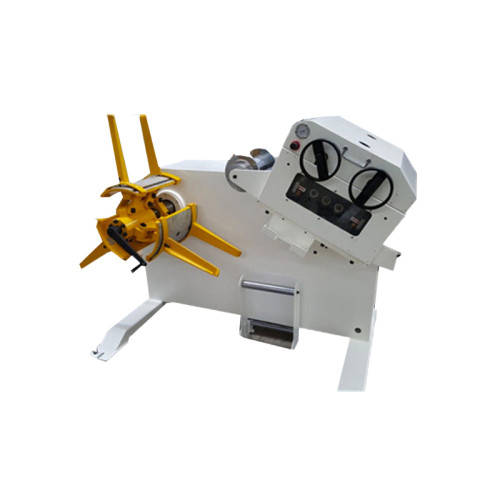
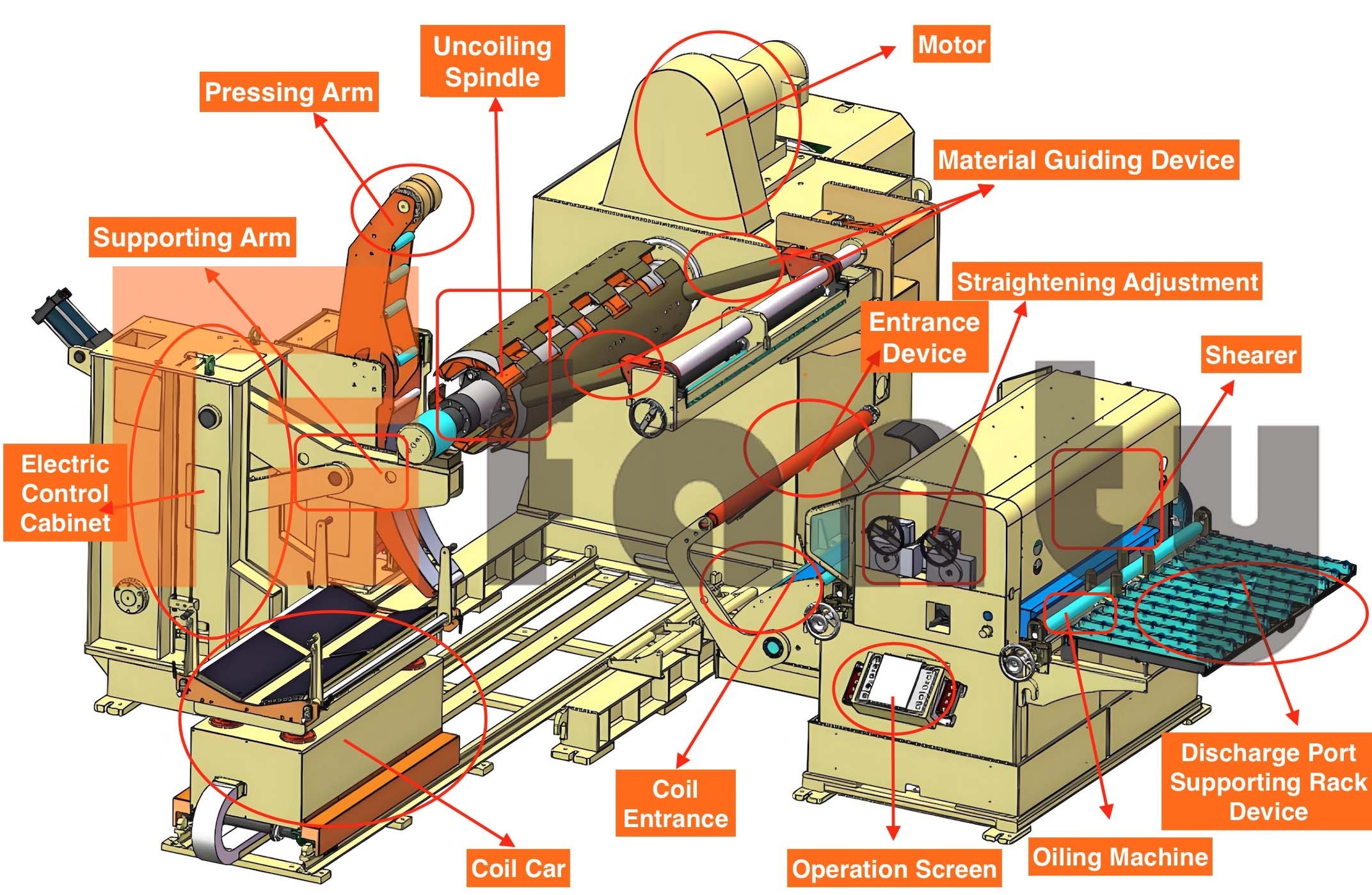
The metal coil is loaded onto an expanding mandrel using a coil car or forklift. The mandrel expands to grip the coil's inner diameter securely. A motorized pressing arm prevents the outer coil wrap from springing loose during unwinding. A variable-frequency drive controls the rotation speed, synchronized with the downstream demand through a loop sensor or photoelectric eye. The decoiler section must maintain consistent tension without overfeeding or underfeeding the straightener — any instability here affects the entire line.
2. Straightening (Leveling)
The strip passes through a series of alternating rollers — typically 7 to 17 — that bend the material progressively in opposite directions. This reverse bending relieves the internal stress (coil set) created when the metal was originally coiled at the steel mill. The number of rollers, their diameter, and the precision of gap adjustment determine the flatness quality. For demanding applications, an NC straightener feeder with servo-controlled roller gap adjustment delivers repeatable flatness within ±0.1 mm per meter.
3. Feeding
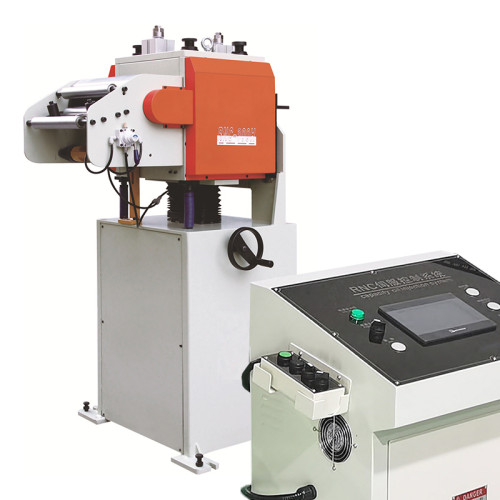
The servo-driven feeder section advances the straightened material into the press at a programmable speed and length. Modern NC servo feeders achieve repeatable accuracy of ±0.05 mm at speeds up to 200 strokes per minute, synchronized with the press angle encoder for precise timing. The feeder control system stores multiple job profiles, allowing operators to switch between different parts with a single touchscreen selection.
3-in-1 vs Traditional Separate Systems
| Feature | Traditional Separate Units | 3-in-1 Integrated System |
|---|---|---|
| Floor Space Required | 6-8 meters | 3-4 meters — up to 50% reduction |
| Setup Time per Job Change | 45-90 minutes | 5-15 minutes with digital presets |
| Feeding Accuracy | ±0.15 to 0.3 mm | ±0.05 to 0.1 mm |
| Operator Skill Required | High — must manage multiple controls | Moderate — single HMI touchscreen |
| Maintenance Points | Three separate machines to maintain | One machine with centralized access |
| Alignment Procedure | Three alignments needed at installation | Factory pre-set, single alignment check |
Which Industries Benefit Most?
| Industry | Typical Parts Produced | Key Requirement |
|---|---|---|
| Automotive | Body panels, brackets, chassis components | High precision (±0.05 mm) and high volume throughput |
| Home Appliances | Refrigerator panels, washing machine drums | Scratch-free processing for pre-painted materials |
| Electronics | Connectors, shields, heat sinks | Fine-pitch feeding for progressive dies |
| Hardware & Construction | Fasteners, hinges, roofing components | Cost-effective solution for medium-volume runs |
| EV & Solar Energy | Battery enclosures, solar frame profiles | Multi-material handling (aluminum, copper, HSS) |
Measurable Benefits of Going Integrated
- 50% space savings — eliminating the loop area between straightener and feeder frees up valuable floor space for additional press lines or die storage
- 80% faster changeovers — digital job presets allow operators to recall feed length, speed, and straightener settings in seconds rather than manually adjusting each machine
- 25% scrap reduction — the gapless material path eliminates misfeeds during threading and reduces setup waste
- Simpler operation — one HMI touchscreen controls all three functions; one operator can manage multiple press lines simultaneously
- Lower maintenance costs — fewer components, fewer alignment points, and fewer potential failure modes compared to three separate machines
How to Select the Right Model
Selecting the right 3-in-1 decoiler straightener feeder requires matching machine specifications to your actual production data. Start by defining your material thickness range (light-duty 0.2-3.2 mm, medium 0.5-4.5 mm, or heavy 0.6-8.0 mm), maximum coil width and weight, required feeding accuracy, and production speed. Factor in future material and volume changes to avoid outgrowing your investment too quickly.
FANTY Machinery offers a comprehensive range of CE-certified 3-in-1 decoiler straightener feeders from our 45,000 m² facility in Dongguan, China. With over 80 R&D engineers, 370 skilled employees, and 12 years of industry experience, we custom-engineer each machine to match your exact production requirements. Our machines feature Mitsubishi and Siemens controls, Yaskawa servo drives, and are trusted by customers in over 60 countries worldwide — from automotive Tier 1 suppliers in Germany to appliance manufacturers in Brazil.
Frequently Asked Questions
What is the difference between a 3-in-1 and an NC straightener feeder?
They refer to the same type of integrated machine. "3-in-1 decoiler straightener feeder" emphasizes the three combined functions, while "NC straightener feeder" highlights the numerical control (servo) feeding capability. FANTY's DSF series combines both — full 3-in-1 integration with precision NC servo feeding.
How much floor space does a 3-in-1 system save?
A typical separate decoiler + straightener + feeder layout requires 6-8 meters of linear space. A 3-in-1 integrated system fits in 3-4 meters — approximately 50% space savings, depending on coil width and model size.
Can an NC straightener feeder handle both thin aluminum and thick steel?
Yes, within the specified range. FANTY offers models covering 0.2 mm to 8.0 mm material thickness. Each model is optimized for its specific range using appropriate roller diameters, motor power, and frame rigidity. However, switching between extremes (e.g., 0.3 mm aluminum to 6 mm steel) may require roller changeover for optimal performance.
What training is provided with the machine?
FANTY includes comprehensive operator training — both on-site (optional) and remote via video conference. We also provide detailed video tutorials, a printed operation manual, and ongoing technical support for the life of the machine.
Looking for a reliable 3-in-1 decoiler straightener feeder? Contact FANTY Machinery for a free consultation and custom quote within 24 hours.