NC Servo Feeder vs Mechanical Feeder: Which One Should You Choose for Your Press Line?
A misfeed on a progressive die can scrap an entire coil of material and damage a $50,000 tool in seconds. The choice between an NC servo feeder and a mechanical feeder directly affects your scrap rate, die life, changeover speed, operator requirements, and overall profitability.
This detailed comparison examines the key differences in accuracy, speed, maintenance, and total cost of ownership — helping you choose the right feeding technology for your specific production needs.
Head-to-Head Technical Comparison
| Parameter | NC Servo Feeder | Mechanical Feeder |
|---|---|---|
| Drive Mechanism | Programmable servo motor (PLC controlled) | Eccentric shaft or cam driven by press |
| Feed Accuracy | ±0.05 mm (closed-loop encoder feedback) | ±0.2 to 0.5 mm (open-loop, cam tolerance) |
| Maximum Speed | 200+ strokes per minute | 80-120 strokes per minute |
| Feed Length Range | 0.1 mm to 9,999 mm (any length programmable) | Limited by cam profile; typically 0-500 mm |
| Setup / Changeover | Seconds — digital preset on touchscreen | 10-30 minutes — manual cam adjustment |
| Independent Operation | Runs independently of press stroke | Must be mechanically linked to press |
When to Choose an NC Servo Feeder
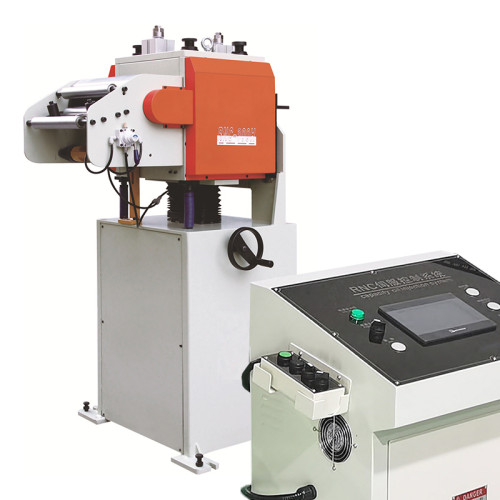
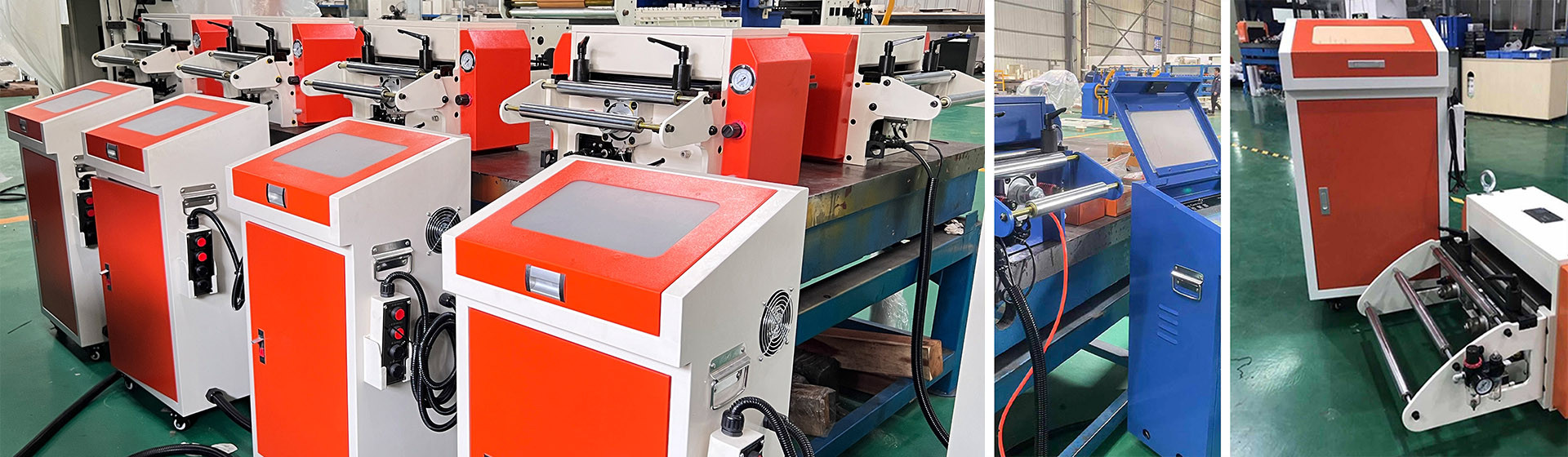
An NC servo feeder uses a dedicated servo motor controlled by a PLC to advance material with extreme precision. The operator sets feed length, speed, acceleration, and timing through a touchscreen interface, and the feeder executes these parameters independently of the press cycle. Ideal for:
- High-precision stamping: Automotive parts, electrical contacts, and electronic connectors where ±0.05 mm accuracy is non-negotiable
- Frequent job changes: Short-run, high-mix production where setup time directly affects profitability
- High-speed operations: Running above 120 SPM where mechanical feeders cannot maintain consistent accuracy
- Progressive dies: Multi-station dies requiring consistent pilot pin entry every single cycle
- Complex feed profiles: Multi-stage feeding with different speeds for acceleration, positioning, and deceleration
When to Choose a Mechanical Feeder
A mechanical feeder is driven directly by the press through an eccentric shaft, gear train, or cam mechanism. Its motion is mechanically synchronized with the press stroke. Ideal for:
- Simple, repetitive jobs running the same part for days or weeks without changes
- Budget-constrained projects with lower initial investment requirements
- Under 100 SPM where mechanical systems are reliable and well-proven over decades
- Thicker materials needing robust mechanical drive components
- Existing press compatibility for retrofitting older mechanical-drive presses
5-Year Total Cost of Ownership Comparison
When evaluating cost, look beyond the purchase price. The total cost of ownership over 5 years tells a different story — especially in high-mix environments where changeover frequency is high.
| Cost Factor | NC Servo Feeder | Mechanical Feeder |
|---|---|---|
| Initial Purchase | $$$ — $4,000 to $15,000+ | $ — $1,500 to $5,000 |
| Installation Cost | $ — simple electrical connection | $$ — mechanical linkage and alignment |
| Changeover Labor (5 yr) | $ — seconds per change, negligible cost | $$$ — 10-30 min per change times frequency |
| Die Damage Risk (5 yr) | $ — built-in misfeed detection protects dies | $$$ — misfeeds can destroy expensive progressive dies |
| Maintenance (5 yr) | $ — minimal wear parts, no clutch/brake | $$ — gears, clutches, brake linings replacement |
In a typical high-mix environment with 5+ job changes per day, an NC servo feeder pays for itself within 12-18 months through reduced setup labor, lower scrap rates, and fewer die repairs alone.
FAQ
Can a mechanical feeder match servo accuracy?
No. Mechanical feeders are limited by cam tolerances and mechanical wear to ±0.2-0.5 mm. NC servo feeders with closed-loop encoder feedback maintain ±0.05 mm consistently. For progressive die work requiring tight pilot hole tolerances, servo feeding is the industry standard.
How fast is job change on a servo feeder?
Changing feed length on an NC servo feeder is a digital entry on the touchscreen — under 30 seconds. On a mechanical feeder, you must manually adjust the cam or crank mechanism, which takes 10-30 minutes depending on complexity.
Do servo feeders require special training?
Basic operation is intuitive through the touchscreen interface. FANTY provides comprehensive operator training and video tutorials with every NC servo feeder. Most operators become proficient within one shift.
Which type is more reliable long-term?
Both are reliable when properly maintained. NC servo feeders have fewer mechanical wear parts — no clutch, no brake linings — reducing long-term maintenance needs. They do require basic electrical troubleshooting knowledge.
Related reading
Part of the the coil line guide library — the full library of coil handling, straightening and feeding guides from FANTY.
Not sure which feeder fits your line? Talk to FANTY's feeding experts for a free, no-obligation recommendation.