
What Is a Decoiler Machine?
A decoiler machine, often called an uncoiler, is a vital piece of industrial equipment designed to unwind large rolls of coiled materials—like steel, aluminum, or stainless steel—and feed them steadily into downstream processes. Imagine a massive spool of thread, but for heavy-duty metal: the decoiler grips the coil's inner core, rotates it smoothly, and dispenses flat strips without snags or waste. This prevents production halts, ensuring continuous flow in lines for stamping, cutting, or forming. At its core, it's about transforming bulky, stored coils into usable sheets, boosting throughput by up to 30% in high-volume setups. From my years advising manufacturers, I've seen decoilers cut downtime dramatically—think of a busy auto parts factory where uncoiling glitches once idled presses for hours. Now, with reliable models, lines hum 24/7.
In essence, a decoiler isn't just a holder; it's a precision feeder that maintains tension to avoid material buckling or stretching. For beginners, picture it as the "opener" in a metal sandwich assembly—unfurling the base layer for everything else to build on. Fanty, with our 10+ years crafting these since 2013, designs decoilers that integrate seamlessly with straighteners and feeders, minimizing setup time and maximizing output. Our mission? Help you slash line stoppages while enhancing precision—because in manufacturing, every second counts.
How Does a Decoiler Machine Work?
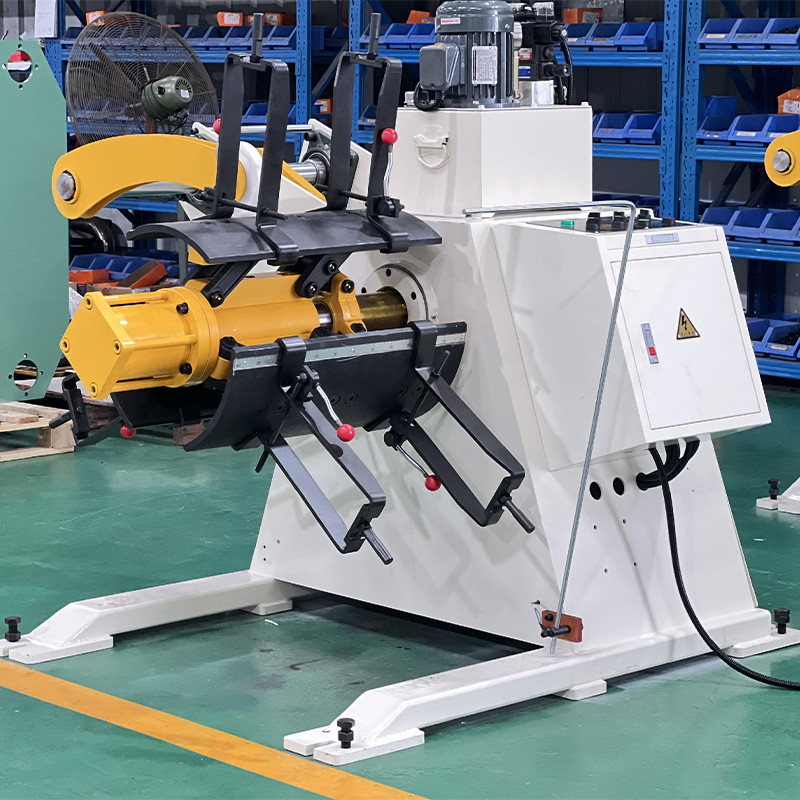
The magic of a decoiler starts with loading: A coil car shuttles the heavy roll onto the machine's mandrel, which expands to clamp it securely—hydraulically for big loads, mechanically for lighter ones. As downstream equipment pulls the material, an electric motor or gearbox drives the mandrel's rotation, uncoiling at controlled speeds up to 100 meters per minute. Tension brakes apply just-right pressure to prevent slack, while sensors monitor for overloads, auto-adjusting to keep feeds even. It's a symphony of mechanics and electronics, where one misstep could wrinkle a $10,000 coil. In practice, I've consulted on lines where poor tension caused 15% scrap rates; switching to smart controls dropped that to under 2%.
The process ends with guided exit rolls directing the strip straight into feeders or levelers, ready for punching or bending. For users like you, this means predictable workflows—no more frantic coil swaps mid-shift. Fanty's decoilers, built in our 45,000㎡ Dongguan facility, incorporate world-class components for radial runout under 0.01mm, ensuring flawless performance. We've powered U.S. auto lines since 2018, proving our tech scales from small shops to global giants.
What Are the Key Components of a Decoiler Machine?
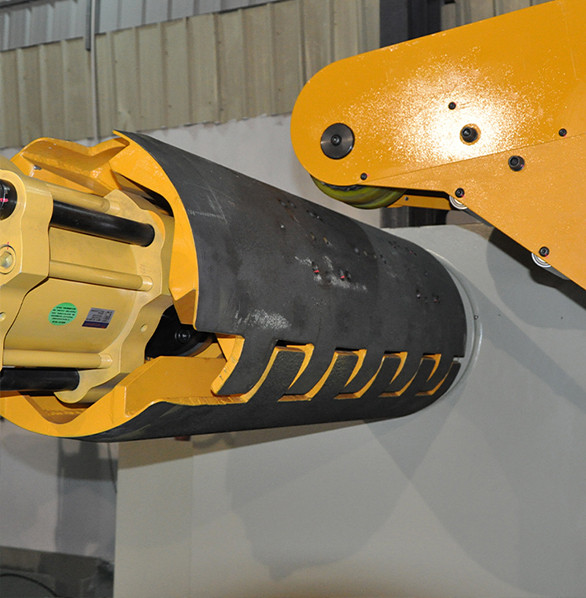
Every decoiler boils down to a handful of robust parts working in harmony. The star is the mandrel—the expandable spindle that grips the coil's ID, often hydraulic for loads over 10 tons. Supporting it are coil cars for easy loading, reducing worker strain by 50%. Tension controls, like pneumatic brakes, fine-tune unwind speed to match pull rates, avoiding tears. Drive systems—motors and reducers—provide torque, while exit guides and sensors ensure alignment. Don't overlook the frame: Powder-coated steel withstands factory grit for years.
From experience, underrated components like photoelectric eyes prevent jams by detecting strip ends early. At Fanty, we QC every roller to HRC60 hardness, drawing from our 80+ R&D team's innovations. This isn't off-the-shelf; it's tailored for your coil specs, whether 0.2mm thin sheets or 6mm thick plates. Clients rave about our integrated straightener-decoiler combos, which cut component counts and boost reliability.
What Types of Decoiler Machines Are Available?
Decoilers come in flavors to fit your scale and needs. Manual ones suit low-volume shops—simple crank-operated for coils under 5 tons, affordable at startup. Hydraulic models dominate heavy industry, auto-expanding for 20+ ton loads with minimal effort. Motorized variants add powered unwinding for speed, ideal for continuous lines. Then there's double-head decoilers for non-stop operation: One loads while the other feeds, slashing changeover time by 70%. Cone types handle tapered coils, preventing slippage in specialty metals.
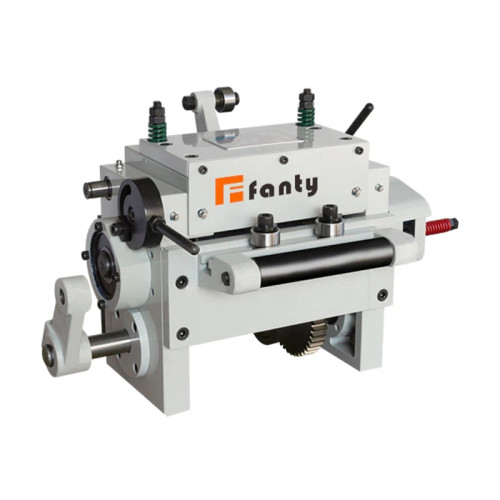
Choosing wrong? I've seen mismatched types bottleneck flows. Fanty excels in hybrids, like our Decoiler Straightener Feeder for 0.5-4.5mm steel—compact, versatile, and OEM-customizable. Since our 2015 robotics push, we've evolved these for smart factories, integrating with multi-axis arms for true automation. Your throughput goals guide us; let's chat specs.
What Are the Main Applications of Decoiler Machines in Manufacturing?
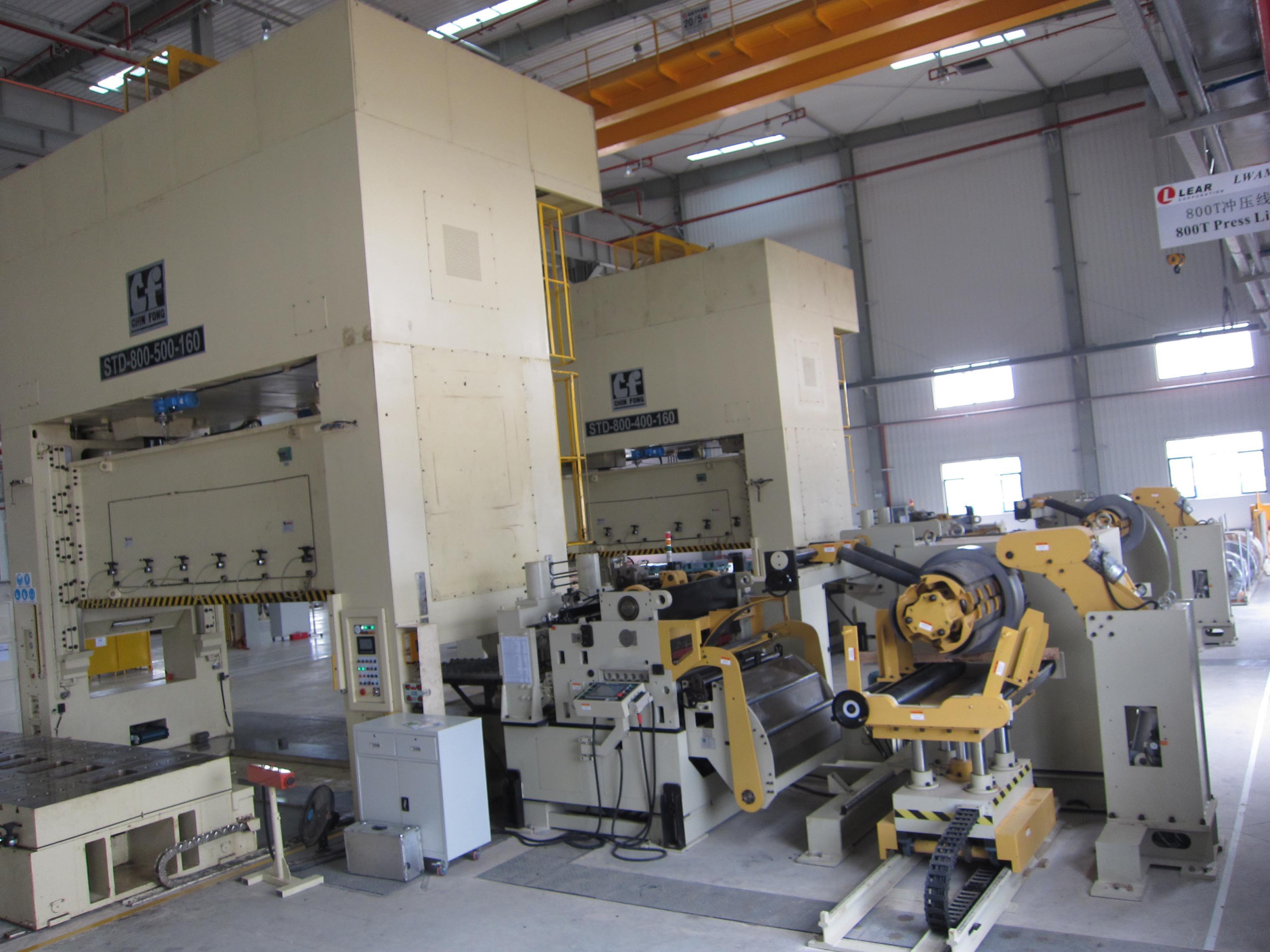
In automotive, decoilers feed coils into presses for chassis or door panels, ensuring micron-level precision amid high speeds. Home appliance makers unwind aluminum for fridge shells, where even tension averts costly dents. Construction relies on them for roofing sheets—processing galvanized steel without waves. Broader uses span aerospace (titanium coils) and electronics (copper strips for circuits). Anywhere coils enter the equation, decoilers shine, often paired with lasers for blanking lines.
Real demand? Factories seek versatility for mixed materials. Fanty's solutions, trusted in global partnerships, powered a 2019 U.S. stamping line that hiked output 40%. Our coil cut-to-length systems exemplify this, reducing waste in sustainable builds. If your line handles diverse jobs, our customizable decoilers adapt seamlessly—because efficiency isn't one-size-fits-all.
What Are the Benefits of Using a High-Quality Decoiler Machine?
Top-tier decoilers deliver uptime: Fewer breakdowns mean 20-30% more daily output, per industry benchmarks. They safeguard materials—precise tension cuts scrap by 10-15%, saving thousands yearly. Ergonomics improve too; hydraulic loading eases heavy lifts, curbing injuries. Energy-wise, efficient motors trim bills, aligning with green mandates. Long-term, durable builds from premium alloys last 15+ years with minimal maintenance.
Users often overlook ROI: One client recouped investment in six months via faster cycles. Fanty embodies this with our core values—innovation and quality assurance. Our 370-strong team ensures devices like the hydraulic decoiler withstand rigors, backed by global service. During 2020's disruptions, we kept lines running remotely. Invest in quality; it's your edge in competitive manufacturing.
How Do I Choose the Right Decoiler Machine for My Needs?
Start with coil specs: Weight (5-30 tons?), width (up to 1800mm?), thickness (0.2-6mm?). Match to your line speed—motorized for 50m/min+, hydraulic for heavies. Budget? Entry manuals run $5K; full autos hit $50K, but pay back fast. Factor integration: Does it sync with your PLC? Site constraints like space or power? Audit these, then prototype-test.
From consultations, mismatches waste 20% efficiency. Fanty shines here—our Engineering Center tailors OEM solutions, from basic uncoilers to full auto-lines. With dealer training and parts stock, we're your partner. Visit our about page to see how we've transformed setups worldwide. Ready to spec yours?
Case Study: How Fanty Decoiler Boosted a Client's Efficiency
In 2018, a U.S. auto supplier struggled with coil jams, losing 10 hours weekly to manual swaps. We deployed our double-mandrel decoiler-straightener-feeder hybrid, handling 15-ton steel coils at 80m/min. Hydraulic expansion and auto-tension sensors eliminated slacks; integration with their press cut changeovers to minutes. Result? Output soared 35%, scrap fell 12%, and ROI hit in four months. The client noted, "Fanty's precision turned chaos into clockwork."
This mirrors our vision: Smarter stamping futures. With 370 employees and eight workshops, Fanty delivers turnkey wins. From pandemic-proof support to custom robotics since 2015, we're built for your success. Explore our range—let's uncoil your potential together.
Ready to Enhance Your Line? Contact Fanty Today
Decoilers aren't just machines—they're gateways to leaner, greener production. Backed by Fanty's expertise, yours awaits. Learn more about us or reach out for a free consult. Into a more efficient future—with Fanty.
Word count: ~1520 | Written by Fanty Team, December 2025
Are you looking for a reliable manufacturer of down home textile products?
We can quickly provide customers with market analysis, technical support and customized services.Or send us messages online !
- *Phone
- *Title
- *Content